1

I added an outlet to a bathroom. When I pulled the outlet, which was a 15A, that I was going to tie into it was wired with a #12. I checked the circuit and it is a 20 AMP circuit. It was part of a bathroom that was part of a GFCI. I thought maybe since the was a ground fault that it was okay to have the 15A outlet on a 20A.

I did a little more looking around comparing the circuit to the outlets. It appears that the 20A circuits are all wired with 15A outlets.

Is this a code violation or safety hazard?

Thanks,

Dave

broncosbuck99
  • 11
  • 1
  • 1
  • 2

3 Answers3

4

Folks, folks...

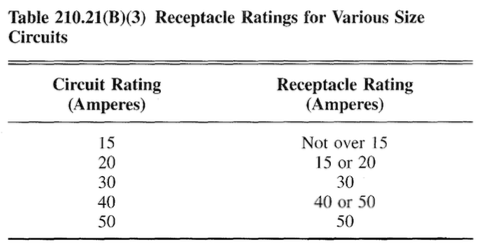
15A outlets are totally legal on 20A circuits.

Because the NEC makes an exception specifically for that (National Electrical Code): enter image description here

The exception is by careful plan. It would be stupid for electricians to have to carry two types of receptacles on their truck. So UL (the listing agency) requires all 15A receptacles to have internal circuit paths good for 20A. This allows the same receptacle to be used in both 15A and 20A circuits. It also allows two appliances totaling 20A to be plugged in at once, even though each appliance is less than 15A. The extra copper is trivial, they still manage to sell these things as cheap as 60 cents apiece.

If you want a quality receptacle, buy one. You can buy quality NEMA 5-15 (Mr. Horrified) for $3 and up. You don't need to buy a NEMA 5-20 (Mr. Winky) to get quality, but it assures quality since cheapie 5-20's are not commonly made.

Harper - Reinstate Monica
  • 313,471
  • 28
  • 298
  • 772
1

Most 15 A receptacles are rated for 20 A pass through. So, if you plug something into it, it has to be less than 15 A, but it can safely be installed on a 20 A circuit.

mmathis
  • 8,959
  • 14
  • 44
  • 66
-3

This is code but I would change the outlets. Outlets are cheap and easy to replace. Why chance it?

So you can leave this but don't plug more than 2 or more things into one of the outlets that exceed 15 Amps through extension cords or the like. Technically, doing that isn't code but most people who are not electricians don't realize they have to know about this issue. It's crazy that they make people hard-wire smoke detectors in (because people yank the batteries) but expect these same people to not overload an extension/splitter.

Make sure all the other occupants in the house know not to use these:

enter image description here

Or you could just change out the outlets to 20A rated. Another option is that you could change the breaker to a 15A. That will reduce the overall capacity of the circuit, though.