3

Possible Duplicate:
How do I install an electrical outlet on a live circuit?

I remember back in my college days, having a badly damaged outlet plug on a built-in dresser/vanity right above my bed (the face had cracked away exposing the metal contacts for the hot and ground). My solution, not needing the plug at all, was simply to tape over it. However, had I put in a maintenance request, let's assume for a second that the most granular breaker circuit available would still shut down half the dorm floor and so it normally wouldn't be done.

How then would an electrician or maintenance guy attempt to replace the outlet while keeping it live? Obviously the average joe working on his home wiring should ALWAYS kill the breaker (because otherwise he can kill himself), but if you HAD to work on a live circuit, as a professional electrician, how would you prepare/protect yourself?

KeithS
  • 14,367
  • 7
  • 45
  • 74

5 Answers5

7

Professional electricians work on live circuits all the time. They don't shut down the powergrid when they have to climb a telephone pole. ;)

The key with working with ANY electricity is to make sure you aren't grounded and providing a path for the current. This typically involves using all sorts of various insulators...rubber gloves...rubber shoes...not using metal tools, not being on a metal ladder, etc, etc.

But yea, whenever possible, kill the power first.

DA01
  • 24,586
  • 30
  • 82
  • 153
5

If you have to ask the question you have no business messing around with a live circuit.

Loren Pechtel
  • 982
  • 1
  • 7
  • 14
4

With one hand in your pocket.

But really, don't.

Adam Jaskiewicz
  • 1,121
  • 2
  • 8
  • 13
2

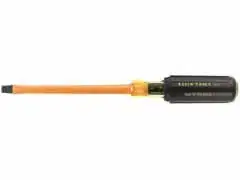
There are a variety of insulated tools available for when working on live circuits. For example, here's a screwdriver insulated for 1000v, meaning, you will not get electrocuted through the tool.

Klein insulated screwdriver

The guys working the hydro poles have all sorts of gear rated for much higher voltages that can make contact with the lives wires while keeping the user safe. Even then it is still risky.

There is also the concept of a Faraday Cage that is used in the field. For example, when working on hydro lines from a helicopter.

As others have said, avoid it at all costs especially if you are not a professional.

Steven
  • 27,770
  • 10
  • 56
  • 90
2

Lots of good advise from previous answers. I've been working electrical for over 40 years and often don't take my own advise about not working on hot wires and devices. I am always ultra careful not to put myself in a position to complete a circuit or a path to ground. I have to admit however, I have taken dozens of "zingers" across my fingers and hand and have managed to destroy a lot of expensive Klien Tools. YIKES that smarts! But then no one ever accused me of being a real smart person, so take it from someone that has done everything wrong a few times............So as I say, not as I do......Turn off the breaker!!!!!!

shirlock homes
  • 58,628
  • 3
  • 87
  • 168