4

I am trying to raise the voltage to 240 V so that I can power two computers with 1300 watts, each on ONE 15 ampere circuit.

I power four 15-A circuits in my shop via a 60 ampere breaker I keep in my main panel. I came ought to that 60 ampere breaker with three #6 wires (two hots + neutral) and a #10 ground.

Each of my PCs is 1300 watts.

So, all I need to do is wire the existing neutrals that are already on the bus bar (those neutrals which originate from each applicable circuit. In my case, the only ones on the bar), remove these from the bar, and place the neutral in another 2 pole 15-A breaker. Is this right? Will this allow me to connect 2600 watts to one circuit? Is all I need to do to add a two-pole breaker and move the neutral to it?

Niall C.
  • 20,909
  • 19
  • 95
  • 135

4 Answers4

28

Hire an electrician before you burn your shop down with all those computers in it.

While I can try to educate you, the fact that there's PLENTY of information already available and yet you clearly have done no research or just don't understand your power system makes the above my succinct advice.

In short, neutral has nothing to do with a 240V (only) circuit in the USA/Canada system.

You replace two 15A one-space breakers with one 15 amp two-space breaker, and both legs are hot. You need to replace the receptacles on the circuits as well.

Alternatively just add 4 more single-pole 15A breakers and wire new 120VAC circuits to them.

Please hire an electrician rather than forge ahead half-understanding; or take a good long time to actually understand before you touch a wire.

Ecnerwal
  • 235,314
  • 11
  • 293
  • 637
5

The loads

The "1300w" power supplies for PCs are apparently a specialty item made by a few manufacturers. That nominal wattage is the power it can give to PC components; due to inefficiency, it draws more from the grid.

A PC doing heavy computation is what's called a continuous load. For those, you must allow an extra 25%. For instance if the load is 12 amps (1440 watts), then 125% of that is 15A. Now, 15A is the common circuit size found in houses, and power supply manufacturers know that. The power supplies are designed to draw 12 amps because of this rule.

The ones I studied are switching power supplies (required so they can hit the "Gold" power factor), and they can also run on 240V. At twice the voltage they take half the current, or 6A. Two of those (12A) will "max out" a 240V/15A circuit when you account for the 125%. Another common size is 20A, but three will overload a 240V/20A circuit, so there's no benefit to going 20A.

The rules generally prohibit putting multiple receptacles on circuits larger than 20A. If you're feeding a bunch of machines off a 60A breaker, nope.

240V on the 15A circuit

If you are in a dwelling unit, they do not allow 240V circuits unless absolutely necessary, i.e. A load is over 1440W (the max for a continuous load on a 120V/15A circuit). As discussed, these power supplies are exactly that so they don't qualify. But that's OK, you have plenty of power in that 60A split-phase service.

If you are not in a dwelling unit, you can do as you propose: pick a circuit, change every load and receptacle to 240V, mark all the white wires with tape to designate them as hots, and punch them down to a 2-pole breaker rated 15A. You could then plug up to two of these PCs in 240V mode. You must use a 240V receptacle and get 240V cords for the PCs. Do not under any circumstance wire 240V to a common 120V receptacle, that would create a booby trap for anyone else who tried to use the receptacle!

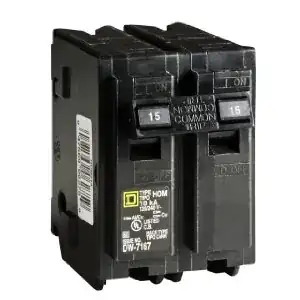
240 receptacle 2-pole breaker

These receptacles are also made in "doubles" like the normal double receptacles you're used to (with the blades different obviously).

60 amps on 6 AWG wire

This is OK. 6 AWG wire is good for 55A at 60 degrees C temperature, however since they don't make 55A breakers, you can go up to the next size, 60A.

Making the most out of 60A/240V with neutral

You mentioned "4 circuits" so you may have already done some of this. You cannot simply hang a bunch of 120V/15A receptacles off a 60A split; you need to have a sub-panel.

Now imagine you get an 8-space sub-panel and fill it with eight 15A/120V breakers, and use those to feed eight 15A 120V circuits. Can you do that? Yes you can, because of your neutral. You have 60A on each leg of the 240V, so you have 60A/120V on one side, and 60A/120V on the other side, both at once. It will work fine.

This will let you serve eight PCs.. That is more than what you need.

Get a panel with plenty of extra room, like a 20- or 30-space, or even 42. It costs a bit more, but they often give you free breakers. And it'll be nice if your needs ever change. Your breakers equal your capacity only because you plan to load everything to 80% of max. In normal loading you could have more than 8 breakers.


Of course, the problem with this sort of activity is the power company makes most of the money. However some power companies offer plans that give you power almost for free if you play their game right... That can change the finances of mining.

Harper - Reinstate Monica
  • 313,471
  • 28
  • 298
  • 772
1

All I need to do is add a 2 pole breaker and move the neutral to it?

AIUI (I'm not an American so I may have missed something) to do this properly you need to.

  1. Ensure all equipment you plan to connect to the circuit is suitable for 240 V operation.
  2. Disconnect the hot and neutral wires of the circuit from the breaker and neutral bar and connect them to a new double pole breaker. The former neutral wire is now a hot wire.
  3. Change the receptacles on the circuit to NEMA 6.
  4. Mark the former neutral wire red at both ends so that people know it is a hot wire.
  5. If the equipment uses a voltage switch move it to the 240 V position.
  6. Replace the plug or power cord on the equipment to connect to the new receptacles. For appliances with IEC power cords I would suggest marking the appliance end of them somehow so you know at a glance which IEC connectors have 240 V on them.
Peter Mortensen
  • 335
  • 2
  • 8
Peter Green
  • 5,358
  • 13
  • 29
0

This is probably not the answer you are looking for, but in the interests of preventing house fires:

  1. Please always specify what country you are in, so that you can be advised appropriately of local wiring codes and legal restrictions (and so your audience knows whether you have 110V or 230V mains).

  2. If you plug in any set of non-faulty appliances of any sort and a circuit-breaker pops, that means you should consult a qualified electrician unless you are very sure that you know why that happens, what can be done about it safely, and whether you are legally permitted to do that for yourself. (In which case you probably don't need to ask questions here). A circuit breaker is there to stop the wiring in the walls of your house from an overload, consequential overheating, and setting the house on fire. If a breaker pops, consider that to be a house fire averted. You probably need a wiring upgrade to support what you attempted. You may be under legal constraints as to what you may do for yourself.

nigel222
  • 866
  • 4
  • 6