3

I'm helping a friend remodel an old addition on his house. We've uncovered a construction technique that may have been normal 60 years ago, but isn't up to the standards of today. I'd like to know if there is a simple remedy.

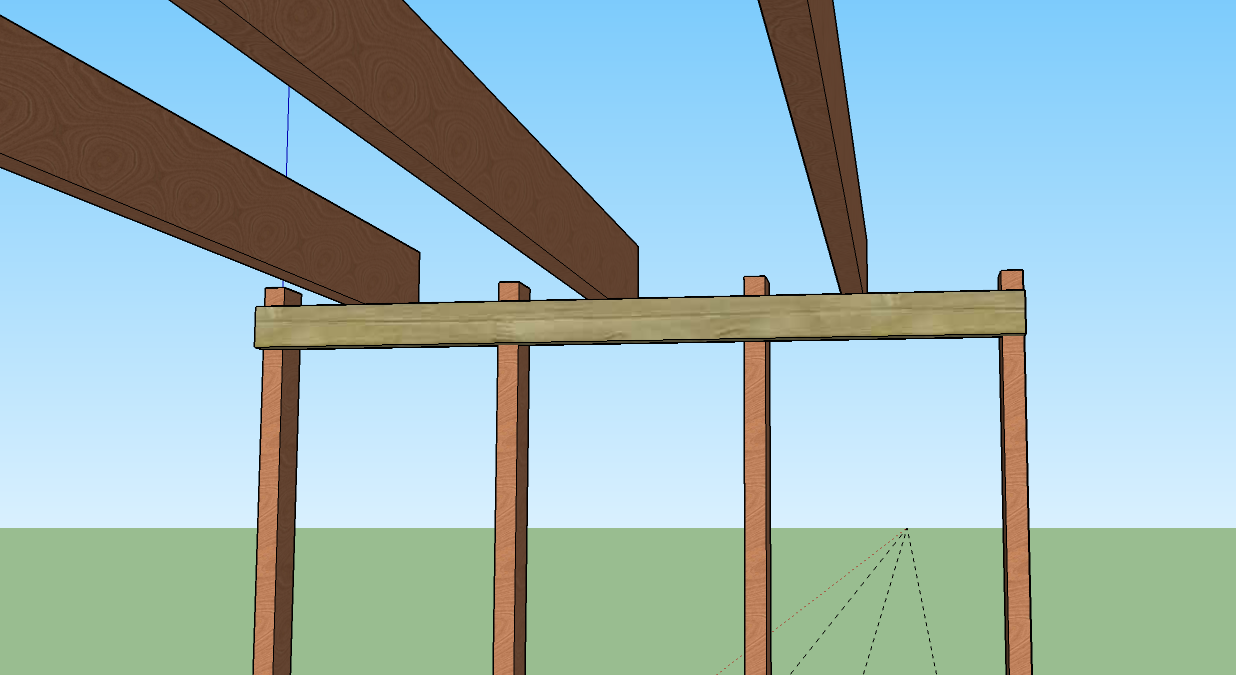
We are looking at a 2x4" (actual dimensions, not 3.5x1.5) ledger board that is face nailed in to the exterior wall studs, which are also 2x4". The ledger is not let in at all.

There are 2x8" floor joist for the 2nd story that are resting on the ledger. What this means is the entire weight of the 2nd story is effectively being loaded on the old nails that attach the ledger to the 2x4s! Talk about some sheer strength!

We've considered adding a wall directly below the ledger to help support the weight, but there simply isn't enough room to make that happen. We've also looked for some sort of Simpson Strong Ties that might add additional support, but found none. Even after calling the manufacturer.

Do any of you have any bright ideas that might help us out of this pinch?
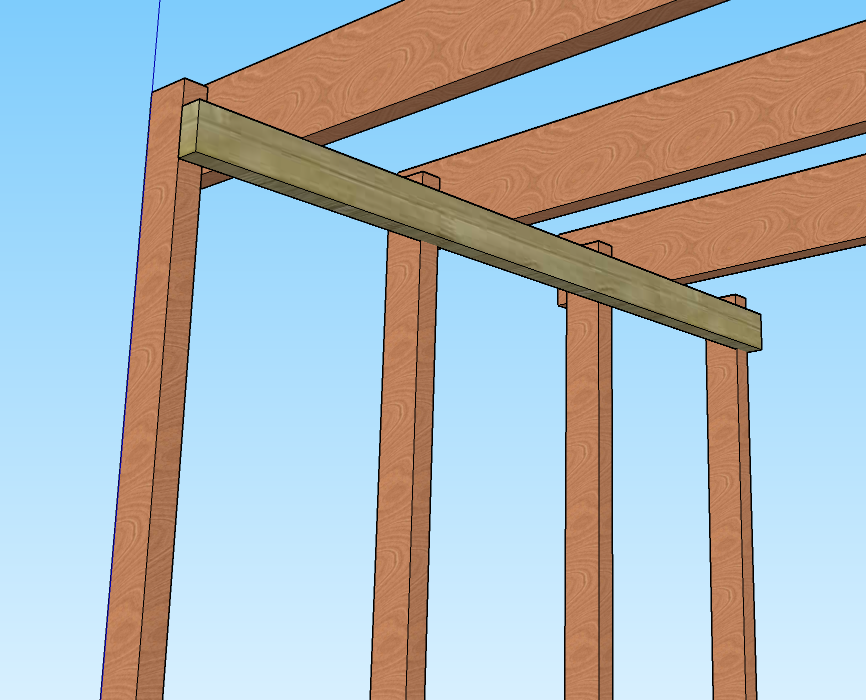
angle 1 angle 2

Doug Hill
  • 349
  • 5
  • 12

3 Answers3

4

The 2x4 ledger is sufficient to support your 2x8 joists, but it needs 4 or 5 16d common nails per stud at 16" on center to be able to carry the load if it is only carrying the floor load and no roof load. Typically the framers would have also nailed the side of the floor joist to the side of the wall stud so the the ledger isn't carrying all of the load, but I'm not going to assume they did that.

If you are concerned about it and want to replace it, first add a temporary support (build a temporary wall) to support the floor joists, next remove the 2x4 ledger, and then replace it with a 2x6 ledger.

Fasten the new 2x6 ledger to the wall with two Simpson SDS25312 1/4" x 3-1/2" heavy-duty screws into each wall stud. Put the top screw 2" down from the top of the 2x6, and put the bottom screw 3/4" up from the bottom of the 2x6.

I'm suggesting to use a 2x6 ledger to give yourself more room for the new SDS screws to work at their full capacity. If you have the room and want to overkill it, then upsize to a 2x8 ledger and put 3 screws into each wall stud.

If it's hard to find those specific screws, you can use any other 3" to 4" screw if it is rated for 350 or more pounds of shear strength.

Dotes
  • 4,869
  • 11
  • 17
2

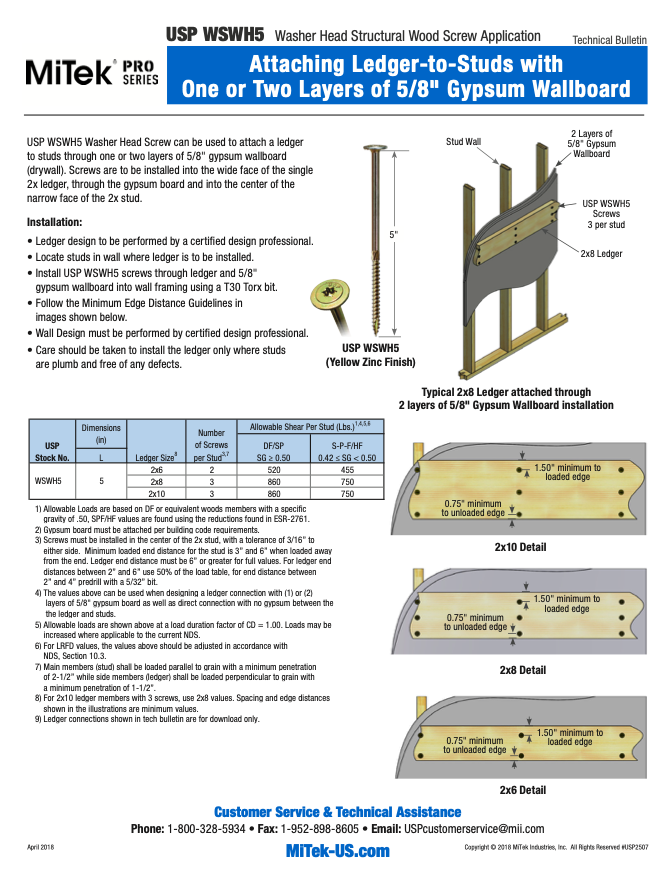
In case someone finds this question later, MiTek (who makes USP hangers and ties, similar to Simpson), has a technical bulletin illustrating the screw placement and minimum clearances for different 2x dimensions when attaching a ledger board to studs, with or without gypsum board:

MiTek Technical Bulletin Screenshot

hammertime
  • 131
  • 3
0

This sounds like & the drawing looks like my balloon-framed house. In mine the ceiling joists (upstairs floor joists) are nailed to the studs, at least, but that 2x4 ribbon (described as a ledger board in the question above) looks inadequate to hold up what it seems to be holding up. Balloon frame means the studs are long and go all the way up to the top sill, where the roof meets the walls. In my house they end at a double top plate at 4 feet above the upstairs floor. A gambrel roof on that, so I have slanted walls upstairs, starting 4 feet up, on the long sides of the building.

My place started its life as a barn/garage in about 1950 and was converted to a house in the mid 1990s. I shored it up, after consultation with an architect, with sistered joists, and enlarged the beam running down the center of the building, to support the joists. I excavated and poured concrete footings under the posts holding up the center beam. But at that time my remodel guy didn't put in a larger ribbon, even when he sistered to the joists. It's still a puny-looking 2x4 nailed to the interior of my exterior walls, just under the joists. As I understood it at the time, the ribbon was just there to keep the studs aligned, not to bear any weight.

But after 70+ years the building is still standing and has held up to winds around 80-100 mph many times, plus at least one small tornado.

TamTam
  • 1