10

I'm geting ready to install a couple new wooden privacy fence gates on the sides of our house. One of my co-workers suggested to wrap the 4"x4" with plastic stretch wrap around the 2' part that will set in the concrete. He had heard that the plastic wrap will keep the lime in the concrete from eating into the wood over time.

Has anyone heard of this or what do you think?

Tester101
  • 133,087
  • 80
  • 327
  • 617
TornadoKnight
  • 181
  • 2
  • 3
  • 5

11 Answers11

11

Most concrete and cement these days do not contain lime. When it contains lime its called Limecrete and generally it is used as a type of mortar for older buildings. Anyway If you wanted to protect the posts you are best soaking the post in creosote it's a type of oil that is used specifically to treat wood for this very reason its also used in tar distillation and is commonly available. You can also soak the wood in general motor oil for a week as it absorbs it well and repels water. The plastic would in fact trap moisture in the wood which in effect would increase the rot. Ideally you want to dig the hold deeper and put gravel under the post to allow water to drain easier and then fill the rest of the hole with concrete

Ryan Walkowski
  • 1,598
  • 10
  • 15
6

This is a horrible idea IMO. Check out The Fence Bible from you local library. The cement does not rot your posts, the moisture does. Concrete holds moisture. If you don't allow the concrete to wick moisture out to its surrounding dirt, it will rot your posts quick.

I think the best way to do posts is to use just gravel, no concrete. Tamp every 6 inches and you could get it as solid as concrete and this would keep you posts as dry as possible. I was going to do this for my new house, but I decided to use aluminum fencing to avoid the issue entirely.

Evil Elf
  • 4,414
  • 9
  • 54
  • 65
5

If what I am thinking your plastic wrap is, I think it is too thin and would probably be destroyed on installation.

I covered the same area in roofing tar and they have been in for over 25 years. I came up about six inches above ground level. It's been through earthquakes and high winds and the posts have never been replaced. My next door neighbor did creosote and he has had no problems either.

lqlarry
  • 7,617
  • 1
  • 20
  • 37
5

I have been a fence contractor for 25 years. It is important to keep the soil away from the base of the post. Wood rot starts there because of moisture, microbes and fungus. Post rot does not start underground because there is no oxygen there or fuel.

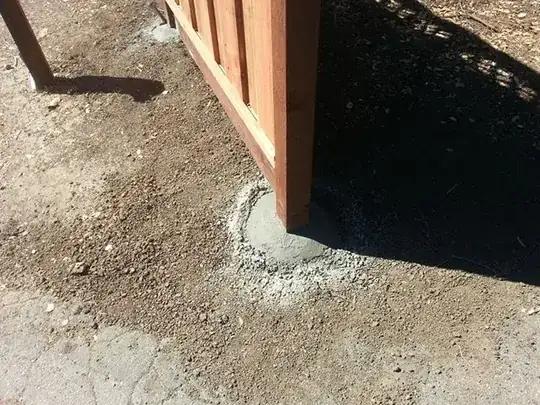
enter image description here

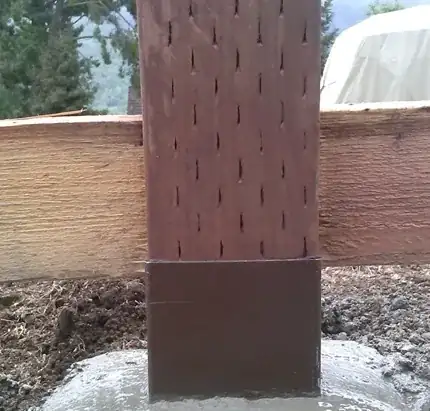
It is important to crown or slope the concrete above the grade to keep soil away and so water runs off and doesnt sit at the base and pool up. Very simple. Tar wears off, so do other products. There is only one product out that works and it is called The Post Collar. It seals the base of the post and has a galvanized metal barrier to protect the sealant. We are using them on all our jobs.

So crown the concrete, no tar, creosote is banned in the US and so is Cromated Copper Arsinate (CCA). Crowning concrete
The Post Collar

Tester101
  • 133,087
  • 80
  • 327
  • 617
Troy Emmett
  • 109
  • 1
  • 5
4

Ok, I'll keep this going and toss in my 2 cents worth. Dig a hole 6 inches deeper than you need. Add 6 inches of gravel. Pound it down with a fence post. Add more to bring you back to 6 inches. Repeat as necessary. Double wrap the bottom of the post with Grace ice and water barrier. This stuff sticks to wood like super glue. Finish the wrap a couple inches above ground level. Do no seal the bottom of the post, the long grain end. Water entering through the top, and to a lesser degree, the sides, eventually migrates to the bottom. Think of a piece of wood as a handful of plastic straws mashed together. Pour water on the top and eventually some comes out the bottom. Add cement and slope away from the post. Yeah, cement wicks water. Not an issue. How does this work? The gravel allows excess water to drain away. The rubber (high density cross laminated polyethylene) keeps water, oxygen and microbes off the wood surface. This stuff is rot resistant like you wouldn't believe. Your post wont rot and you don't need to spend extra cash on fancy plastic post anchors/protectors. Oh yeah, frost heaves. Smooth, regular surfaces will not frost heave. A post buried below the frost line will not heave. Adding cement with irregular surfaces above the frost line will heave. Just a fraction then it will try to settle. But when it heaves, small amounts of dirt get under the post stopping the settling. If frost heaving is a big issue in your area, set the post in a large diameter concrete form tube. Then add concrete.

mike
  • 41
  • 2
2

There are commercial products on the market designed for exactly this purpose.

One example can be found at http://www.postprotector.com, which manufactures a plastic sheath for 4x4 posts, intended to be buried in the ground.

Chris Cudmore
  • 14,169
  • 7
  • 61
  • 91
Orlan
  • 41
  • 1
2

An Oregon project. I soaked my 6"X6"X18' deck roof support posts with two coats of Flood preservative stain. The posts had been kiln dried then sun baked before treatment. The stain dried in the hot sun for a few days. The surfaces were then flooded with Helmsman Spar Urethane - 3 coats. The urethane extends up a foot above concrete to shed water. The concrete is mounded, finished and painted. The post sits on 3/4 minus at the bottom of the hole. I've used this UV protecting urethane coating to protect solar panels on a mountain top repeater installation. After ten years of extreme weather exposure the urethane coating was intact. It is tough material. There is no doubt that the contact surfaces on my posts are impermeable.

Will
  • 21
  • 1
0

I've tried wrapping the submerged part of the post in Blueskin foundation membrane, including the butt end. I think this should work excellently, so long as the Blueskin rises above the ground/concrete level, and doesn't peel back from the sun.

Niall C.
  • 20,909
  • 19
  • 95
  • 135
troy
  • 1
0

I have been told to use a dry ballast/cement mix using minimal water to avoid too much moisture getting to the post, I have also treated them all before installation

0

I have heard of wrapping the bottom of wood fence posts with rubber flashing, or (better) "packing" their end grain with epoxy, to reduce the rate at which the wood takes up water and hence discourage rotting.

I haven't heard of plastic wrap being used for the purpose.

And I have no idea how either would interact with concrete. In fact, the advice I've gotten has been that concrete is not currently recommended for fence posts in most soils, and that when it is used it should be a concrete footing that the posts sit on top of rather than being embedded in. (Wish I'd read that before I built my rain-barrel platform. Oh well.)

keshlam
  • 33,603
  • 5
  • 56
  • 110
0

The main reason to wrap the in ground portion of a wooden post in plastic is not to prevent water getting in but to provide a slippery surface so that the post can not be pushed up by frost in the ground. Gravel at the bottom of the posthole is a must for drainage.