I've been told that PEX requires home runs to a manifold (or star topology, to borrow from networking) to maintain the same flow rate/pressure as copper. Anyone else heard this?
Asked
Active
Viewed 2,178 times


4 Answers
12
PEX uses fittings that have a smaller inside diameter than the tubing, unlike copper where the fitting ID is typically the same as the tubing. That smaller ID is going to reduce your flow rate vs. copper if you have a lot of fittings between the source and your fixture, as you might in a non-home-run situation where fixtures are teed off a main trunk. In a properly installed system, this will be countered somewhat by using larger diameter tubing for that trunk line.
So that's the theory, but in practice I can tell you that I've now lived in two houses that were plumbed in non-home-run PEX and never had problems with reduced flow in the remote fixtures. Both of these houses used 3/4" PEX for the trunk and 1/2" PEX for the branch lines.

Mike Powell
- 9,394
- 1
- 25
- 43
6
PEX is generally run to a manifold, but there are adapters that let you connect it to existing copper pipe. However, it's so easy to run that I'd just do it the nice way.

nstenz
- 822
- 4
- 7
2
As PEX is just the material the pipes are made out of, you should need exactly the same configuration as you would if you were using copper. I would have thought that the only way the flow rate would be affected would be if the tube has a significantly different internal diameter.

ChrisF
- 16,973
- 5
- 51
- 74
0
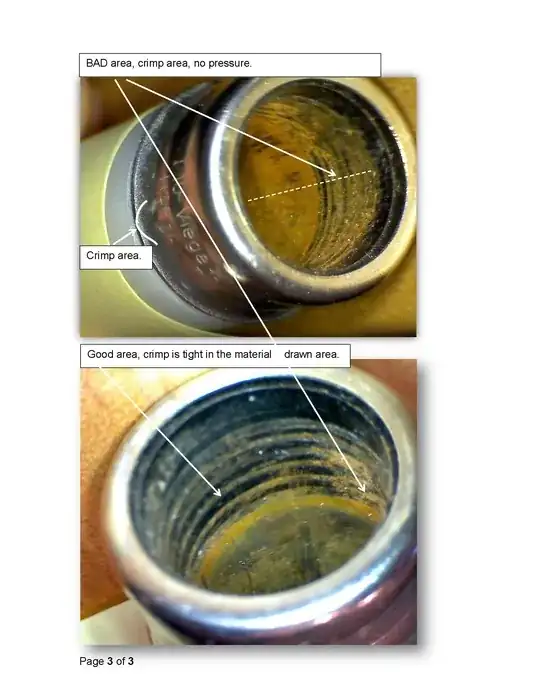 The problem is PEX clamps leak around the two crimp point areas. (Unlike hose clamps that have an overlap and have uniform area on the seal area)
This leak can lead to pop offs and thus house interior flooding.
The problem is PEX clamps leak around the two crimp point areas. (Unlike hose clamps that have an overlap and have uniform area on the seal area)
This leak can lead to pop offs and thus house interior flooding.
Therefore homerun designs (no crimps behind walls and ceilings) allow for the leak and pop-offs to contain the water damage to a one area.

owlpic
- 35
- 2