5

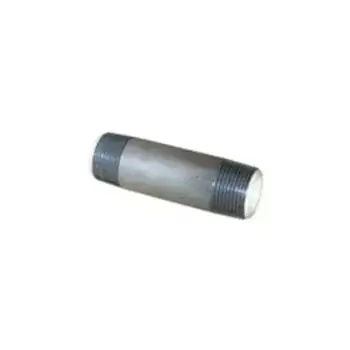
There is corrosion forming on the inlet and TP valve connections to my water heater; the outlet seems to be fine. More specifically, the nipples are what is corroding. I have read the copper pipe and galvanized steel will cause this, and I assumed this was the issue. Upon further investigation, "Dielectric" is clearly readable on the nipple labels so they are not steel I guess.

I thought that these nipples were produced to avoid this exact problem. Why are they still corroding? The inlet nipple has corroded to the point that there is now a tiny drip present.

Edited for adding pics below. I am suspecting that maybe the nipple is corroding from the outside?

Click any image for full size (8Mpixels)

enter image description here enter image description here

Niall C.
  • 20,909
  • 19
  • 95
  • 135
Evil Elf
  • 4,414
  • 9
  • 54
  • 65

8 Answers8

2

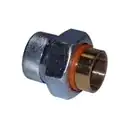
I'm thinking that the installation is missing this dialectic union. Your "dialectric" nipple has an ABS plastic coating inside a galvanized steel pipe. If the dialectic union were used in conjunction with this nipple it would provide electrical isolation from the copper - galvanize connection. This document explains this in better detail.

enter image description hereenter image description here

SteveR
  • 3,889
  • 1
  • 19
  • 17
2

On second review of the photos, I don't think that the corrosion is due to electrolysis. The dielectric nipples should be adequate to prevent that and there is no sign of issues with the hot connection. As for the T&P connection, if the copper drain pipe does not come into contact with anything then there is no closed circuit for electrolysis to take place.

It looks more like corrosion due to a small leak over a long period of time. A leak that would not have always been noticeable, but would slowly get worse over time. You can see where the water has been dripping and there is signs of calcium buildup.

Like I mentioned in a previous comment, I would inspect the sacrificial anode rod and replace it if needed. As for the cold connection, you could:

  • cut the copper line and unscrew the copper section from the nipple
  • brush the nipple with a steel wire brush to remove the buildup
  • reinstall the copper section using teflon tape and a joint compound on the nipple
  • reconnect the copper line that you cut with a shark bite coupling or a solder coupling if you know how

You could do the same with the T&P connection, just cut the vertical down pipe so that you can remove the copper pipe from the T&P and then remove the T&P, clean and reinstall.

You mentioned that the tank was installed in 2006, so it would be nearing the end of its life expectancy (most residential warranties are for 5 to 6 years) so I would keep an eye on the tank for any leaks.

pdd
  • 6,609
  • 17
  • 28
2

Leave it alone. The inlet and outlet threads on your water heater are plastic. It's a one time deal, you've got to do it right the first time. Wait until you need to replace the water heater. Use all copper next time. Mineral deposits can be sign of leakage, but sometimes the deposits seal the leak.

Niall C.
  • 20,909
  • 19
  • 95
  • 135
don
  • 21
  • 1
1

Looks like it was teflon taped, tightened to tank, then soldered , cooking the upper adapter sealant. I try to prep a soldered piece with a copper extension 2-3 inches long soldered on. When i use a coupling to make final solder connection, I wrap a wet rag on lower parts to keep teflon cool. I would be tempted to try a stainless nipple at tank.

John TB
  • 59
  • 2
1

"Dielectric nipples" are a marketing term for the most part. They are NOT truly dielectric, because you DO have the dissimilar metals in contact with each other. What these nipples to is prevent the worst EFFECT of having dissimilar pipes in contact, that of the pipe closing off from the INSIDE with corrosion buildup, which you can't see so you don't know it's happening until the water stops flowing. That's because it has a PEX (high temp. plastic) liner on the inside. But because the dissimilar metals are in contact, the corrosion happens on the OUTSIDE, as it is in your case. However, now you can SEE that and replace them when it happens.

The only thing that stops the electrical flow is a dielectric UNION that puts a non-conductive material between the metals. Even then, if the water has a lot of dissolved minerals in it, internal corrosion and blockage can still happen because the electrical flow takes place through the water. So the best solution is BOTH the union and the sleeved nipples.

Or like I said, when you see the external corrosion, consider it a warning and just replace them. From the photos you posted however, I don't see any kind of union fitting anywhere, so replacing them is going to be difficult. If there isn't one ahead of those pipes somewhere out of the photo, you are going to have to cut or at least de-solder the pipes. Not a great idea for the uninitiated. But if you do, put in a union so you don't have to do it next time, and if you do THAT, make it a dielectric union.

JRaef
  • 15,146
  • 1
  • 20
  • 40
1

Use a brass nipple or stainless steel. The galvanized nipple will after time corrode to the point that you will have low flow and pressure reduction. Go to Corro-Protect site and consider replacing your anode for this.

1

Electrolysis is generated by multiple dissimilar metals interconnected in a body of water, or with water running through it. There are already multiple dissimilar metals in your water heater, so it’s already a little electrolysis making machine. That’s why the manufacturer installs a sacrificial anode rod made of zinc and aluminum in the top of the tank before shipping them out. It counteracts the effects of the electrolysis, and protects your water heater tank and associated fittings. If there is sufficient anode protection, it won’t matter what material you use for the nipple. So long as it’s a more noble metal than zinc and aluminum, it will be protected from electrolysis. Keep in mind any materials used still need to be lead free and plumbing code approved. Under normal circumstances, anode rods last about 4 years. If you have a salt water softener in the system, they last about 6 months. If a magnesium anode rod is used in conjunction with a salt water softener, you’ll get a little more than a year of useful life out of it. Another common problem is areas where there is hard water. Scale buildup within the water heater can coat the anode rod, preventing it from being in direct contact with the water, which renders it useless against electrolysis. The fix for these issues is to install a descaling device of your main water supply, and perform ongoing routine maintenance on your water heater, consisting of anode rod replacement every four years, and every six month to a year if you have a salt water softener.

I’ve been a state licensed new home and remodel construction plumber, service plumber, and B licensed General Contractor for 30 years.

Tim
  • 11
  • 1
-1

It is electrolysis from two dissimilar metals. You have copper pipe in contact with galvanized steel pipe. A small electrical current is created (Google "thermocouple"). There is no dielectric union between these two metals.

Niall C.
  • 20,909
  • 19
  • 95
  • 135
john
  • 1