19

My subfloor is squeaky, and there's a small window of opportunity I'll have to fasten it down before/during my carpet being replaced. I have available to me a nice corded drill, and an air-powered framing nailer. My chief concern is longevity of the solution, I don't want the floor squeaking again in 5 years. Screws will likely hold longer than nails, but with the way higher nailing rate and the right nails (suggestions?) will nails be a better choice for me?

Cost isn't really a factor, as this is only one job. Carpet installers show up tomorrow :)

Tester101
  • 133,087
  • 80
  • 327
  • 617
Bryan B
  • 391
  • 1
  • 3
  • 12

6 Answers6

24

Screws:

  • It doesn't sound like you're reattaching the entire floor; this is more like strategic intervals to solidify the fastening. Your nail/screw rate is not as important as if you were attaching a new subfloor from scratch.
  • Glue and screw is popular for more reasons than just rhyming
  • You're going through this effort to make it right. So do it right.
dolphy
  • 658
  • 2
  • 7
  • 14
10

Don't wait for the carpet installers. Find your worst squeaks, cut through the carpet and padding, and put the screws in there right now. Then you can hit any missed spots and otherwise stay out of the installers way tomorrow.

BMitch
  • 43,263
  • 15
  • 98
  • 204
8

Screws. Nails will pull out over time.

The Evil Greebo
  • 25,971
  • 16
  • 91
  • 125
4

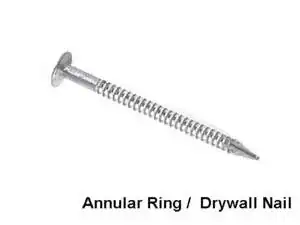
Screws would be the more 'sure' solution, but if your nailer can handle ribbed nails like this:

enter image description here

Or a spiral shank:

enter image description here

they'll hold pretty tight.

DA01
  • 24,586
  • 30
  • 82
  • 153
0

We were just advised by a great contractor that screw & glue are definitely the best. We're going to have him redo someone else's work who just nailed an entire new home ...

0

If you visually compare a nail and a screw, you'll see that the shank of the nails is smooth, assuming regular nails. So, the only thing keeping them secure is the pressure of the material (typically wood) around the shank when installed. In contrast, the shank of the screw has a spiral groove that yields much more resistance to being pulled out of the wood it has penetrated.

Ian Dunn
  • 105
  • 4