4

I am going to be putting up an outbuilding with rafters. Is it necessary to use a ceiling joist with conventional rafters?

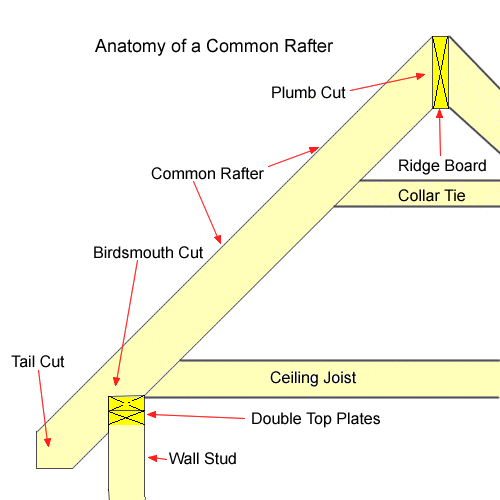
This picture shows that I need one (https://www.carpentry-pro-framer.com/Roof-Framing.html) enter image description here

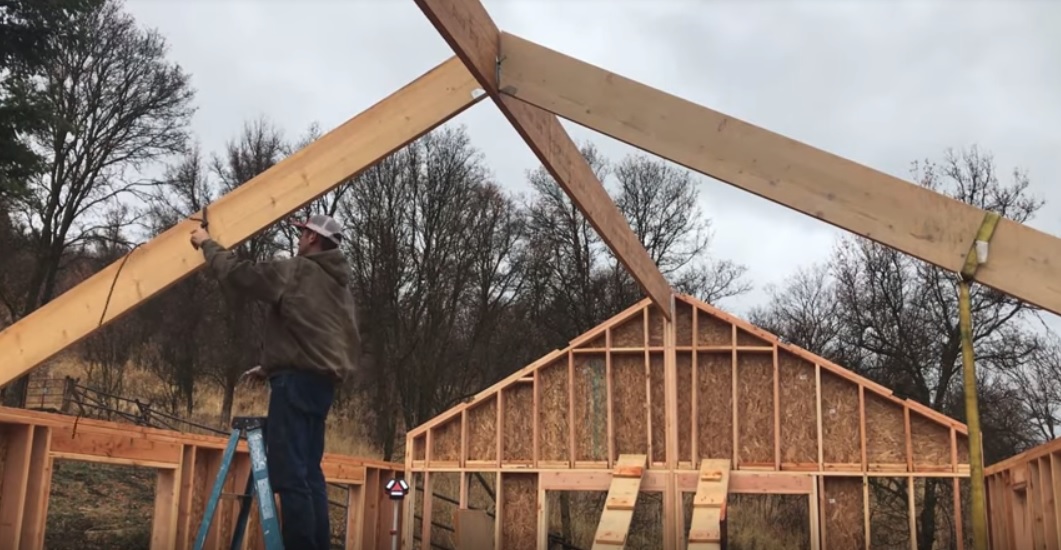
However in this video there is not one (https://www.youtube.com/watch?v=KeNC98mCgoI) enter image description here

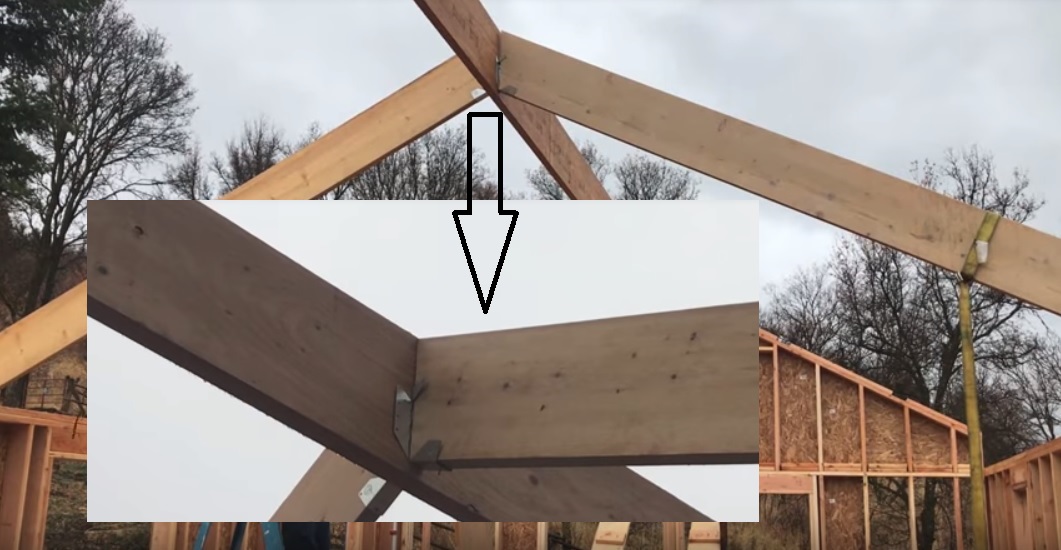
Also, can I just nail the rafter into the ridge board or do I need a metal brace: enter image description here

isherwood
  • 158,133
  • 9
  • 190
  • 463
rafter-builder
  • 41
  • 1
  • 1
  • 2

3 Answers3

1

Collar ties go on the top third of the rafters, and mainly hold the rafters to the ridge beam, they may or may not be required by local code, or may not be required if you use an approved metal connector like a Simpson rafter tie.

Rafter ties go across the bottom third of the rafters, in older construction they could be on the bottom half or bottom two thirds of the rafters. They prevent the roof from flattening, and they're pretty much usually required unless the structure is engineered so the outward thrust is taken into account some other way. For example some cathedral ceilings are made to be stable without rafter ties. In most cases ceiling joists are parallel to the rafters and are installed in such a manner that they function as rafter ties.

batsplatsterson
  • 25,515
  • 1
  • 34
  • 83
1

The video you linked to is definitely not done. There will be either walls added under the ridge board or posts set to support the otherwise severely undersized ridge board to act as a ridge beam. Ceiling joists are used to keep the walls from being pushed out by the roof rafters. The rafter ties, mentioned in an earlier answer is a new term to me, but would work in lieu of ceiling joists. For what it is worth, I have seen ceiling joists raised above a plate line in the same fashion described like the rafter ties. I still call them ceiling joists. Never the less, an engineer prescribes where all this goes.

If you are looking for a cathedral ceiling in your outbuildng you would need a properly sized ridge beam. A ridge beam is a much larger version of the ridge board. it is supported on either end by posts set inside the gable end framing and is strong enough so when the weight of the framing is set to it, along with the roofing and a heavy snow load, the beam will not sag enough to cause damage at the sides of the building. This is something an engineer typically sizes as well.

To answer the question about the metal clips at the top, there are not needed, unless required by code because of seismic activity or wind loads. In my opinion, these became necessary when parts of buildings or decks would fall down or roofs blow off because the building trade is pushed so hard and the workers have a nail gun, they do not take the time to fasten anything properly, and because the worker thinks a nail goes into the wood it is doing something, in some cases, it is not. Seen that myself, done that myself. The metal clips are a "how-to" nail properly when the instructions are followed. I have seen that screwed up too. Pardon my cynicism....
Jack
  • 38,117
  • 2
  • 30
  • 66
0

The answer depends on the strength and rigidity of the rafters. I've built my last two yard sheds (which, admittedly, were only 10' x 14') using 2x4 rafters with OSB gussets at the top. The gussets were 48" wide at the bottom, effectively acting as collar ties. The roofs on both were rock solid, even under the weight of several adults. Many ears later there's no sign of sag.

Since the span of the rafters and their relative stiffness is adequate, it's unlikely that the walls will ever bow significantly. The roof sheathing itself acts as a shear plane, stabilizing the wall position.

isherwood
  • 158,133
  • 9
  • 190
  • 463