1

My house was built in 1982. I’m trying to diagnose my doorbell to see if it’s worth trying to fix or if I should just let it go and maybe get a wireless one instead.

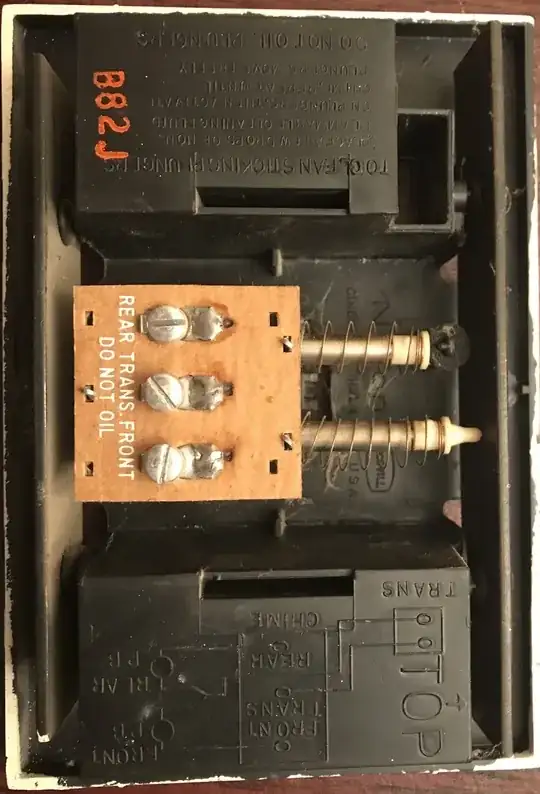
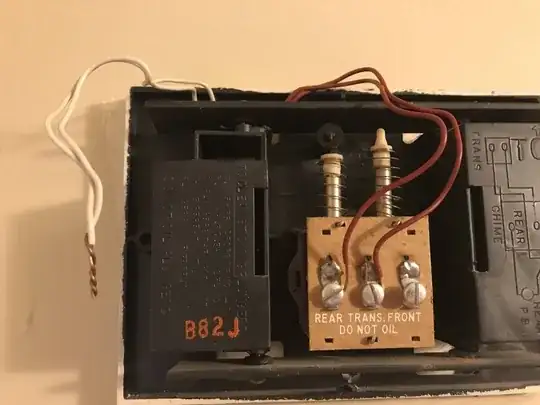
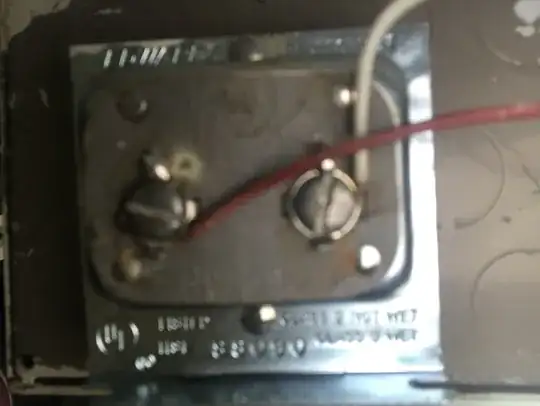
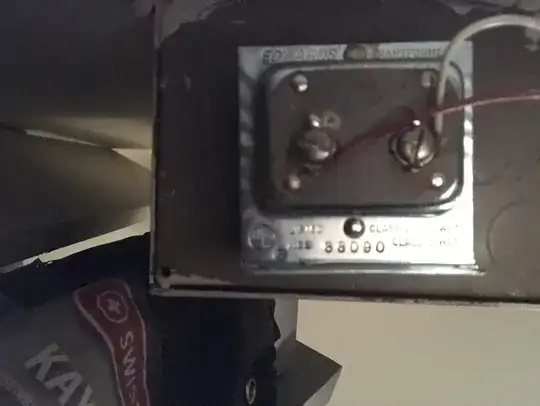
I used a low voltage tester on the transformer in my basement and the tester lit up so it appears the transformer is working. However, when I tested both the outside lead wires by my front door and also the wires in the doorbell chime unit (NuTone KA-10), I’m not getting anything.

What does this indicate and how involved is the fix? Do I need new wiring and if so, does that require following the wire all through my house and knocking out drywall? If so, I think I’ll pass on it.
enter image description here

enter image description here

enter image description here

enter image description here

isherwood
  • 158,133
  • 9
  • 190
  • 463
Dave
  • 73
  • 3
  • 9

3 Answers3

2

The problem could be the button, the chime, the transformer (tested OK), or the wiring in the walls. Check the devices before chasing wires through walls. Start with the front button: disconnect and touch the 2 wires together. Does it ring? Then put your voltmeter on the chime coil. Does the chime get voltage when you touch the button wires together? If you have voltage at the chime with no bing-bong, then the chime is faulty. The only time you should measure voltage at the chime is when the front button is pushed. If it rings only when you touch the wires, then the front button is faulty.

John Canon
  • 2,015
  • 7
  • 7
0

I don't trust anything other than a volt meter with low voltage because some are AC and some are dc. I have been fooled in the past with high end low voltage detectors. In my experiance the wiring is usually ok if it worked. The main problems I have found is bad switch or contact to the switch #1. The next check I have found is at the chime it self, many electronic chimes don't last long for my #2 problem. The more rare problem that I have found is the transformer has failed , for me this has happened 2x on on a Victorian home with a ceramic encased transformer and another with a 60's era transformer as #3. The last and number 4 issue was a residing company drove a staple through the twisted wire that shorted them together, the chime was connected all the time so it buzzed, the owner had replaced the transformer and switch prior to calling me. Found the shorted wire and pulled new wire then good to go. These are the problems I have found ( well other than a few tripped breakers for other reasons) so these would be the areas I would check. Some electronic chimes have back up batteries when the 9v battery died and actually dragged the chime voltage down it failed to work so there quite a few simple things to check. Added: since you have a simple chime unit this should not be hard. Your voltage is a bit low but I would expect it to work. My first test would be to disconnect the door bell switch and take a measurement, also short the 2 wires together by hand if the chime activates bad switch, you should see a voltage similar at the switch location, I suggest removing the switch from the circuit because lighted switches that have failed have provided strange readings. Verify the wiring a wire may have come off at the chime or transformer. I have found bad coils in chime units but this has been less often and I have not had both coils fail measuring the chime coil resistance should provide a resistance value on both coils if open the coil is bad. I had already had mentioned the wiring to the chime and and switch so this is all there is to test.

Ed Beal
  • 103,727
  • 4
  • 79
  • 158
0

You can purchase an electrical wire tracer and follow the wire through the house. This is also useful for figuring out if there are any breaks in the wire.

You can also test the voltage differences at the doorbell -- might be a bad doorbell, not a bad set of wires.

Easiest way to test this is to get a coil of wire and use it to test continuity each of your transformer->doorbell wires individually.

gbronner
  • 5,752
  • 1
  • 19
  • 47