9

(I'm familiar with thread "locking" compounds, purple, blue, and red, but that's not what I'm looking for here. They lock once and then upon breaking the joint, do nothing further.)

I'm looking for a way to tighten up a free spinning clean, easily threading bolt in a threaded hole. Basically I want it to behave as if there is a locking fastener like a "nyloc nut" or an "interfering thread nut" etc.

Any thoughts? The best idea I have right now is sugary syrup or something.

EDIT: to clarify with some examples

Example 1: I have a metal pen, with a threaded metal cap that screws on. The cap screws on like butter, very nice and clean threads. The problem is sometimes I find it has unscrewed in my pocket. I would like the threaded connection to always feel like it has a slight interference fit.

Example 2: I have a folding pocketknife with a single small torx screw that adjusts the tension required to fold out the blade. This screw loosens occasionally and then knife doesn't work properly. Common wisdom is to use blue threadlocker and tighten the screw to the perfect torque. However, I'd like to adjust it frequently without disassembling the whole thing and adding more threadlocker.

Brad
  • 234
  • 1
  • 3
  • 9

16 Answers16

8

Based on the clarifications, I would recommend using a reusable thread-locking liquid.
Here is a link to one I found that may work. I have not used it. Vibra-Tite VC3 Threadmate http://www.vibra-tite.com (I am in no way affiliated with the Vibra-Tite Company)

RSMoser
  • 806
  • 5
  • 6
3

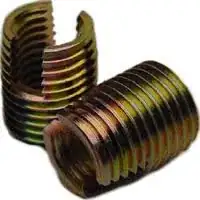
You may have a damaged/stripped bolt or threaded hole. Check to see if the threads on the bolt are damaged then you will need to purchase a new bolt. If the threads in the hole are damaged you will need to install a threaded insert enter image description here

or use a tap and die set.

RSMoser
  • 806
  • 5
  • 6
2

Try lightly damaging the threads by laying the bolt flat with the head unsupported and tap threads with a hammer or flat punch to slightly roll the peaks over. Go slow and test for the right amount of friction.

fred
  • 21
  • 1
2

You could try some really really fine sand - something that will create more friction between the threads without seizing up.

Alternatively maybe you could redrill/thread the hole to a slightly larger size?

The Evil Greebo
  • 25,971
  • 16
  • 91
  • 125
2

how about plumber's thread tape? (AKA 'teflon' tape)?

mac
  • 2,601
  • 2
  • 22
  • 22
2

Sounds more like you want a lockwasher. Or possibly a jam-nut setup (two nuts tightened against each other to exert pressure on the threads and lock them both in position).

StayOnTarget
  • 5,675
  • 21
  • 58
  • 102
keshlam
  • 33,603
  • 5
  • 56
  • 110
1

Beeswax. Acts as a nylon lock nut, but you can apply it to surfaces.

user74312
  • 11
  • 1
1

Try mixing something gritty with something gooey that won't dry out. Heavy-weight grease plus sand might do the trick. Basically you're trying to make threadlocker compound but without the property that it dries out. Try it out on another bolt/nut combo FIRST, to see if it works, before gumming up your target bolt.

You may be overthinking this one, though. I'm guessing the bolt hole is really hard to replace or something?

Alex Feinman
  • 3,532
  • 7
  • 30
  • 41
1

Is there room to add a second nut? If so, use a second nut as a "jam nut" to act as a locknut: slightly overtighten the inner one, put on the outer one so that it will allow the inner to move out only to where you want it to end up, then "loosen" the inner one 'til it touches the outer one, then use two wrenches to tighten the outer while loosening the inner. The tension between the two nuts prevents them from moving, but it's easy to reverse the process if you need to make adjustments later.

This page has some images: http://www.boltscience.com/pages/twonuts.htm

liantics
  • 809
  • 6
  • 2
1

If the bolt is just slightly slipping, and not really "free spinning" you could look to deform slightly the threads of either the bolt or the hole (or both), so that they don't slip anymore.

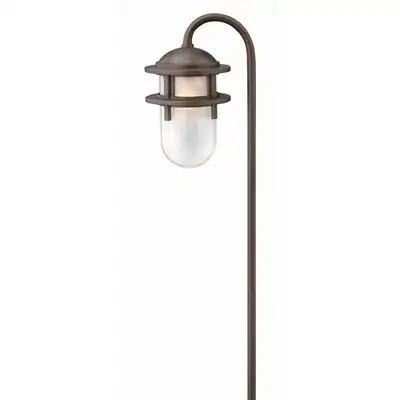
I used this successfully to fix a landscape lighting fixture that had a 2-part post where the threading between the sections was stripped. Slightly tapping each part of the threaded connection was enough to transform it from a full circle to an ellipse where the threads didn't slip at all and the exterior junction still appeared normal.

I'd been looking for some epoxy or something to hold the parts together, but this ended up being a much easier fix--especially since both pieces were hollow and easy to deform just enough.

Not sure if it'll help in your case, but it's a suggestion in case it might.

landscape lighting fixture

BQ.
  • 841
  • 8
  • 14
1

Silicone sealant, hot melt glue heated on, marmite or yeast extract some of the hardest jars to open if you dont clean the threads & it probably has staying power, tomato ketchup, vegetable or sunflower oil gums things up nicely i know from childhood when i striped & re asembled my starwars AT-ST 2 leg walker i used it on the back leg actuating button & leg joints big mistake worked fine for 5 mins or so before it congealed lol. Honey, treacle, those Desert topping sauce's, again as a child every time i lent my BMX out & the icecream man came my handle bar grips came back as sticky as f**k, sweet & sour sauce so sugary sauce's in general, even prit stick is worth a try, Thick axle grease (Remember the sticky bomb in saving private ryan) Dont think i missed anything all you need to decide is flavour, smell hold longevity & mess factor hunting for an aplicable tar like substance, tree sap plant blood any coagulant lol. On the other end of the spectrum candle wax, soap, vaseline (Petrolium gelly can be harsh but conducts electricity well while it lasts), washing up liquid or GT85 spray (Doubles as an electrical contact cleaner with inert non reactive PTFE non stick plastic formular, not as course a penetrant as WD40) will help get it moving again. Disc brake degreaser leaves it sqeaky clean.

Tony
  • 11
  • 1
1

I had the same problem with a fountain pen cap, and found this post while searching for a solution. I ended up using Loctite® Threadlocker Blue 242®, by spreading a very thin layer on the threads. It's a "removable" thread locker, and has been working great for me so far.

Just don't use the Loctite® Threadlocker Red 271™, because that creates a permanent bond.

Tester101
  • 133,087
  • 80
  • 327
  • 617
James
  • 11
  • 1
1

You could also put an o-ring at the bottom of the male end of the pen cap. That creates friction and there's no way it can damage the threads.

Michael
  • 11
  • 1
0

If it is something that you are unlikely to need to remove at a later date, or if you are OK having to destroy the bolt/nut to remove it, you can use epoxy to bond the bolt and nut.

Steven
  • 27,770
  • 10
  • 56
  • 90
0

For a cheaper fix than some of the above answers mentioned, two thoughts came to my mind:

  1. dental floss - wind around the bolt or screw.
  2. Scotch tape - This is what I used for my loose LED flashlight, and now it works like a charm.
David
  • 1
0

What I did is I used small piece of electrical tape put on bolt and stretched it on so I can see threads through tape and boom worked for my scooter axle