1

This is a followup to this question: How to fasten one end of a rope to multiple points so as to distribute load equally?

Specifically, I'm following this answer's advice about using a cordelette. Here is an informative article that shows how to tie a cordelette.

These two images from the linked article illustrate the general idea:
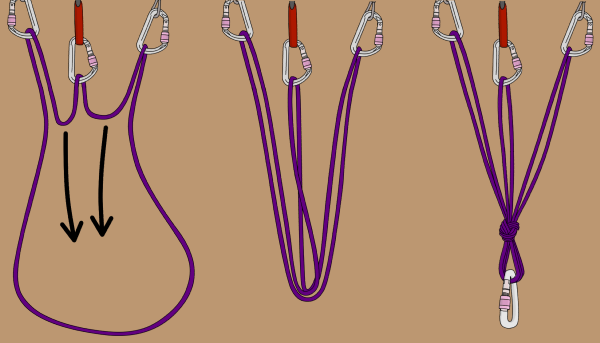
3-point cordelette

This image illustrates a multi-cordelette scenario:
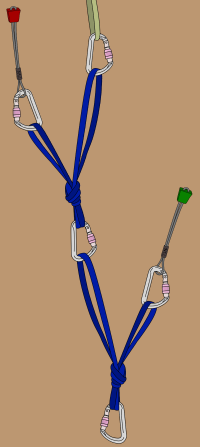
multi-cordelette scenario

In my case, there are 7 points available amongst which I'd like to equalize the load. They are arranged in a complicated way, and I'm wondering if I can indeed use all of them or not.

Offhand diagram of the potential fixing points' arrangement; notice the area where no rope can pass through:
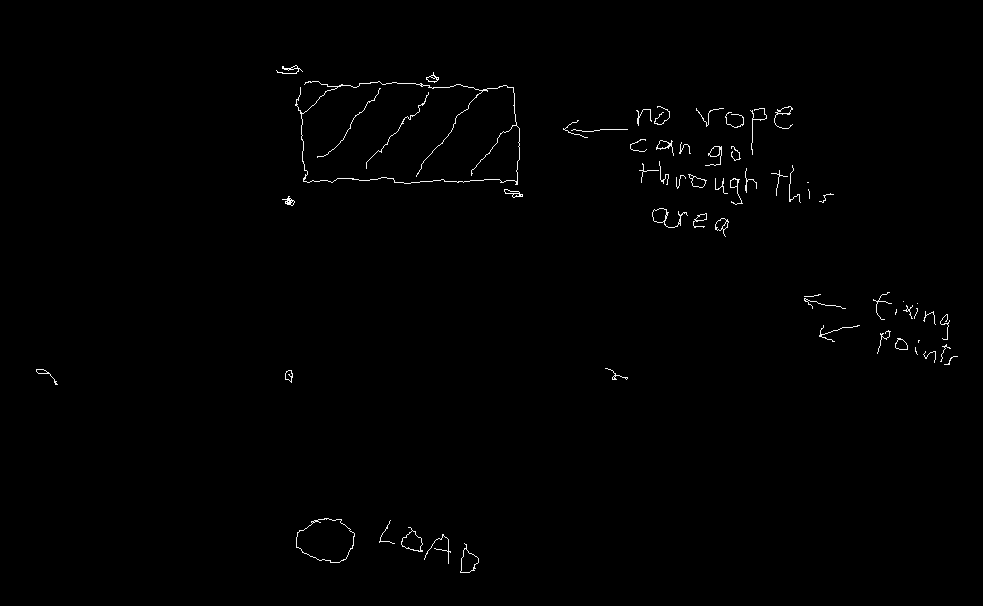
fixing points' arrangement overview

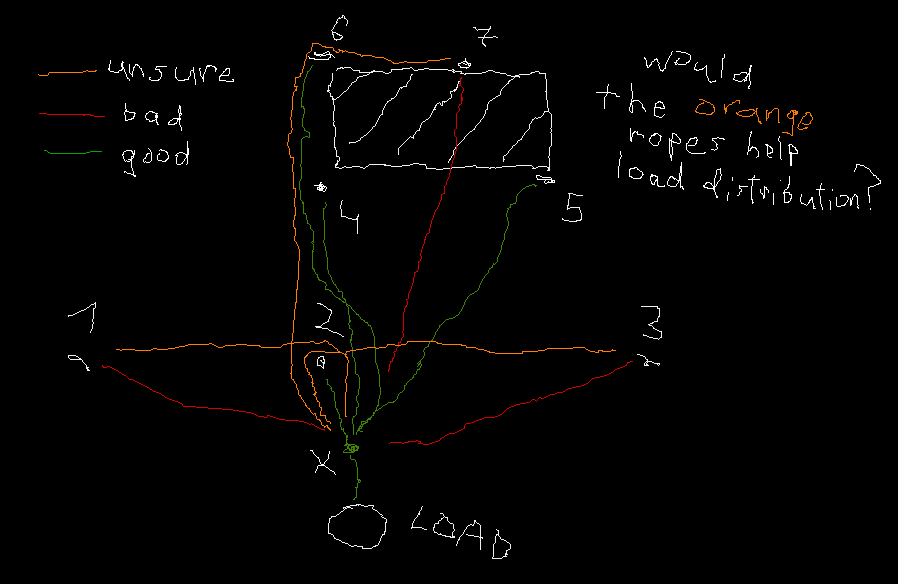
Color-coded diagram illustrating possible cordelettes:
possible cordelettes

In the second diagram, the points are numbered 1 through 7, and their connections with the cordelette's knot (marked X) are color-coded. Green is good, meaning I am fairly certain they will help with equalizing the load. Red ropes are bad, either because they go through the no-rope area (rope 7X), or because their V-angle (explained in the article) is too steep, i.e. more than 60 degrees (ropes 1X and 3X).

It's the orange ropes that I'm unsure about. They go around other fixing points so as to reduce the V-angle, but they also increase the load exerted on those go-around points.

For example, the orange 7-6-X rope that goes from 7 to X through 6. Obviously fixing point 7 then takes on part of the load, but since this rope is pulling on 6 as well, load on it is increased as well. The question is: does the 76X rope add more load to its go-around point than it takes off? Same question applies to all three orange ropes in the diagram.

If the orange ropes increase the load on go-around points (6 and 2) more than they reduce it, it's not worth it.

To sum up, the question is: how to tie the optimal cordelette in this scenario? If going by my illustrated idea, would the orange ropes increase the load on points 6 and 2 more than decrease it?

2 Answers2

1

Honestly I think you are over thinking this. As long as your anchor point spread out too far you shouldn't have a problem you don't really need to worry too much about transferring load because there is only one load on it. If you plan on swinging in your hammock that's a different story. On the other hand you don't have to worry about plummeting to your death either.

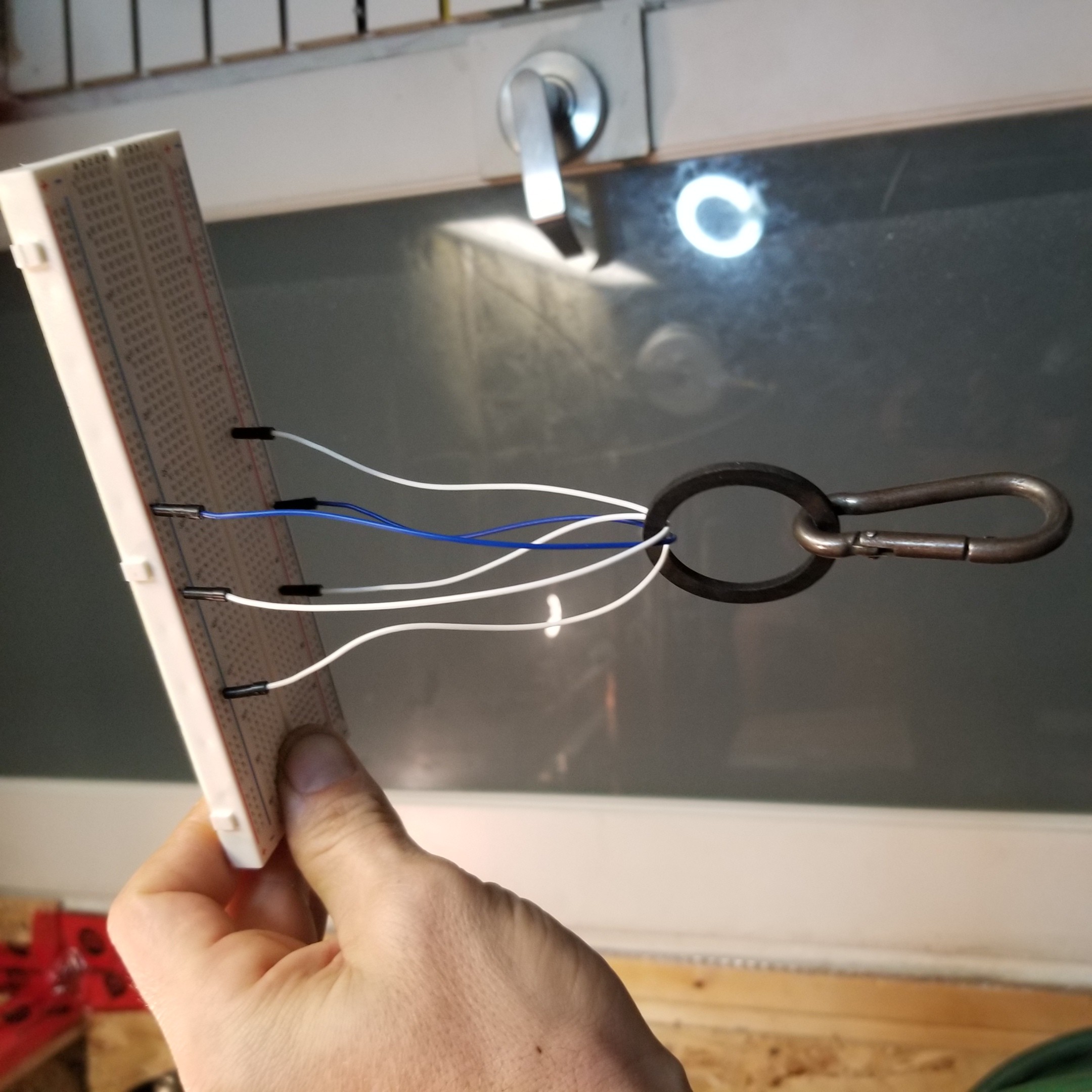
You could try something like thisenter image description here Using six of the anchor points that you have outlined you can easily make adjustments to the load-bearing points by adjusting three lengths.

Test your anchor points

Start with your best anchor points. Fix a rope in place at a comfortable height for you to hold on to and do a pull-up and then bounce a little. Use your judgment to figure out the quality of the anchoring. I often mount things over people's heads and the best of field test I've come up with is to hang off an individual anchor effectively quadrupling the load it would possibly see.

perhaps this is a more accurate representation of what you needenter image description here

Once you have one or two decent anchor points the rest are just insurance. with this setup always make sure the two best anchor points are together.

Joe Fala
  • 6,414
  • 10
  • 36
0

A cordelette is probably overkill. When I am building a climbing anchors with a cordelette, I am trying to create a SERENE anchor:

  1. Solid/Strong
  2. Equalized
  3. Redundant
  4. Efficient
  5. No Extension

Incorporating your 7 points makes your anchor solid (hopefully). Equalized is also important to you since you want to distribute the load. Redundant if one point fails, the whole anchor does not fail. There is a big difference between a total failure at 2 feet and 2000 feet above the ground. Efficient refers to how long it takes. If it takes you an hour to build an anchor, you get to drink more beer. If it takes a climber an hour to build an anchor, they are not going to get to the top and will end up drinking less beer. No extension means if an anchor point fails that the master point does not move (as this could drop a climber over the edge or something else bad).

With this in mind I would create a loop between 6 and 7 and run it through the master pint carabiner. If either point fails, they both fail, but it will be equalized (and even handle slight shifts). I would also run a loop between 4 and 5 and the master point and another between 1 and 3 and the master point. I would then make a single loop between 2 and the master point.

StrongBad
  • 713
  • 2
  • 11
  • 28