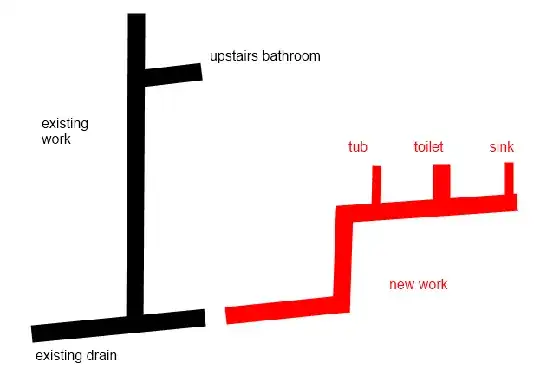
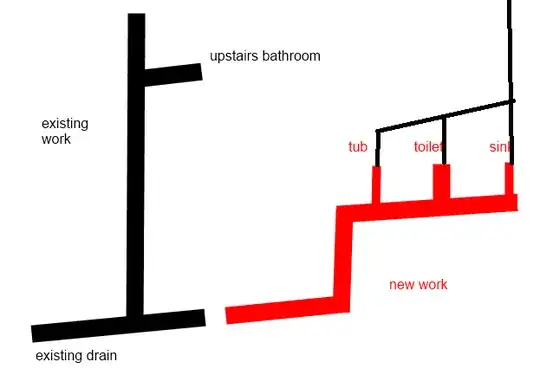
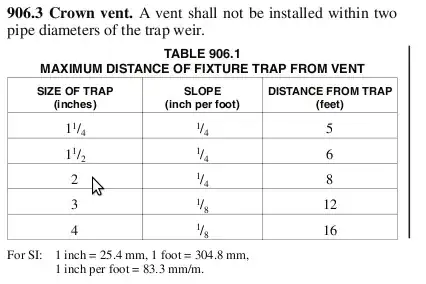
I would like to clarify a few things regarding this question and the provided answers.
As others have stated, you will definitely need to provide additional venting for the fixtures within this new addition, the existing vent will not suffice. Others have recommended providing individual vents for each fixture and then combining them in the ceiling to one common vent. While there is nothing wrong with this solution, it is inefficient and would be more costly.
I'm not a licensed plumber in your state or country, (I am in Canada) I have reviewed your state's plumbing code. You are allowed to vent these fixtures with what is called a wet vent:
SECTION 909 WET VENTING
909.1 Horizontal wet vent permitted. Any combination of fixtures within two bathroom groups located on the same floor level is
permitted to be vented by a horizontal wet vent. The wet vent shall be
considered the vent for the fixtures and shall extend from the
connection of the dry vent along the direction of the flow in the
drain pipe to the most downstream fixture drain connection horizontal
branch drain. Only the fixtures within the bathroom groups shall
connect to the wet-vented horizontal branch drain. Any additional
fixtures shall discharge downstream of the horizontal wet vent.
Source: 2006 Virginia Plumbing Code, Chapter 9 (starting at the bottom of page two)
This is possible because drainage systems are size so that the drain lines do not run full of water. The bottom portion is where the water runs and the top portion allows free air movement. (In the case of vertical pipes, water "clings" to the sides of the pipe as it moves in a spiral, this leaves the centre of the pipe open for air movement.)
In Canada, one of the rules to wet venting is that the water closet must be the last fixture connected to a wet vent, that is no other fixtures are allowed to be connected downstream of the water closet. This reason is that when the water closet is flushed it could "choke off" the wet vent of any downstream connections. I did not see any requirement for this in your code, however all of the sample drawings provided in Appendix N showed the water closet as the last fixture with the exception of Figure N4: B. Horizontal Wet Venting (page 4) which shows a shower connected downstream of the water closet.
Here are two isometric diagrams showing how your bathroom could be wet vented:
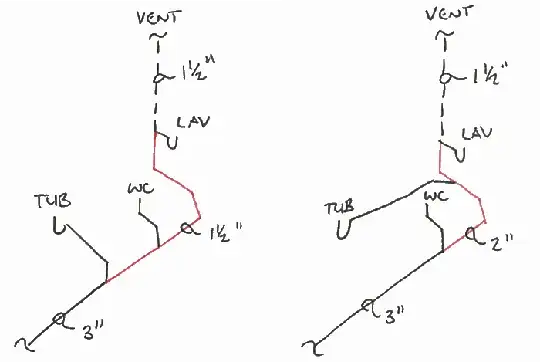
The one on the left shows the tub connected downstream of the water closet. The drawing on the right shows the water closet as the last fixture connected to the wet vent (this is how we would do it in Canada).
In both drawings, the red line represents the portion of the system which would be considered the wet vent. The dashed line represents the dry vent. As you can see, wet venting eliminates a lot of the vertical piping and saves on fittings as well. Please note that you should have a clean-out installed on the vertical section of pipe before the lav's fixture arm (located in the wall). This will allow for cleaning of the branch line.