6

A room in an old farmhouse, formerly a porch, now enclosed, has floors made of tongue and groove lumber. I need to repair those floors by replacing at least some sections of floorboards - somewhere between 10-30 linear feet.

Each original floorboard has a 3 1/4 inch face, and is 3/4 inch thick. I'd guess it was milled from 1x4s, removing 1/4 inch sections to make the tongue and groove. Tongue and groove each have 1/4 inch measurements.

All the off-the-shelf replacements I've found have a 3 1/8 inch face, and are something less than 3/4 inch thick. Close but no cigar.

If I use the off-the-shelf replacements, that's going to leave a big gap, and I'd rather not. Since I can't find off-the-shelf materials that match the original measurements, maybe I should try to fabricate replacements myself?

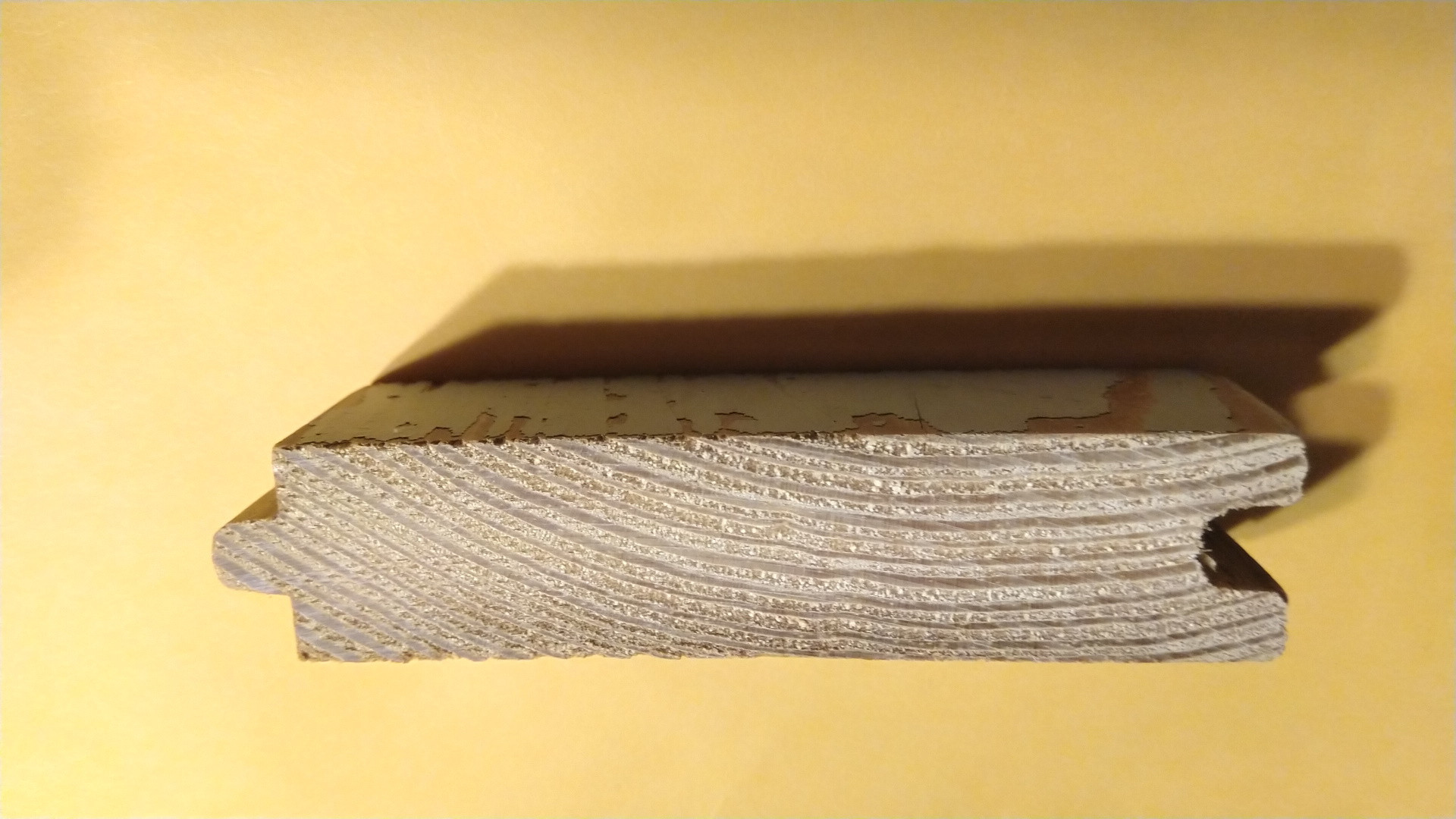
I have a table saw without dado, and I have a never-used router and small router table. I think I could take 1x4s and slice out the material on either side of the tongue on the table saw and make the groove with two passes; or I could try to use the router, which I have no experience with. Whatever I did would at best result in square sections, not the rounded sections in the original material. (See photo below.)

So, three questions:

  1. Are off-the-shelf replacements for these available and I just don't know where to look? Ideas?
  2. Will square sections instead of rounded ones be adequate?
  3. Table saw or router?

Original sample

royal
  • 169
  • 1
  • 6

5 Answers5

7

Given your expressed degree of inexperience, unless you particularly want the learning experience (good, but pay close attention to coming out the far side with all the fingers and eyes you had going into it, and don't forget the earplugs for preserving your hearing, too) your best bet is to take a sample around to a custom millwork shop, which can likely do the job easily.

Aside from the "never used" aspect of your tools, the quaint belief that there's 3-3/4 inches of lumber in a 1x4 is concerning regarding how much of a learning process you have ahead of you for the DIY route. You MIGHT be able to get 3/4" thickness from 4/4 hardwood, but you often need 5/4 to be certain (fortunately you only need the one side to be good, which improves those odds - leaving the backside not completely planed is OK) and you'll definitely need 4-1/2 inch width to have 3-3/4 inches to work from. A "modern 1x4" in S4S condition (surfaced, i.e. planed flat, 4 sides) is typically 3/4, or even 11/16 thick (13/16 if you get a really super supplier) by 3-1/2 wide.

If you choose the learning experience, expect to make some bad boards, especially at first, and again when you get overconfident. That's part of the experience, and the only way to get experienced is to do it, learn from it, and do it some more while remembering what you learned when you screwed it up. But do try really, really, hard to make sure that your learning experiences don't involve trips to the Emergency Room.

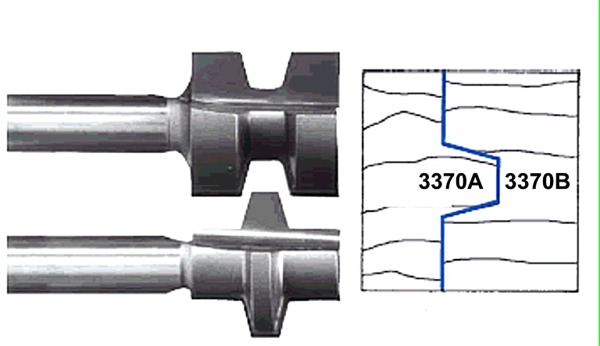
Square- section T&G can be difficult to assemble. This is a set of routerbits that cuts a wedge-shaped profile (which has implications for "fixed size" that should be obvious) - I have also seen more rounded profiles, but am having no luck finding a set of router (or more commonly, shaper, but you don't have one) bits to cut those at the moment.

For the limited amount you need, you could just sand sharp edges off the tongues. You could also cut the square tongues to a rounded profile with a cove bit and a fence on the router table.

Whiteside TG router bits image from carbide processors website

Ecnerwal
  • 235,314
  • 11
  • 293
  • 637
5

There are places that sell items from old houses that have been deconstructed. One is "Restore" I think is affiliated with Habitat For Humanity. They or other places like that will likely have the flooring you need. It will match closer in color and texture so it blends in with your existing floor better than anything off the shelf. Newer wood will sand and take stain differently.

The main thing to watch for when purchasing used flooring material, is that has been sanded on possibly many times. Look at the groove side down the lengths of the pieces you are going through and make sure the lip on the top side of the groove is as thick, if not thicker than the bottom lip.

I am not affiliated with Restore or Habitat For Humanity

Jack
  • 38,117
  • 2
  • 30
  • 66
1

Finding an off the shelf will be hit and miss. Fabricating your own would probably be your best bet. Since you have a table saw, and I'm assuming you know how to use it, I'd invest in a dado head just to make the job easier. Making a few passes with just a saw blade would work fine too. Square sections will work. Good luck and have fun.

JACK
  • 89,902
  • 21
  • 80
  • 214
1

A few points from central Europe (not sure how they translate to NA, customs and norms may be different):

 Thickness

  • While 21 mm would be a more standard thickness for groove and tongue floor boards, 19 mm (3/4") is sufficiently common to get it. Though maybe not if you do not just need some softwood but a particular type of wood.

  • These floor boards are meant to be grinded a couple of times before they have to be exchanged. Thus, your now 19 mm boards may been 21 (23, 27 or whatever usual thicknesses are in NA) mm boards.

  • In order to allow more grinding, the groove and tongue are usually not in the middle but towards the lower side (in the middle at end of life after several rounds of grinding):

       +-------------------------+                     
       |                         |                   +-------------------------+
     --+                       --+                 --+                       --+
    |             new         |                   |  several grindings later|
     --+                       --+                 --+                       --+
       +-------------------------+                   +-------------------------+
    

    What is important for you is that the tongue and groove are at the proper height.

    Your photo looks either much-ground or upside down - or it is an opticall illusion that the upper part looks smaller than the lower part. (Of course, the boards may be upside down in your floor - these things happen)

Width

  • 80 mm (3 1/8") width is rather narrow, typical widths here start from about 10 cm (96 mm).
  • However, width is comparably unimportant for repair: as it's groove and tongue, you'll anyways have to take out everything till the bad section.

    You can then rearrange the repair so that it results in new boards spanning the full width (length) of the room. If the repair is sufficiently small to need just one length of new board, you're fine because you then use whatever wider board of the correct thickness you can get and saw it off to the appropriate width.

cbeleites
  • 351
  • 1
  • 5
0

With a set of tongue-and-groove bits, your router would make this a fairly quick job. enter image description here

brhans
  • 7,241
  • 3
  • 28
  • 42