1

Will the top of this barrel come off in such a way as to be usable as a lid? It seems to be melted/glued on to be an integral part of the barrel, so I'm guessing the only option is to saw it off.

enter image description here

EDIT:

SolarMike's idea of using a broomstick is excellent, and that worked to place my fitting. However, because I had drilled the hole through the bottom where the thickness of the plastic has significant variations, it wouldn't seal. I even bought a Uniseal, which seems to be a fine product, but it still didn't seal.

I pondered how to put the fitting in a hole drilled on the side of the barrel, hoping the plastic would be more even there, and considered how to plug the hole on the bottom.

Then an idea dawned on me which seems obvious in retrospect: flip the barrel, drill a hole in one of the caps that's already fitted and threaded. A little pipe joint compound was all that was needed on the threads, and a gasket around the fitting.
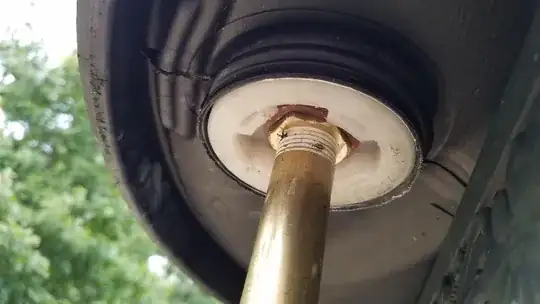
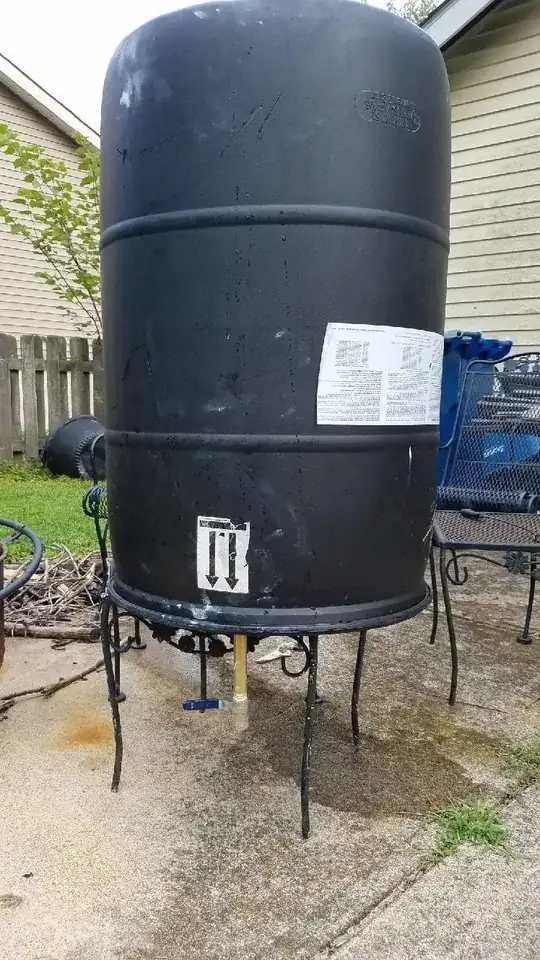
enter image description hereenter image description here

Don Branson
  • 151
  • 2
  • 10

3 Answers3

4

Then, based on your comment that you only need the lid as a dust cover, I would cut around the top of the wall as close to the lid as possible.

Once separated then remove any excess on the lid to leave a slight taper to help the lid "sit" neat after.

I have cut these with a hand wood saw before, a bit boring but the plastic usually cuts well. I found a jigsaw too "bouncy" and it would not be close enough to the lid.

I did 8 of these barrels for my parents for rainwater and made a tool on a broom handle to hold the nut & washer to screw the fitting into so the two original holes were fine, no need to take the top off... Depends on what your fitting is I suppose...

Solar Mike
  • 30,038
  • 2
  • 34
  • 69
2

These barrels are used for highly corrosive materials and the lids are not designed to come off like the normal 55 gallon ones with the screw ring.

JACK
  • 89,902
  • 21
  • 80
  • 214
1

To get the bulkhead assembly in place, I used a long string with a washer tied to it for weight. Drop the washer down and through the hole you drilled for the spigot, pull it out, and step on the damn thing. Then, thread your "interior half" of your assembly onto the string the correct direction, threads to outside, and pull that threaded end through the hole. Screw the female side of the assembly onto the male threads.

Joan
  • 11
  • 1