16

(edited with additional info re. header)

We are removing a couple of load bearing walls as part of renos in our home. The engineer specified a W8x21steel beam to replace the load bearing wall. The floor joists are 2x10.

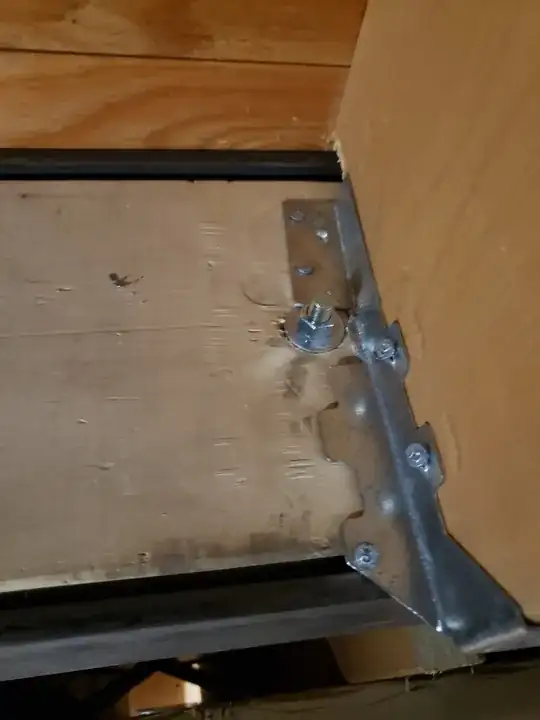
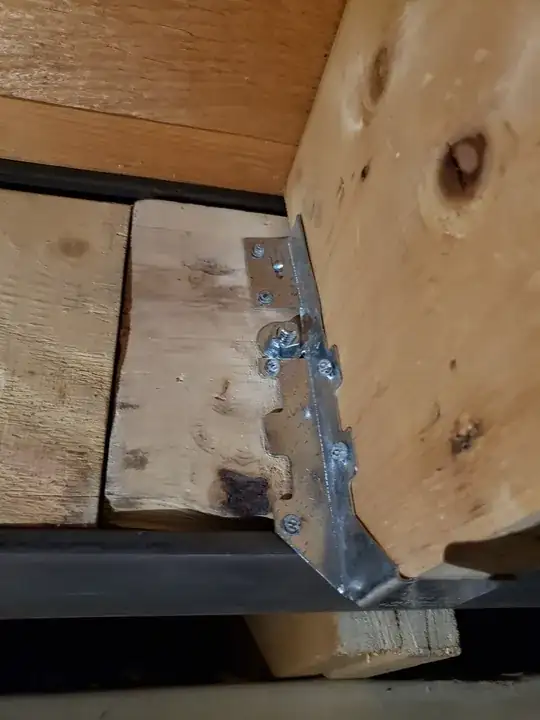
It appears the contractor put the bolts into the "header" (not sure if that is the right term) in the wrong place (not enough space between bolt and joist). He then cut some of the joist hangers to make them fit. This has been done in at least 4 out of the 10 hangers that he has installed.

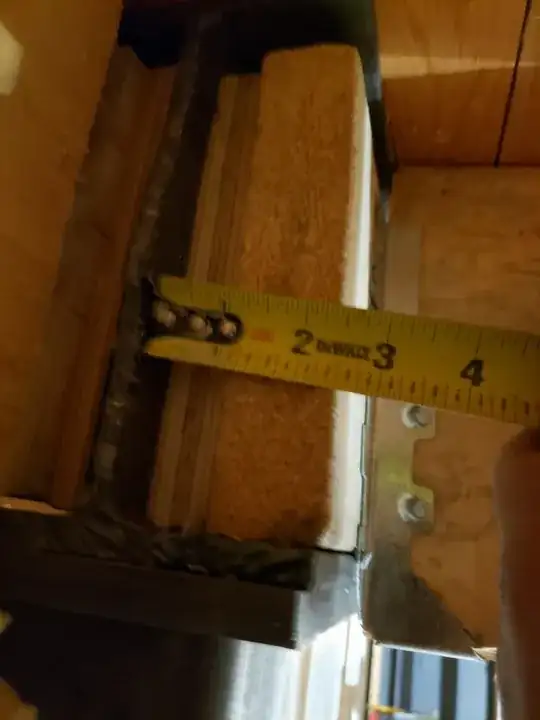
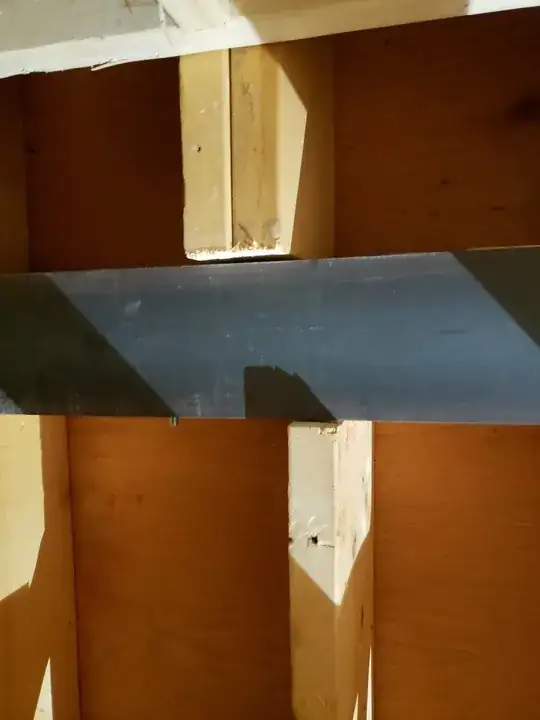
Also, he used 2 1/2" layers of plywood plus a 2x8 as a header in the flange of the steel beam (see picture below)

Questions:

  1. Has the integrity of the hanger been compromised by him cutting out part of the material?

  2. The hangers he used are Simpson Strong Tie LUS210Z. Are these the correct hangers to use in this application since the beam is shorter than the joist by 2" and the lowest nail barely goes into the wooden

  3. The contractor has used N10dhdg Simpson nails (.148" x 1 1/2"). Are these the right nails to use? The Simpson website specifies that common 10d nails (.148" x 3") are used with this hanger.

  4. Is the use of plywood + 2x8 as the header acceptable or should this be replaced with a single 3x10 cut to size? Should we use 2 1/2" nails into the header?

Per the simpson website https://www.strongtie.com/facemounthangersssl_solidsawnlumberconnector/lus-hus-hhus-hgus_productgroup_wcc/p/lus.hus.hhus.hgus

"With 3x carrying members, use 0.162" x 2 1/2" nails into the header and 0.162" x 3 1/2" nails into the joist with no load reduction. With 2x carrying members, use 0.148" x 1 1/2" nails into the header and 0.148" x 3" nails into the joist, reduce the load to 0.64 of the table value."

Is this ok and if not any suggestions on how it can be corrected?

Thanks! Added view of header inserted into i-beam enter image description hereenter image description hereenter image description hereenter image description here
user105375
  • 601
  • 2
  • 12
  • 25

5 Answers5

26

No, it’s not acceptable to cut the joist hangers.

In order to determine if they are acceptable anyway, there are several issues to review: 1) hangers are notched, 2) incomplete nailing, 3) wrong nails, 4) wrong install of fasteners (angled install in lieu of perpendicular to joist installation).

1) Notching the hangers voids the allowable stresses published by the manufacturer for each hanger. However, if the hanger is not stressed to its maximum allowed, the engineer can review and determine if it meets the “intent”.

2) 3) and 4) Published allowable stress values are determined by installing the hanger in the proper manner, as per the manufacturer’s installation instructions. When the fasteners are not correct, missing or improperly installed, then the designer will need to make a determination that they meet the required design loads.

If you have a Building Permit, I’m sure the Building Official will want the designer to provide “certification” that the installation is acceptable. If it’s not acceptable, it will need to be re-done.

So, if the correct wood ledger was used and it’s impossible to comply with the drawings, the engineer will need to redesign...and pay to have it done correctly. You can see that the engineer will do everything possible to accept the lack of nailing fully into the ledger/beam...but will probably want the hanger replaced (at the contractor’s expense).

It’s important to you to get this corrected or have the engineer provide the certification, because if there’s a problem in the future, they’ll both point the finger at each other and you’ll be in court forever.

Lee Sam
  • 23,527
  • 3
  • 21
  • 45
13

Cutting a hanger is never a good idea and should never be accepted. It's shoddy workmanship by the contractor and there were numerous solutions that could have avoided this (starting with properly measuring the bolt locations for the web blocking). However, the main issue is that these hangers are not designed for this application. They are meant to hang joists from solid sawn wood beams, typically 2 or 3 2x members in a laminated configuration. These can also go into a ledger designed for them, but web infill blocking. Is not typically designed for this for a number of reasons. Simpson makes top flange mount hangers that should have been specified instead (whether by the engineer or the contractor) and either welded or pinned to the steel since that is the actual structural member. Sounds like your contractor should be to blame for most of this in my eyes, although the engineer certainly could have done better as well.

Source: licensed architect

9

You never cut hangers unless they are made for cutting. Call in a inspector who will advise you or the engineer who done the design but don't under any circumstances let this go without it being checked. As further down the line could cost you a lot of money.

5

I'm familiar with that double shear hanger. Nails should be 10d 3" for the cross nailing and 10d 3" or 10d 1-1/2" depending on single or double 2 x material rim joist/header. However it's the wrong hanger for the application. It might have been ok if the rim/beam/header was constructed differently. And never modify a framing hanger other than bending those meant for it. The through bolts should have been laid out to avoid conflict with the joists.

Rick
  • 74
  • 1
4

It appears to be horribly wrong. The hangers should not be cut but this is the least of your worries. For starters, the steel I-beam is shorter than the joist it's intended to support. The bolts connecting the wood header to the i-beam are undersized. The wood headed bolted to the I-beam is shorter than the joist it is intended to carry.

There are a few ways to correct this:

  1. You can use Simpson's top mount joist hanger and use the I-beam to support the joists. This would require gaining access to the top of the I-beam by removing the subfloor (and any finished floor) above.

  2. Depending on the condition of the wood header inserted in to the I-beam you may be able to add another header to the one you have. The new header should be the same size as the joist, and must be laminated and bolted to the I-beam with no less than 3/4" diameter bolts spaced 2' apart in a top and bottom pattern to prevent splitting. Keep in mind that the bolts are carrying the load of the joists and must be strong enough for this. After this is done, install the face mount Simpson hangers. Use Simpson #10 x 3" screws where you can drive through both the original header and the secondary header. Otherwise, use Simpson's #10 x 1½ screws.

  3. If you're able to get to a lumber yard, you may be able to get a 3" x 12" wood joist and use this in place of the header that's affixed to the I-beam. You would have to notch a section of the 3 x 12 joist so that it can fit into the I-beam while still keeping the 12" width on the outside of the I-beam. The 3 x 12 must be bolted the same way as in option 2 above and the perpendicular joists can be face mounted with the same screw detail as in option 2.

There's one or two other options but these three should be the least complicated to achieve.

Hope this helps.

wallyk
  • 12,399
  • 3
  • 24
  • 51