When I drill into concrete, stone or similar materials - a lot of dust gets scattered. I realize this might sound like a newbie/trivial question, but - how can I avoid this? Both dust getting on me, and even more importantly - into the air people breath and onto furniture and other items?
Asked
Active
Viewed 9,696 times
12 Answers
32
Vacuum near the point of drilling
Have someone to stand next to you with the nozzle of a (running) vacuum cleaner, and position it very carefully near the where the drill bit enters the wall. Preferably - under the drill point facing up, so as not to "compete" with gravity. Most of the dust should be caught by the vacuum cleaner.
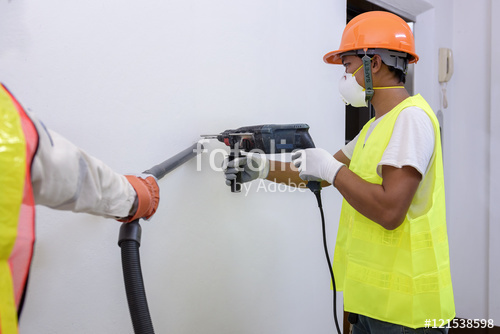
Down-sides to this solution:
- If you're not careful, the vacuum cleaner nozzle/attachment could touch the spinning drill bit and be harmed (and these parts tend to be expensive beyond their actual production cost).
- This still misses some dust (more if we're not careful and precise with the positioning and the angle).
- You can't always get someone to help you with drilling.
- Sometimes there isn't enough room for both people or for both the nozzle and the drill bit.

einpoklum
- 3,145
- 4
- 25
- 42
30
Get it wet!
When drilling or cutting stone, using water to cool the bit will help cut faster and smoother and prolong the life of the bit. When drilling in the wet hole, you don't need a special drill because all of the electrics are safely away from the water. When using a saw or grinder, one made for wet cutting is recommended.
Of course, using water also means zero dust. You have some dirty water to clean up, but nothing at all goes into the air. I've cut granite countertops in place using a wet saw and plastic and had no dust in the house at all - just some dirty water splatter.


20
In addition to the halved tennis ball trick, when drilling walls, I usually use Post-It notes. Take one sheet, fold it horizontally away from the sticky side, then stick it to the wall just below the hole you're drilling. The fold will open up just a bit under its own weight. As you drill, the dust will accumulate in this fold - once the hole is done, simply throw the Post-It note away together with the dust - and get another one for the next hole.
Something like this:
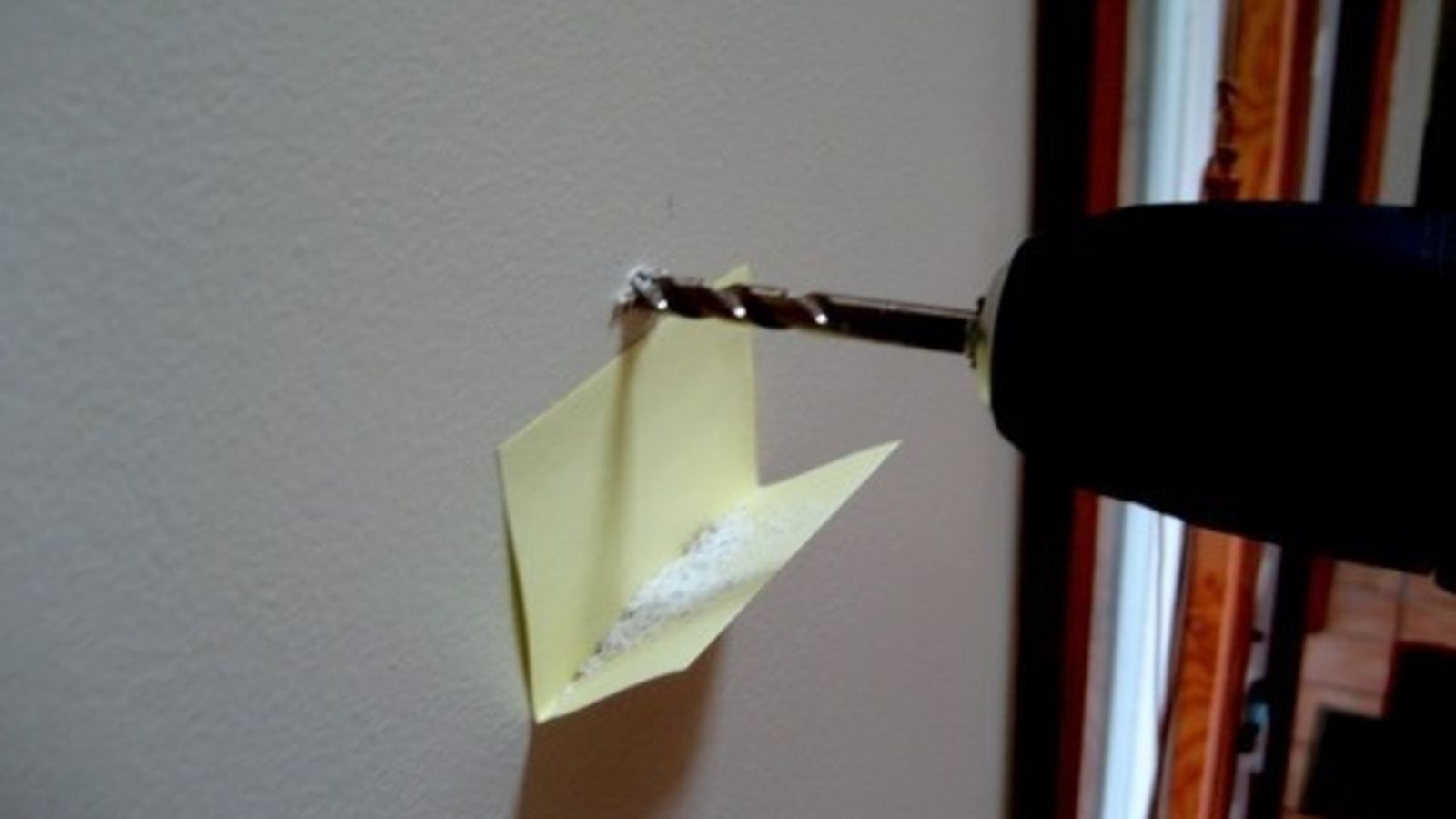 Image from https://lifehacker.com
Of course, this is not going to work when drilling into the ceiling.

Aleks G
- 469
- 5
- 18
13
I am using this tool (Kärcher DDC 50). You put the drill through the hole on the right, and the battery-driven vacuum not only sucks the dust into the storage container but also sucks the entire tool onto the wall, making this a hands-free operation. Careful with wallpapers - sometimes the suction is too strong and you might see some creases afterwards.
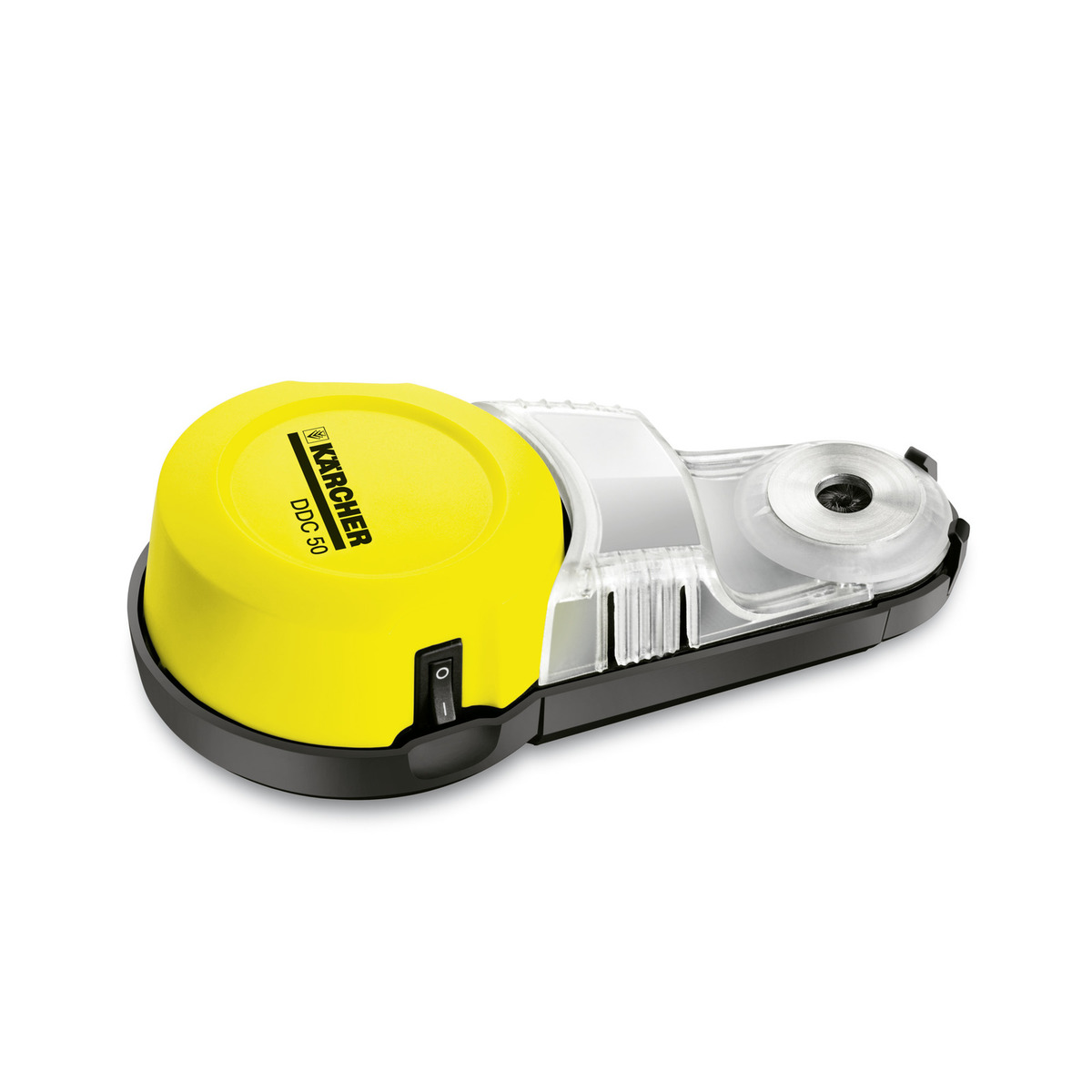
As you complained about not seeing the hole before: Usually, the drill is long enough to pull the tool back until the drill is aligned. Otherwise, you might need a small pilot hole.

mrks
- 231
- 1
- 2
10
Squirt bottle
Wet the wall area just as you start, then as soon as the bit is seated, use one hand to squirt a small amount of water at the hole in frequent intervals. This will assure the stuff comes out as mud.
The point of the squirt bottle is to allow you to tightly regulate the amount of water, so you aren't adding any more water than needed to do the job.
Use a sponge and bucket of water at intervals to keep the mud contained.

Harper - Reinstate Monica
- 313,471
- 28
- 298
- 772
10
A combination of my "vacuum near drill point" answer and @mrks' mini-vacuum Karcher device answer: You can get a (hopefully) universal vacuum cleaner collector attachment for collecting drilling dust:
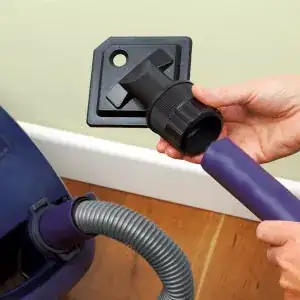
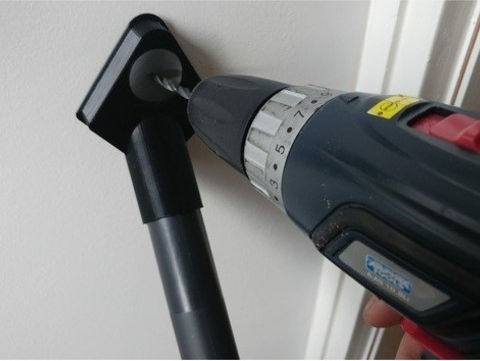
and then you can use your large independent vacuum cleaner; the head should attach to the surface you're drilling into by the force of the vacuum:
However, with many of these attachments, you lose visibility of the drilling point. I wonder why they can't make them using clear plastic.
einpoklum
- 3,145
- 4
- 25
- 42
8
Cut a tennis ball in half. Drill a hole in the center of one half, slide the half over the drill bit, line up the drill and bit to where the hole is to be. Slide the half ball up against the wall and start drilling. The half ball will catch the dust and keep it from getting into the air...

JACK
- 89,902
- 21
- 80
- 214
4
I saw a similar question asked somewhere (possibly here, though I'm not about to be that "marked as duplicate" guy), and I suggested the post-it method already mentioned. Someone else then commented that he worked in a clean-room environment where atmospheric dust was a problem, and they used shaving foam(!): Position the drill, spray some shaving foam on/around the drill tip, and go.
einpoklum
- 3,145
- 4
- 25
- 42

Gary McGill
- 195
- 1
- 2
- 8
3
I use a variety of methods (included in other answers) depending on the situation, but in most for about the past year I have been happy with the Milwaukee M12 HAMMERVAC.
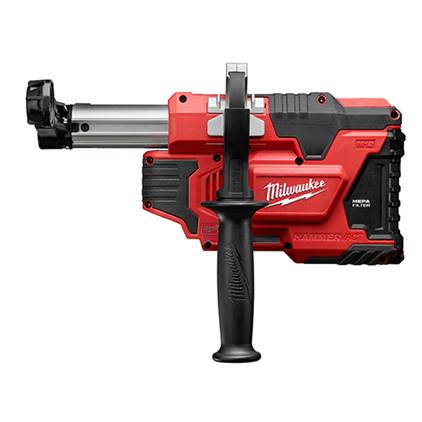
No additional cords or hoses, the depth stop is useful, good battery life and fits my tools from multiple brands (it comes with three different sized collars, but your mileage may vary).
Main drawbacks are that it does add to the size and weight of the tool.

YLearn
- 132
- 7
1
Just buy an appropriately-formed plastic device to put around the head of your drill.
A search on AliExpress yields a few promising candidates:
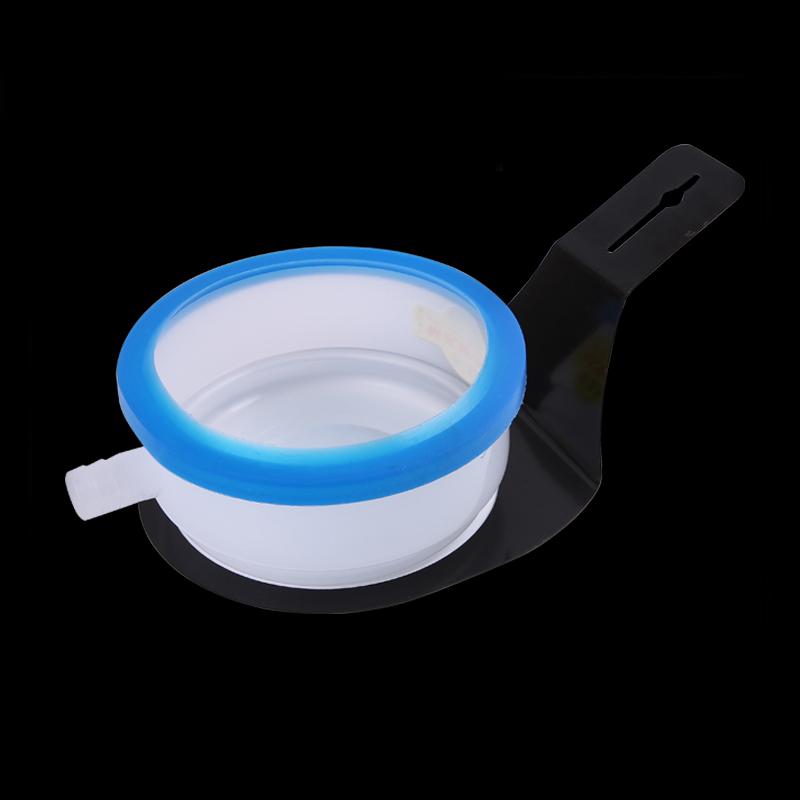
and
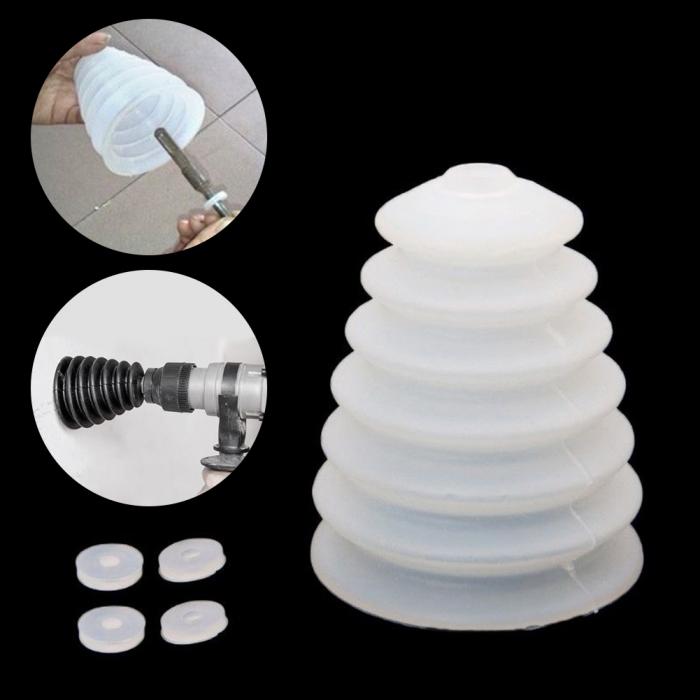
einpoklum
- 3,145
- 4
- 25
- 42
1
I use a small box that's taped to the wall just below the hole. (it's a mini milk box, about 1" by 8" by 6". The 1" gap for the dust to fall into catches pretty much all of it and the fact it's a box means you can drill more than one hole before it needs emptying. (just make sure the tape retains it's sticky each time you move it or it'll fall down, emptying dust everywhere!) I've sealed up the bottom of it with tape so nothing leaks out. Also, conveniently, the box of wall plugs I have sits neatly inside this cardboard one so it doesn't get squashed when put away.

Antony
- 11
- 1
1
There are also single-use products like the DustBubble. I used something like this a few years ago when drilling holes into walls in my home, and it worked pretty well.
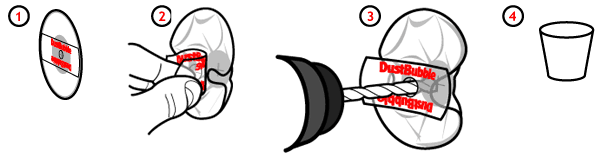
Pros:
- Easy for one person to use
- You can (pretty much) still see where you're drilling
- No need to get your vacuum cleaner out
Cons:
- Single use, so not environmentally ideal
- Single use, so you need to buy more when you run out of them
- Dust collection wasn't quite 100% (in my experience at least)

Richard Ev
- 183
- 1
- 4
- 13