2

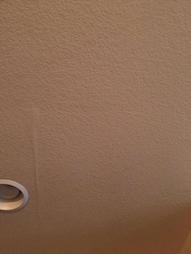
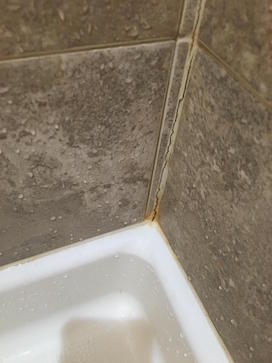
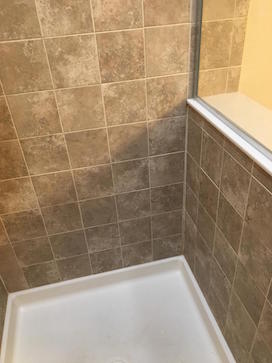
I just moved into a townhome (the shower itself installed at time of construction in 2011). I am concerned with cracking of the shower caulking with discoloration. I am going to rip out all the old caulking and replace it with 100% silicone caulk (edit: I think they actually may have put caulking over grout?), but I am curious what people think about what appears to be a bad tape job on the drywall on the floor below or if maybe the mark on the drywall could have been caused by water getting into the crack and seeping to the floor below.

I sprayed the crack to see if anything major was happening but the drywall appears to be the same and does not feel wet to the touch. The drywall just feels like the tape is loose (I'm not an expert at all, not even close). The shower is about 3 feet away from where the mark on the drywall is down below. Could the crack in the pictures have contributed to the drywall being the way it is? Can water travel 3 feet in between floors or would it have to be directly underneath. Any opinions on the drywall would be appreciated. Today I am going to the store to buy a fan and the proper tools to replace the caulking in the shower.

I am worried that from this crack in the caulking on the 2nd level shower has perhaps caused what I am seeing on the 1st level kitchen ceiling drywall.
enter image description here

enter image description here

enter image description here

Follow up

I don't know if my link was changed to embedded photos by an admin or if it just did it automatically but the best I can figure out right now is how to have imgur posts appear as a hyper link. I'm having difficulty figuring out how to just have an image appear in the post without a hyperlink. Apologies. The "Follow Up" hyperlink is the pictures after a brief time with a putty knife just to show a little more detail perhaps. Thanks for all the responses. I also appreciate the reputation points! It appears I need 15 to sign up, I really like this website and can't wait to sign up!

4 Answers4

1

Could the crack cause damage below on a lower floor?

Absolutely most tile is inside the pan but the backer whatever was used is outside so if the water gets past the grout it can run down. I would say that little bubble looks like a bad tape job because there are no watermarks I can see. As far as that is concerned I would use a t pin or hat pin and pole a tiny hole there just to make sure, if the spot was caused by water it may drip and that tiny pin hole can help it to dry out. As far as the hole next to a penetration we go for the best utilization of the Sheetrock the hole could be between 2 sheets as any pro will tell you.

The crack can be caused by the corner not being tied when I plan on installing tile I lock the corners (framing together so they will not flex and crack. If not tied calking is better than grout

Last I have pulled dozens of shower and tub shower surrounds that had no barrier. I have found some builders that glued the tile directly to water resistant Sheetrock, I have also seen many with backer board and nothing else. It is possible the crack originally was just calking I know contractors that regularly do this to try and prevent corner cracks. Clean it out the best you can and fill with calking, make sure to use a kitchen & bath type these have mold inhibitors. Good luck.

Ed Beal
  • 103,727
  • 4
  • 79
  • 158
0

Cracks (gaps) in either grout or sealant lead to often devastating consequences.

Everyone thinks, "It's such a narrow crack, it can't possibly be the root cause of my serious leak." But it is...

Think it through though. If a crack (gap) is just 0.1mm wide but occurs over a total of 1M in length then you a total of 100 square millimetres of gap. That's the same as having water literally pouring through the equivalent of an 11mm dia hole!

0

Yes this type of crack can cause water to seep behind the tile. What happens next depends if there was a waterproof membrane installed behind the tile or not, but you can't check for this without taking off the tiles. It depends on when the bathroom was built, when it became mandatory, and if the contractor was cutting corners or not, so personally I wouldn't assume there is one.

The corner grout joint in showers often cracks if the building structure is not rigid, for example in wood structure buildings. That's why it needs a silicone caulk joint, which will stretch without breaking.

You need to take the grout out of the joint, but don't insert a blade or anything sharp into it, as that would cut through the waterproof membrane behind the tile. I use a plaster spatula with rounded corners for this, but any metal implement with a rounded tip will work fine. No need to dig deeply, and certainly not deeper than the thickness of the tile.

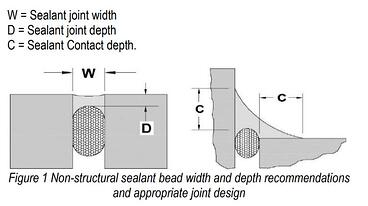
Once the cracked grout is removed you can clean it and apply silicone. If you want to do it right, insert a small foam bead into the joint before:

enter image description here

This prevent the joint tearing fro the back, and makes it a lot easier to replace in the future.

bobflux
  • 11,121
  • 29
  • 35
-2

No that crack cannot cause the shower to leak.

There is a waterproof layer somewhere behind the tiles if that has holes that would cause a leak.

the the mark on the drywall does not look typical of water damage, it looks more like a failed join. could be structural, could just be a bad mudslinger.

Jasen
  • 26,920
  • 1
  • 24
  • 46