To start off with, with any low voltage DC product like this, the product is only as good as the components. Fortunately you linked the Amazon page, and it has some HUGE photos, so we can identify the relay in question: Songle SRD-05VDC-SL-C. Let's go pull the data sheet, eh? What do we see?

Not a well-known and reputable brand of relays. All Kanji, without any simpler Hiranaga nor Katakana, means Chinese not Japanese. Uh oh.


Alright, well, if that's really true. cЯUus = the UL/cUL mark, and the funny triangle is TUV. Both NRTLs, note the ЯU mark is a component mark not a mains-rated equipment mark, but then, this is a component, after all.
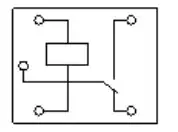
Well, that's good; that makes it a mechanical relay, which means we're guaranteed no weird GND-loop problems that you might have with silicon "relays".
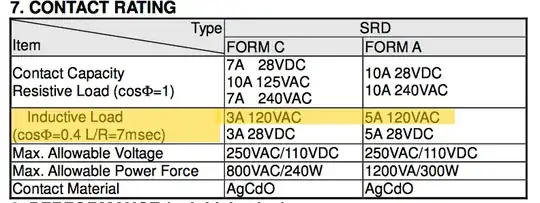
You're not switching resistors here; you're switching big fat contactors with coils. Coils have inductive kick, which will cheerfully arc across the contacts if you don't stop it. That's why you need to use the inductive rating. Now is 3 amps enough? Let's look.
The common furnace transformer is 40 VA @ 24V. That means its capacity is 1.6 amps. Realistically a contactor has to be reasonably under 0.5 amps for multiple ones to be able to be on at the same time. So it looks like a 3 amp inductive relay ought to be able to handle 0.5 amps. If you get burnout/welding/sticking of contacts, you may need to come up with a snubber to dissipate that inductive kick, noting it'll be an AC snubber.
Thermostats take R, and connect it to either G, W, Y, or other wires as called for by system design. As such, R goes to every relay, and G, W, Y, etc. go to a relay of their own.
Having 2 transformers in the system usually means they meet somewhere, with one wire of transformer 1 tying to one wire of transformer 2. It's perfectly possible for that connection to be out of phase, meaning the other lugs of the transformer are now 48 VAC apart. That can fry stuff if you're not careful.


