8

One of our showers has an intermittent leak, and I've figured out that it happens when the hot water heater is on. There's no expansion tank on the cold supply side for our hot water tank, so I'm guessing that the increased pressure while the heater is on is causing the leak.

I picked up a cheap water pressure gauge and measured the cold water pressure at a slop sink in the basement at 100 psi. Presumably that gets even higher when the water heater is on.

I had been thinking that an expansion tank would solve this problem, but now it seems like the water pressure is just too high in general. Do I need something else? Should I just repair / replace the shower faucet and leave the pressure alone?

EDIT: There's definitely no pressure-reducing valve inside the house where water service enters. Our water meter is outside near the street, under a small manhole cover. Might the PRV be in there as well? I couldn't find an obvious way to get into it, perhaps I need a crowbar or something? Municipal water service was installed at this property relatively recently; prior to that it was on well water.

EDIT 2: I've measured the cold line as high as 170 psi while the hot water heater is on. So clearly this is way too high.

My meter is by the street, under this cover (gloves for scale): enter image description here
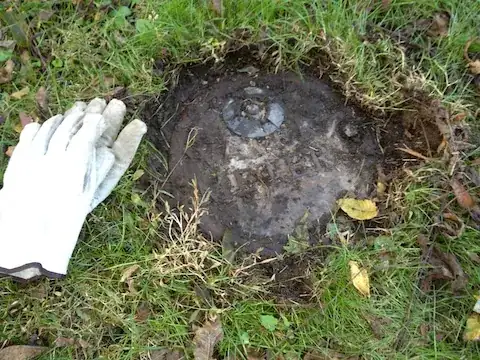
Is it possible there's a PRV in there? I couldn't pry the lid off with a screwdriver. Do I need a special wrench for one of those fittings to get in there? Am I even supposed to open that thing?

Hank
  • 14,213
  • 10
  • 46
  • 48

2 Answers2

7

If you are on a municipal system and have pressure that high, you quite likely already have a pressure reducing valve (PRV) installed near your water meter. The International Plumbing Code requires PRVs on any water supply over 80psi. If this is the case, your PRV may just need adjustment. As they age, the spring regulating the device's operation can soften. Or it could be faulty and need repair or replacement. If you do not have one, you need to have one installed.

If you are on your own well with a pressure tank, the pressure switch controlling pump off operation needs adjustment. Other types of systems should have similar arrangements to control pressure.

How to adjust a PRV. There is typically a bell shaped housing with an adjustment screw and lock nut on top. Loosen the lock nut and turn the adjuster counter clockwise a small amount. The adjustment can be rather sensitive. Operate the faucets and toilets in your house to allow the system to equalize to the new pressure setting. Take a new pressure reading. How much it changed will give you an idea how much more adjustment is needed. Typical water system pressures should be somewhere in the 40-60 psi range. Shoot for the high 50's.

If the PRV controls supply to a fire sprinkler system (it normally shouldn't), you will need to check with a fire supression professional to determine if and how much you can reduce the supply pressure.

If you do need a new PRV, check with your municipality, they sometimes offer rebates to help mitigate some of the cost.

bcworkz
  • 11,578
  • 21
  • 19
3

If your water pressure is always high, you need a PRV, as bcworkz suggests (+1).

If your water pressure increases significantly when the water heater is running, then you need an expansion tank. My suspicion is that newer meters being installed by municipalities (often for remote meter reading) include check valves. So people that never had this problem before might be experiencing it after their meters are replaced.

If you have high water pressure all the time, and it significantly increases when the water heater is running, then you need both (a PRV and expansion tank).

BMitch
  • 43,263
  • 15
  • 98
  • 204