4

I’m working on upgrading my shed in the backyard and I have some questions about the electrical wiring in the building.

The current state of the wiring in there is just sad. I have a main wire coming into the shed, going into a junction box and getting connected to another wire, then that wire goes basically to all the plug points and is all controlled by one switch.

Technical spec questions:

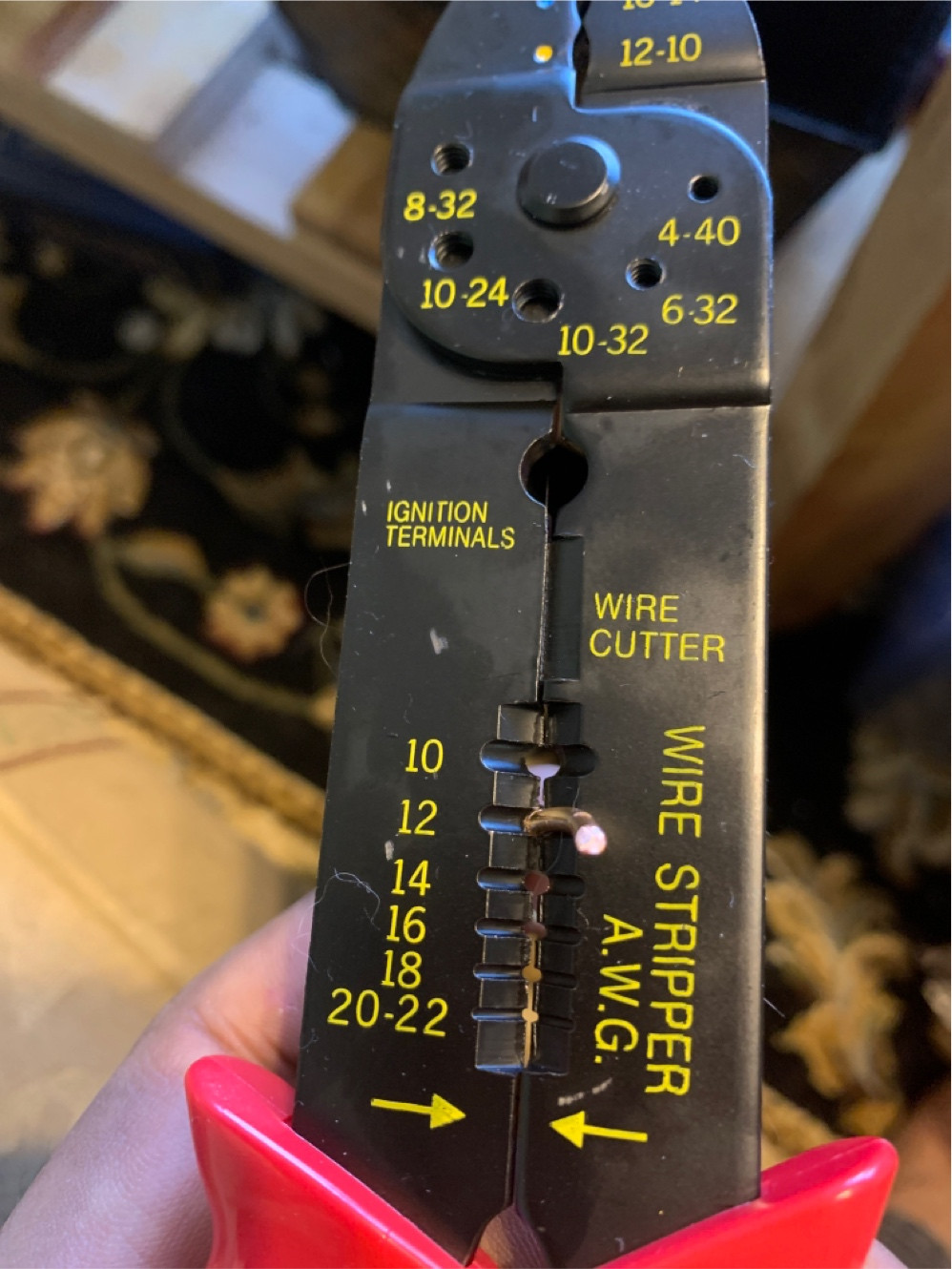
The wire is going underground for about 50 feet. I bought a wire cutter with the little holes to measure the gauge of the wire. The stripped copper goes into the 12 gauge hole almost perfectly.

enter image description here

Can I safely assume that the main wire going into the shed is 12 gauge then? Am I measuring the gauge of the wire properly? If this is the case, for a 50 feet run, how much amperage does a 12 gauge wire bring to the shed?

The charts I found online doesn’t even show this combination. I’m assuming this is not a wise setup but I bought this house at its current state and there isn’t much I can do about it.

The question I’m trying to answer is this: I want to put up a breaker box in the shed. A sub panel. I want the main wire to go into the breaker box and I want the breaker box to hook up 4 plug points and 2 switches. What breaker box/sub panel do I need to buy, given the input wire is like in the photo above?

Any guidance will be highly appreciated! I’m very lost.

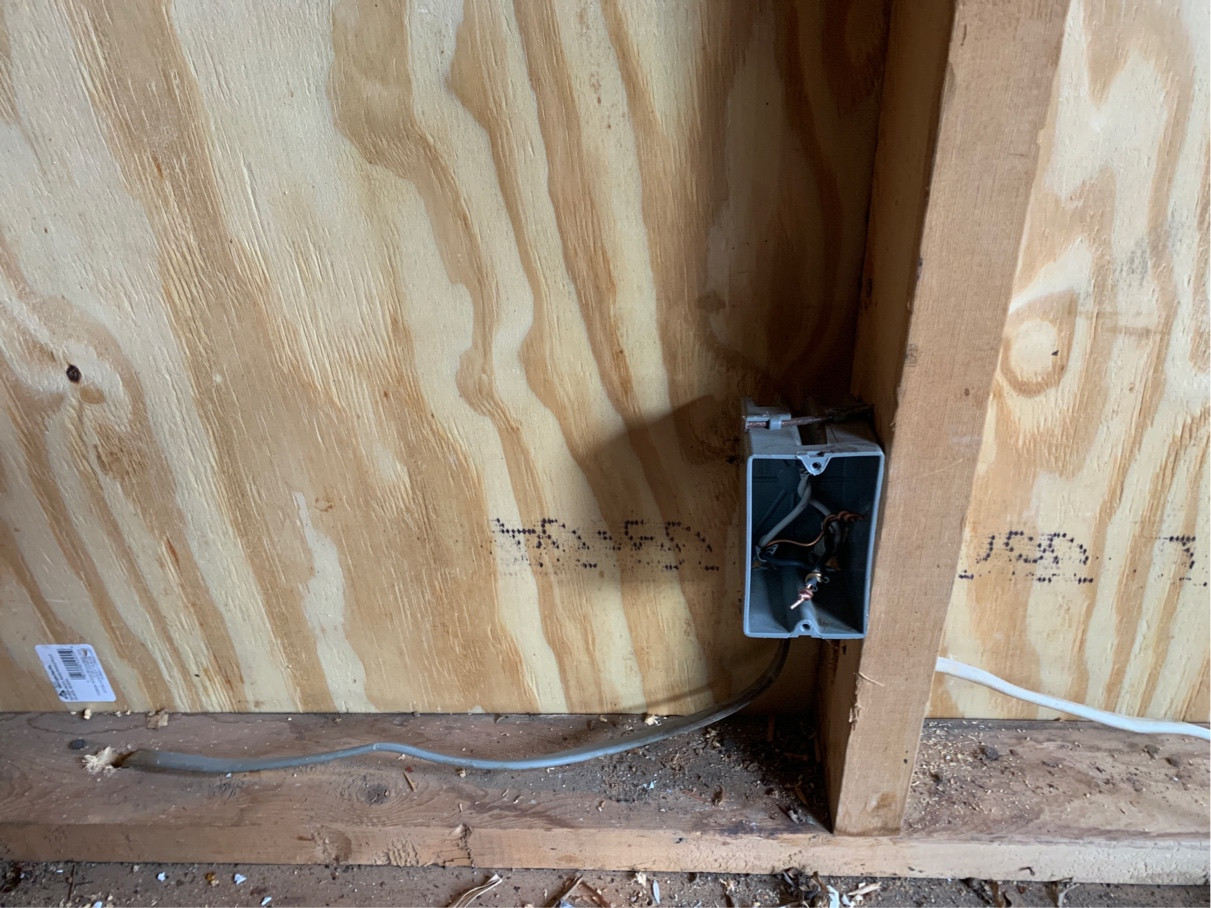
Junction(?) box: I might be using the wrong term here, but I think this is called a junction box?

enter image description here

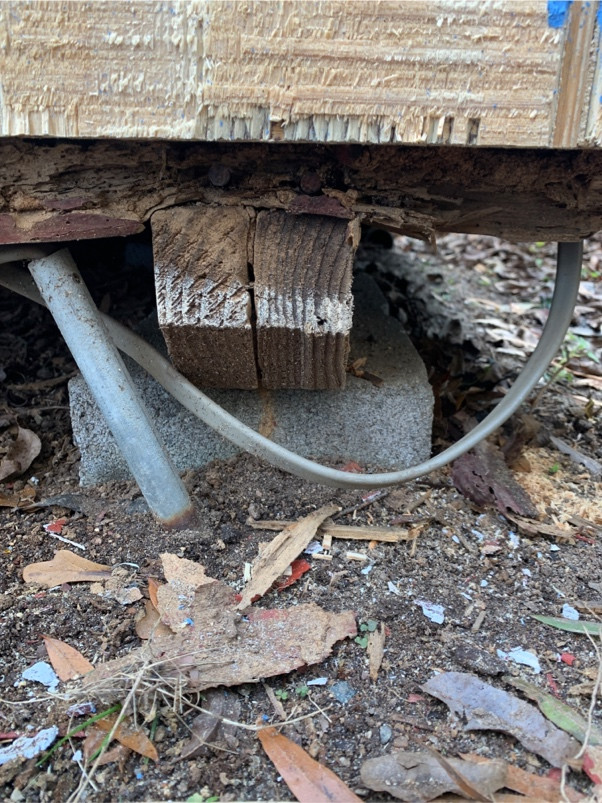
Cable going into the shed: there is a small piece of conduit coming out of the ground and the sleeve on the cable has no writing whatsoever.

enter image description here

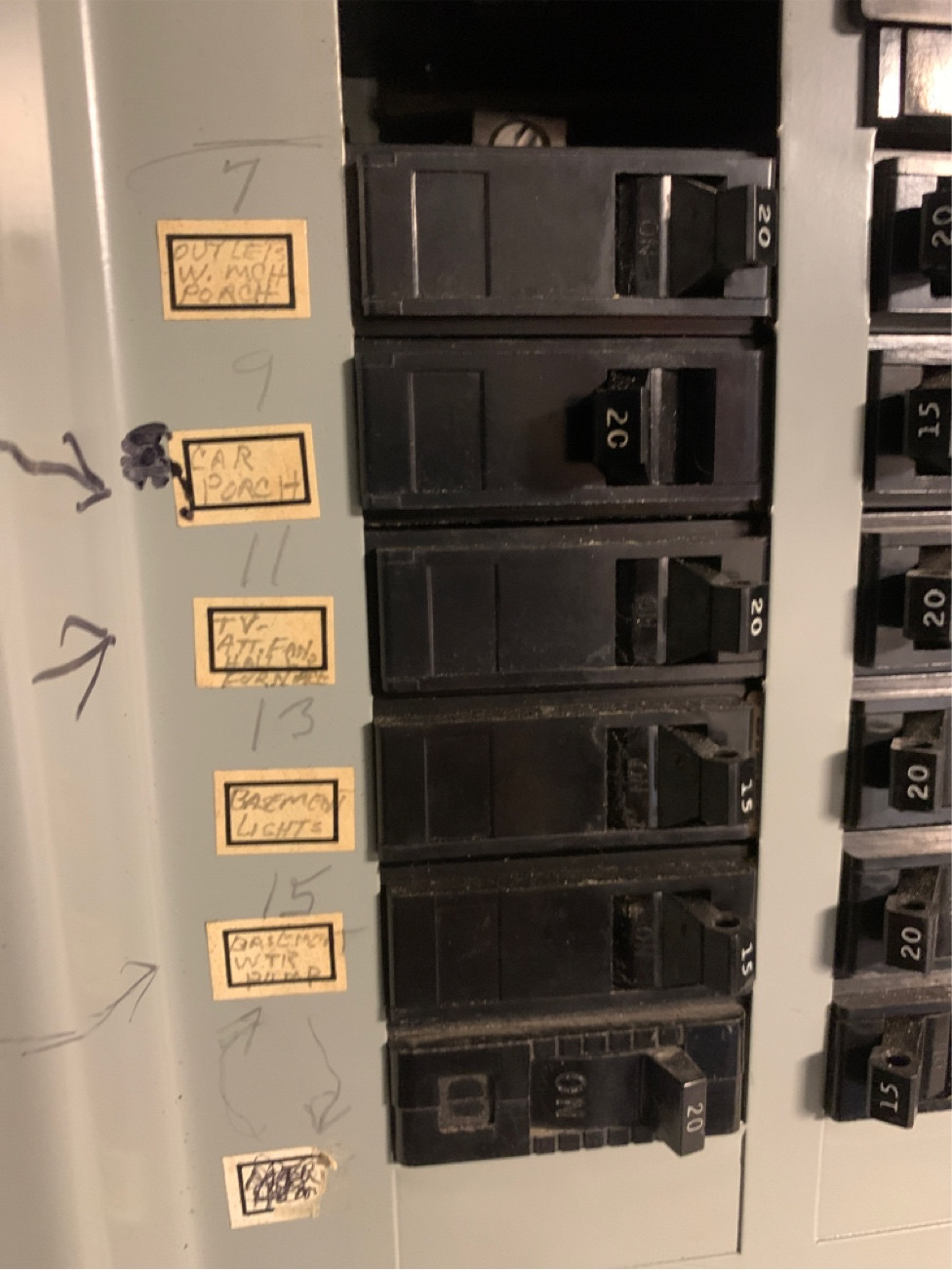
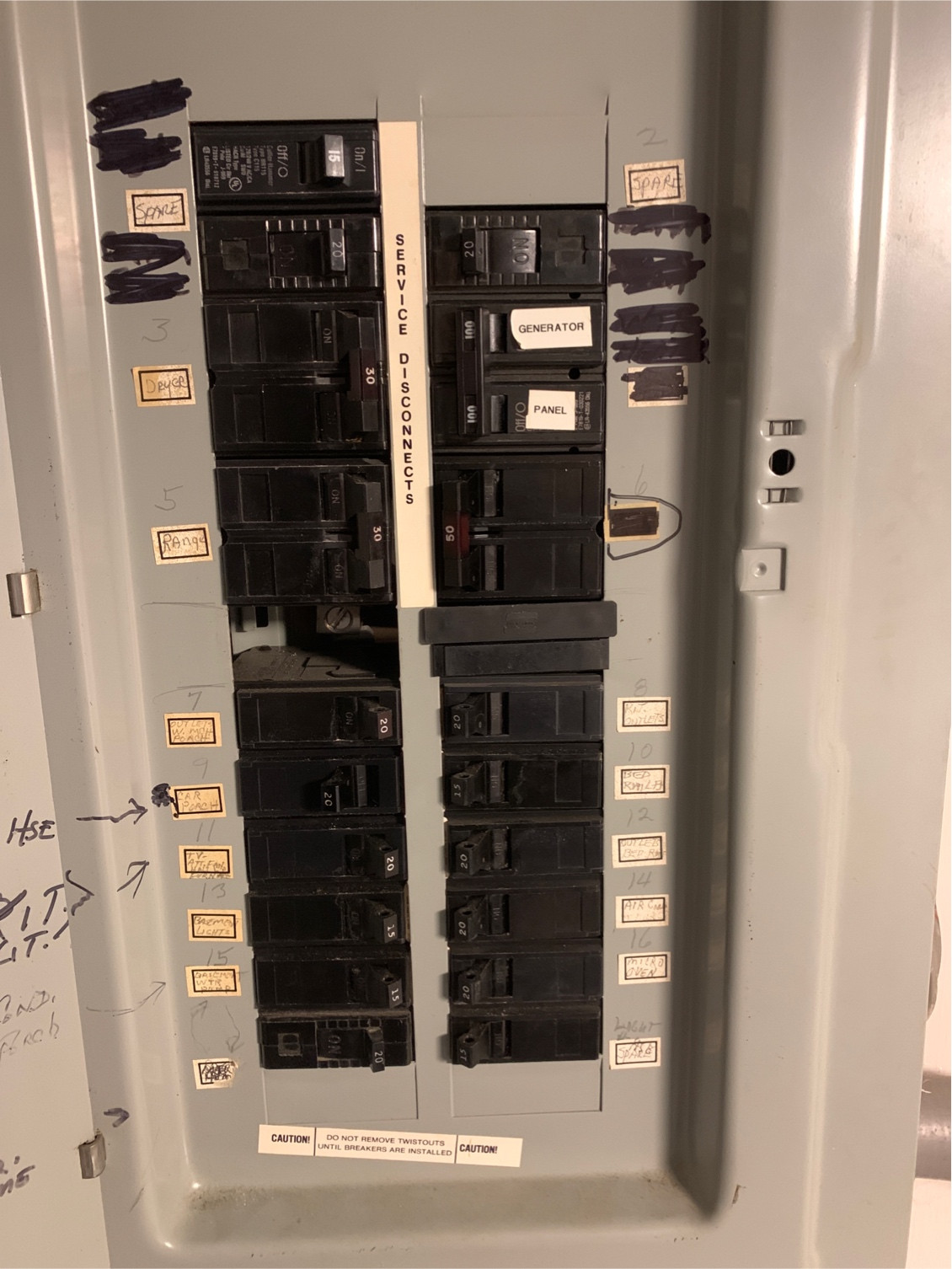
Breaker box from the house: the switch numbered 20 is the one going to the shed. I imagine you would’ve liked the pic without the top cover in the box but I’m not sure of what I’m doing, so I am kinda hesitant and scared to take the cover off

enter image description here

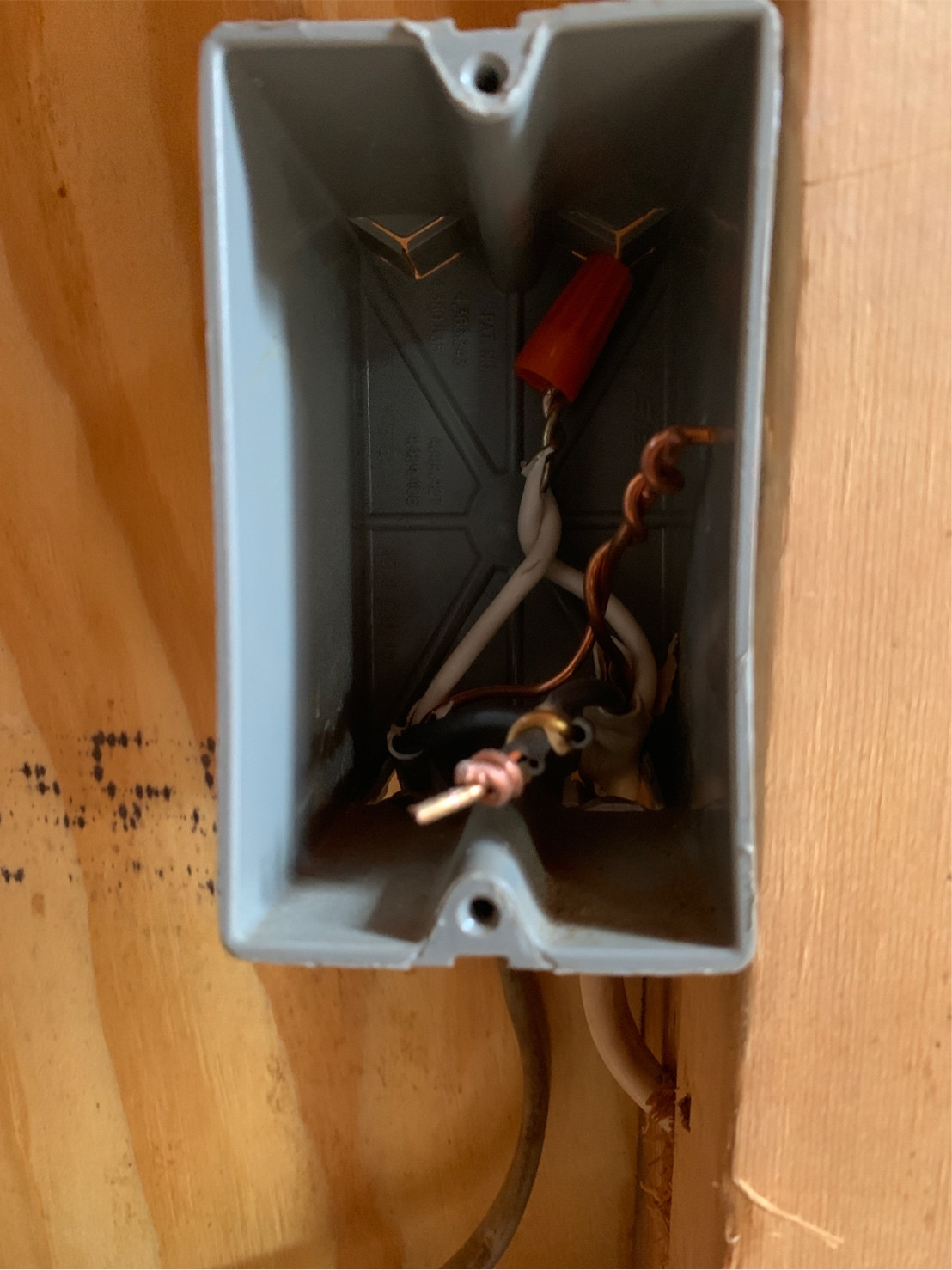
Close up of junction box:

enter image description here

Full breaker panel:

enter image description here

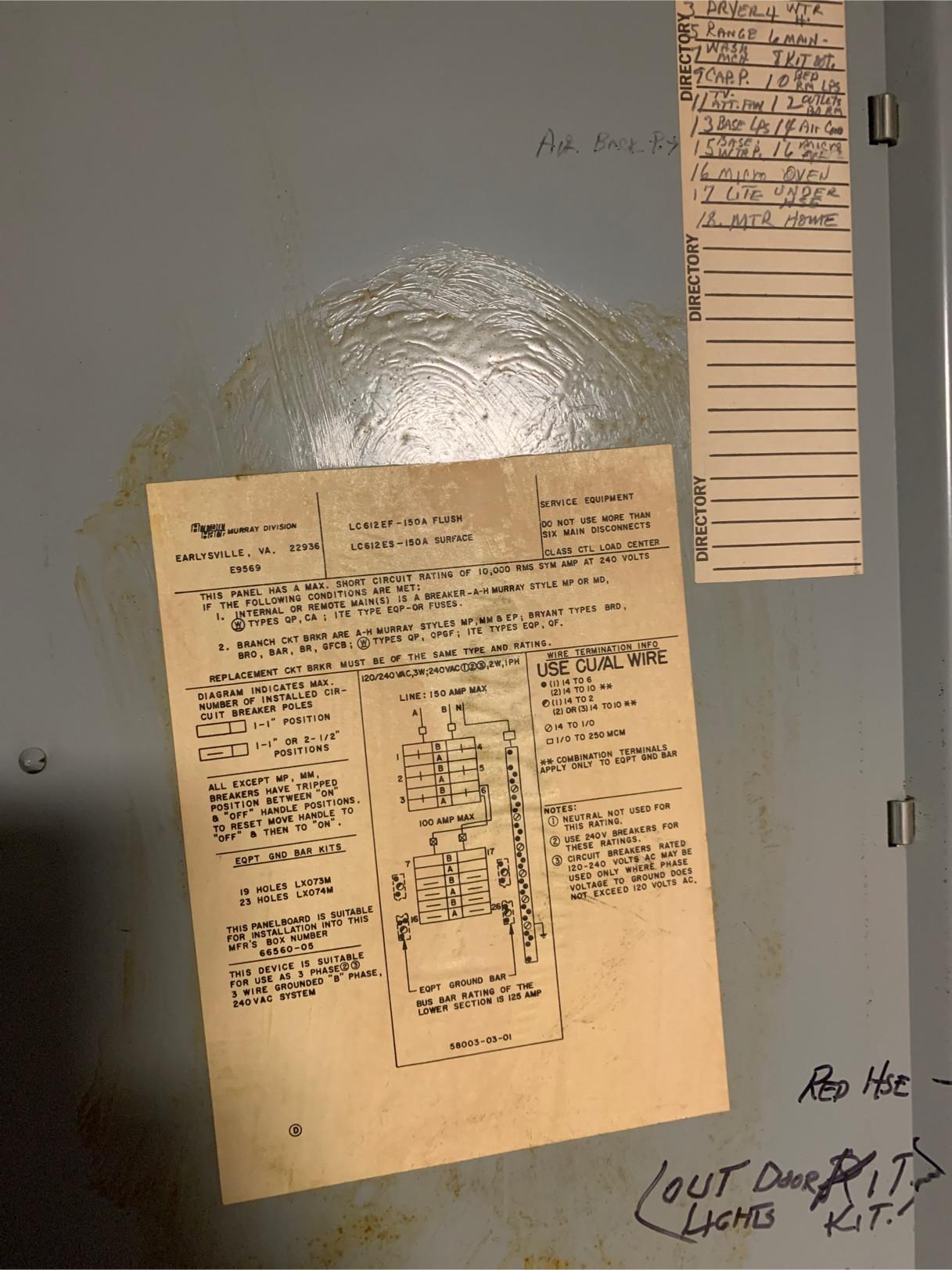
Instructions on the door:

enter image description here

Crazy Cucumber
  • 164
  • 1
  • 9

3 Answers3

4

If your ambition for the shed would call for more power when you can afford to fix things, put in a sub-panel with that in mind, not one limited by your 12Gauge (20Amps - depending on the exact wire you have, 120V or remotely possibly 240V, 2x120V) feed wire.

Assuming a 12 Ga 120V feed (white, black, bare or green) the breaker at the house should be 20A and GFCI (because I'm assuming the burial may be sketchy, among other reasons) and that is actually adequate protection for the whole circuit as it stands, IF that's how it's fed.

i.e. you can certainly put in a sub-panel with an eye to the future, but until you upgrade the feed to the shed, you don't actually need to.

General advice here is to go big on sub-panels. Among other things, small ones are not that much cheaper than big ones, and the "size" does NOT need to "match" the breaker feeding it, while having plenty of "spaces" to put breakers in is very useful, and tends to scale with "size" - so a 100 or 200A panel with 12-24-40 "spaces" might be perfectly reasonable even if you were only planning to run 50A to the shed. The "main breaker" in the subpanel will never trip in that case, but it DOES serve the useful purpose of being a local shutoff for the shed.

You may be perfectly happy with a smaller panel, given that your current ambitions are 4 receptacles and 2 (light?) switches, which would only be 6 circuits at most and perhaps as few as 2, but look at your options, costs, and any potential growth before going tiny.

For now, based on your wire, you only have 20A available, most likely 20A at 120V.

That's a way to measure the wire size, but the wire size should be imprinted on the jacket of the cable (or printed on individual wires that are not in cable, which does not appear to be what you are describing. If your conduit extends all the way, or you dig up the cable to put in one that does, that's what you might replace the cable with.) So you should be able to determine wire size just by reading the outer sheath.

Ecnerwal
  • 235,314
  • 11
  • 293
  • 637
4

Everything you have described fits with a single 12 AWG 20A circuit feeding the shed. That is OK, provided a few things are in order, but is not ideal. The 50' distance is not a problem - as far as voltage drop it can be treated as if the shed was just a room in your house.

  • Cable/Wire Type

Underground wire must be one a few very specific cable types or be individual wires run inside conduit (metal or plastic tubes).

If it is a cable, see if you can find any writing on the outside of the cable, which will tell us what kind of cable it is. Sometimes people have the wrong type of cable and it is a code violation and can lead to real safety issues.

If it is individual wires then you should have a 3rd wire for ground, unless the wires are run through properly connected metal conduit. Unlike cable, individual wires should have labels printed on each wire, which will tell us if the wires are the right type or not.

  • Breaker

If all wires involved are 12 AWG then this can be on a 15A or 20A circuit. If some wires are 12 AWG and some are 14 AWG then this can only be a 15A circuit.

  • GFCI

Receptacles in a shed should be protected by GFCI. That can be at the breaker or at a receptacle inside the house or at the first receptacle in the shed.

The problem with having everything on the shed on one circuit is not code, it is practicality. If a shed is primarily for storage then a single circuit for lights + occasional tool or charger usage is OK. But if you want to turn it into a workshop then you typically want to have more:

  • Lights - separate from tools so that a receptacle breaker trip doesn't turn out the lights
  • At least 2 circuits for receptacles for tools. That allow you to run two large tools or a large tool and a dust collector at the same time.
  • Additional circuits for heat, air conditioning, etc. depending on seasonal usage.

If you have conduit in place (last comments indicated PVC coming out of the ground, but that may or may not indicate PVC conduit for the full distance) then you can replace the existing wires with a set of 4 larger wires (hot/hot/neutral/ground) and install a subpanel. That opens up a world of possibilities and allows for GFCI protection in the shed (no need to go back to the house to reset).

If you do not have conduit in place, any upgrades will require replacing the existing cable with a larger cable. 12/3 cable will allow an MWBC for 2 x 20A, which will double your existing capacity. But if you go up to 10/3 or larger then you can put in a much more functional subpanel. Since proper direct-bury is not cheap and is limiting (to change again you have to trench again), conduit is worth considering.

Those are just he basics. I believe with a subpanel you will also need to have ground rods at the shed, which is not the case with a single circuit.


A little more based on the panel pictures:

You have a Rule of Six panel. That is supposed to mean "maximum of 6 breaker flips to turn everything off". However, you have 3 double-breakers (great) and 4 single breakers (not good). That is a total of 7. 7 > 6 = code violation. From a practical standpoint, that is kind of OK, because the top section (labeled SERVICE DISCONNECTS) has everything and in an emergency it would be "flip everything off in the top section". But technically wrong.

The design of the panel (that's where the diagram is critical) is that the middle pair of slots (one uncovered, one with a strange cover) are not used. Everything else in the bottom section is full. So if you do want to add a subpanel, the way to do it would be to move one of the single breakers from the top to the bottom, replacing the existing 20A feed to the shed. Then put in a double-breaker to feed to the shed. However, that would still leave you with 7 flips in a rule of 6. Two ways to fix that:

  • Move the 15A to the bottom. Replace the 2 20A in the top with a double-20A.
  • Replace one of the 20A breakers in the bottom with a double-stuff/tandem breaker, letting you move another one of the upper breakers to the bottom.
manassehkatz-Moving 2 Codidact
  • 139,495
  • 14
  • 149
  • 386
2

If the cable is 12 AWG the max breaker size is 20 amps , if the cable is in ground it should have a gray covering , possibly black that is what almost all the underground cabling has for colors. As using the strippers this is an accurate gauge the smaller size 14awg is noticeably smaller and only rated for 15 amps, the larger size is 10 awg and rated for 30 amps. If you don’t have a panel in the garage 20 amps is the max it may be a multiwire branch circuit that allows for 2 20 amp 120v circuits.

Ed Beal
  • 103,727
  • 4
  • 79
  • 158