1

I've seen conflicting info on this. Some sources say that you shouldn't insulate your foundation wall because moisture can get trapped between the insulation and the wall. Others say that the insulation is a key part of the encapsulation.

I'm assuming that the answer to which is right is: "it depends." So my question is, what does it depend on?

I'm assuming that some of the factors that matter are:

  • Is the sill plate sealed?
  • Will there be a dehumidifier?
  • Will the HVAC system be serving the crawl space at all?

What else matters?

brentonstrine
  • 1,080
  • 6
  • 21
  • 37

3 Answers3

1

I think the accepted best practice is now to make crawl spaces part of your conditioned living area. Insulate and allow air to circulate like you do in the rest of the house. The best practice for new builds may not work depending on your construction details. You should check out how Risinger Homes out of Austin Texas handles it.

https://www.youtube.com/watch?v=5n4K170f56I

Fresh Codemonger
  • 14,459
  • 3
  • 24
  • 57
0

The answer is no, as the crawl space is not a living space, the moisture changes have no detrimental effect on the foundation material; unless the chemical contents in the air/water are too high, or the space is enclosed and utilized as utility room. Also note, installed over wet/moist surface, the insulation may cause more headaches (mold, hidden cracks), and wouldn't stay long anyway. You may consider apply waterproof on areas that in direct contact with soil, to protect the foundation from surface water runoff.

r13
  • 3,422
  • 1
  • 8
  • 23
0

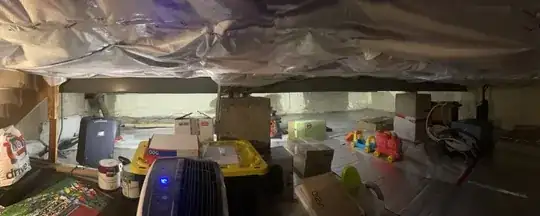
This is what I did. Covered the floor with 6mm plastic from Home Depot and spray foamed the walls. Added a dehumidifier that will pump out water through the vent. enter image description here

Grame Smith
  • 9
  • 1
  • 5