12

I'm interested in replacing an existing outlet (in a wall that's finished with drywall) with a two-gang duplex (four outlets total), using an "old work" box. This box is located in the garage, so I'd like it to be sturdy.

Is it considered good practice to screw the box sideways into the stud?
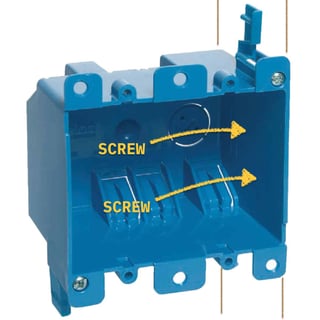
Photo and diagram of old work 2-gang box

It appears from another forum that this might violate electrical codes. In the US, where I am:

NEC 314.23. Supports. (B) Structural Mounting. (1) Nails and Screws. Nails and screws, where used as a fastening means, shall be attached by using brackets on the outside of the enclosure, or they shall pass through the interior within 6 mm (1/4 in.) of the back or ends of the enclosure. Screws shall not be permitted to pass through the box unless exposed threads in the box are protected using approved means to avoid abrasion of conductor insulation.

If so, is there a better way to support old work boxes than just relying on the drywall tabs?

Machavity
  • 26,498
  • 8
  • 44
  • 100
whiskeychief
  • 943
  • 1
  • 10
  • 30

4 Answers4

33

Junction boxes are not to have additional holes drilled into them for securing them to studs. The box you have shown can be used and mounted fairly secure if you take the time to cut the opening as small as possible so the box tabs have more drywall to support it.

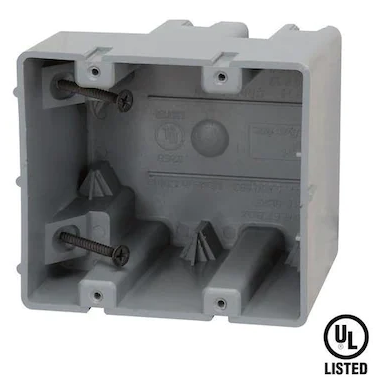
A better solution is to get a box similar to the one below with side screws already included to be mounted to the stud. This is the same size as the old work box but allows you to screw directly into the stud.

enter image description here

Southwire Smart Box 2-Gang Adjustable Depth Device Box #MSB2G

whiskeychief
  • 943
  • 1
  • 10
  • 30
JACK
  • 89,902
  • 21
  • 80
  • 214
17

No, and you'll crack the box if you try.

Plastic is not metal. Plastic boxes are flimsy things. They don't have any strength except where they have been gusseted specifically to have strength.

This means you cannot simply add mounting points anywhere on the box. The box will simply crack there, either from the violence of a self-drilling screw, or the stress points from a drilled hole clamped by a tightened screw, or the physical strain of people wrestling plugs out of a stiff socket.

No, boxes of this type are made to be used exactly one way: placed in a drywall hole exactly the size of the provided template, and then clamp to the drywall using the ears on the outside and the swinging clamps on the inside. You are required to use that box that way, or not at all. NEC 110.3(B).

I quite agree "to the drywall" is a bad deal and will not withstand ordinary stresses of wrestling a 3-prong socket out of a new, quality (stiff) receptacle socket. I'd find another way.

Try steel

If you want to 'freestyle' mountings like this, it's time to move over to steel boxes. Steel has the strength to allow you to drill holes where you please and use them for mounting screws. Steel is also vastly superior for every purpose of a junction box (containing arc fires, not melting and letting a fire spread, causing loose or arcing wires to trip the breaker).

It even self-grounds switches and certain receptacles, so one less wire to wrestle. Really, in a metal box you attach your cables' ground wires to the box first and push them all the way into the back of the box, and never touch them again.

For old work, you need to select a box that has internal cable clamps. This will also have fewer knockouts which makes it easier to find hole locations.

Harper - Reinstate Monica
  • 313,471
  • 28
  • 298
  • 772
7

When I've had to do this, here's how I did it: Cut the new opening to size for the new box. Then cut 2 pieces of 1/2" plywood about 2" x 8" or so. Apply glue and slip them into the opening above and below with the edges aligned horizontally with the edge of the top and bottom respectively. Clamp in place until the glue dries. Then use a box with plaster ears (flanges) using them to screw into the sheetrock/plywood. I'd mark the holes and pre-drill because if you bust out the plywood, you'll have a real mess on your hands! It's a little time consuming, but turns out a great result.

Your other option of course is to simply cut out the sheetrock from one stud to the other, install a new work box and repair the sheet rock, but I don't think that's what you want to do.

BTW, just screwing inside the box to the stud will result in a lot of movement of the box when plugging in and unplugging cords. Don't ask me how I know this! Did it once, never again.

George Anderson
  • 23,304
  • 5
  • 41
  • 83
3

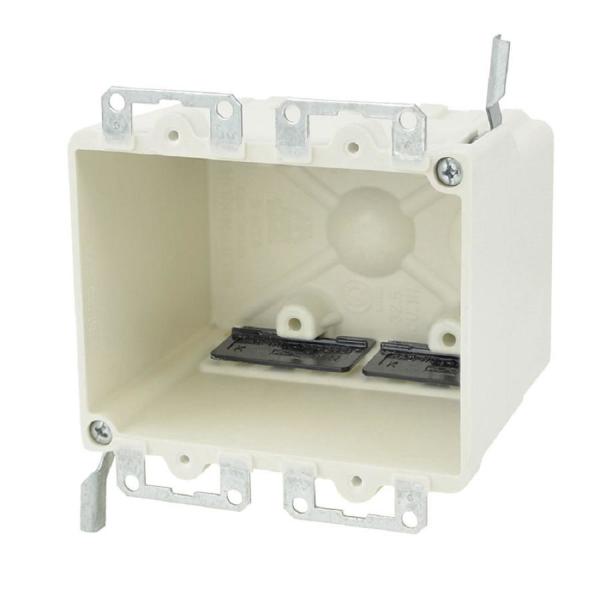
Buy a better box if you want it to be sturdy. Partially because there's a shortage, I couldn't buy a 2-gang old work plastic blue box like the one you pictured in the question. Nearby, there was a much pricier fiberglass box that came with metal tabs.

Fiberglass old work box

Not only will that box grip anything, it doesn't warp at all. The next step up from there would be a metal box, but that might require clamps and other things to get the wire safely in (plus you need to bond metal boxes).

Machavity
  • 26,498
  • 8
  • 44
  • 100