6

How much load can this garage loft handle?

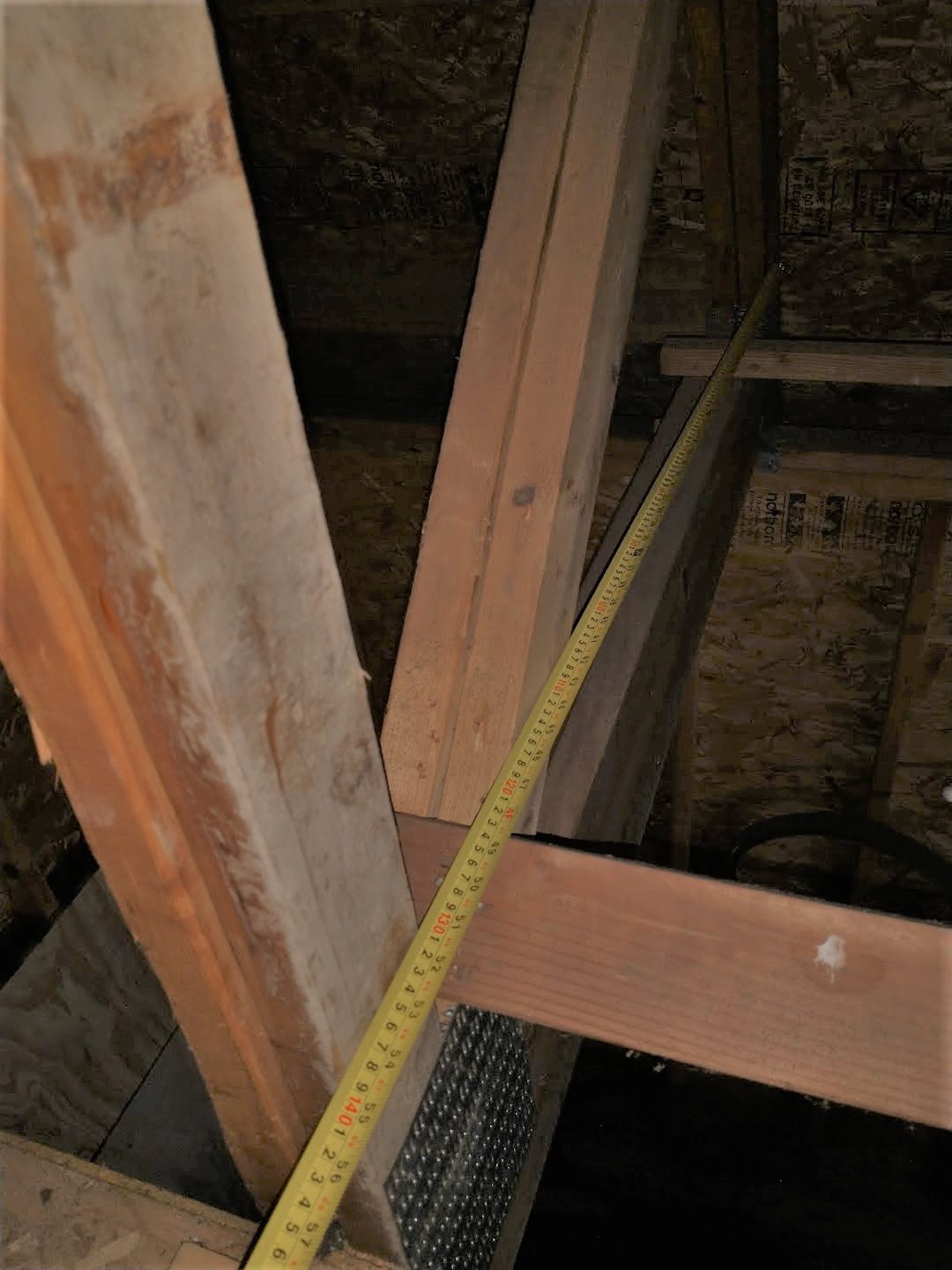
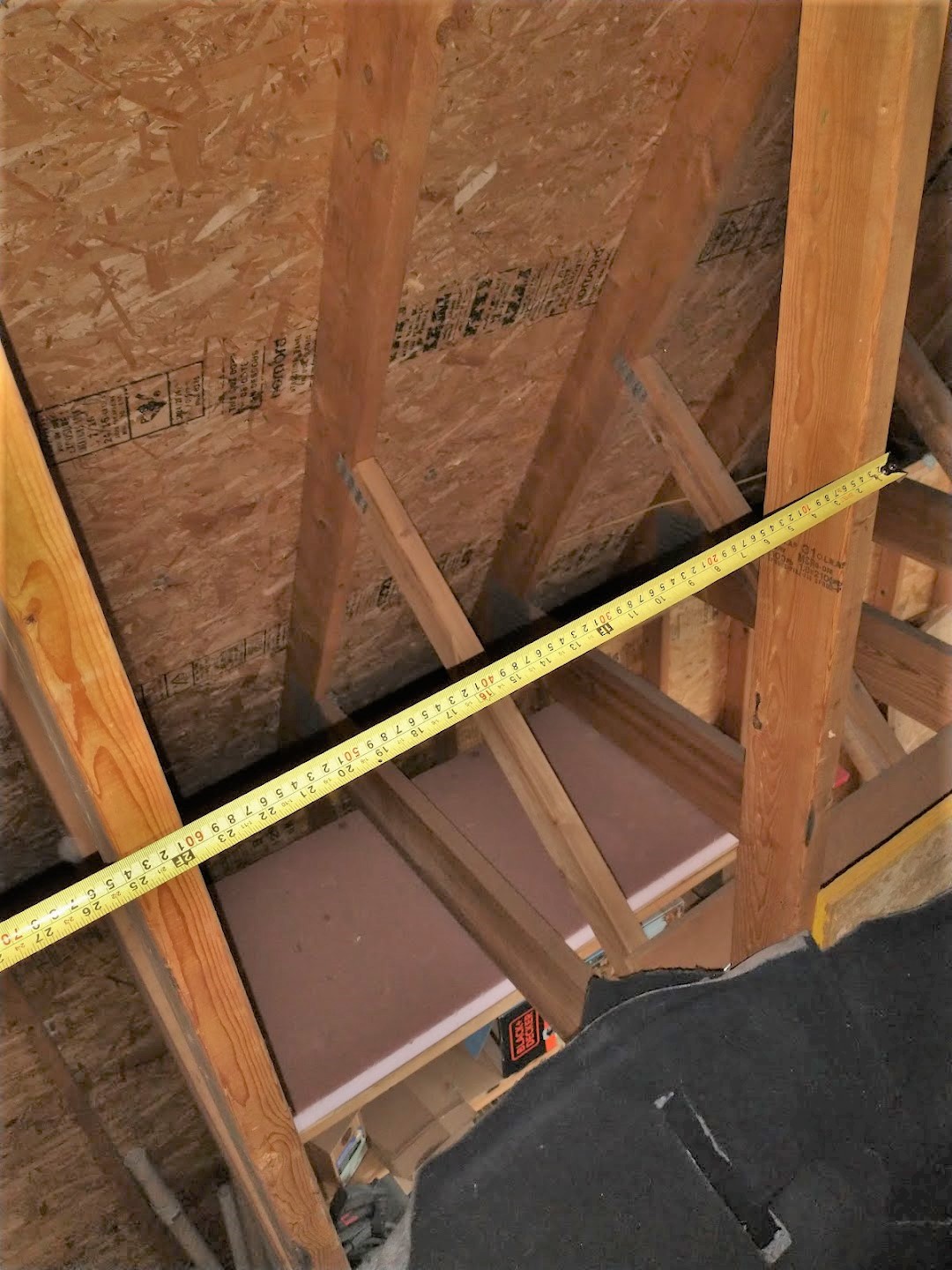
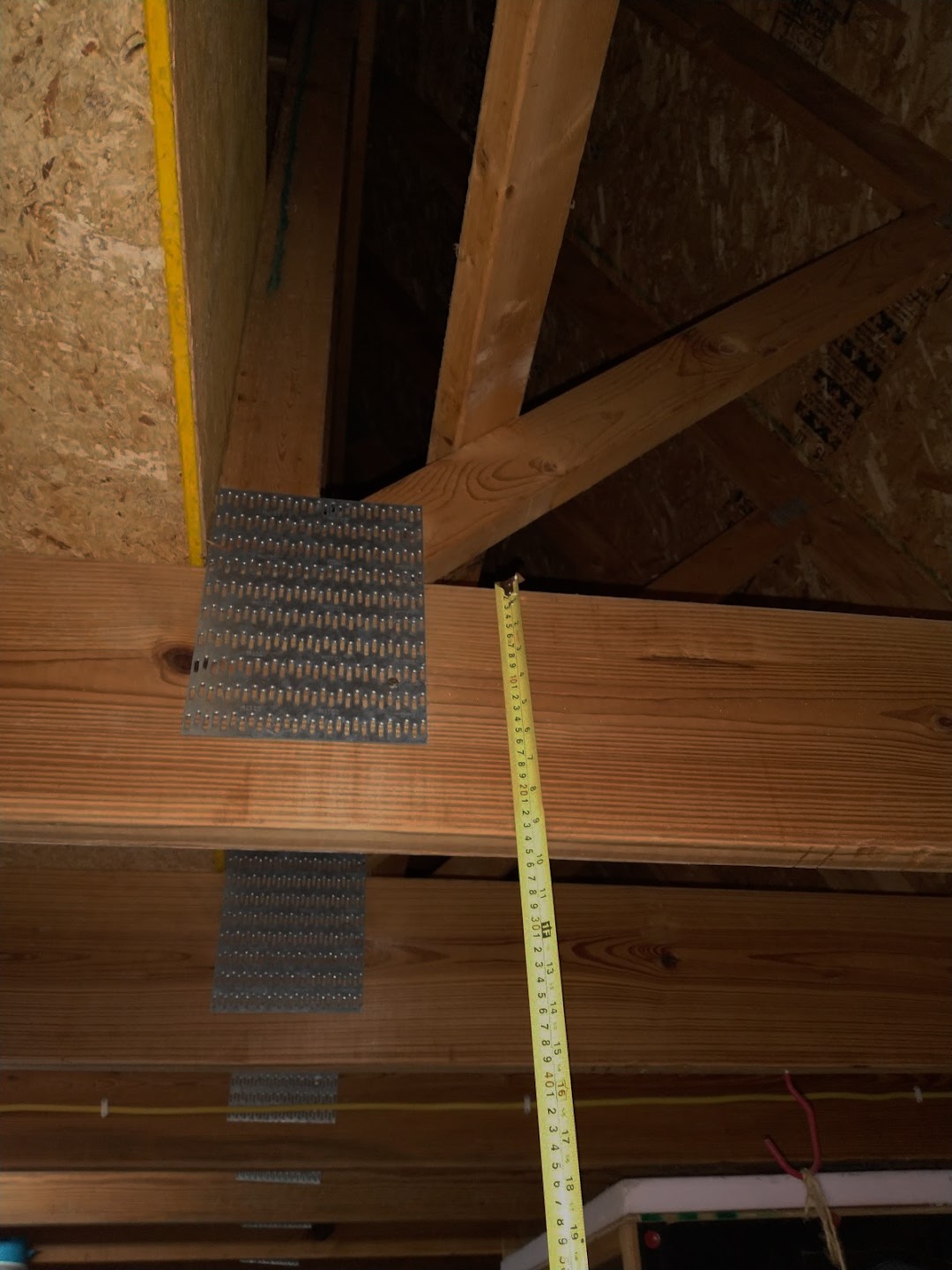
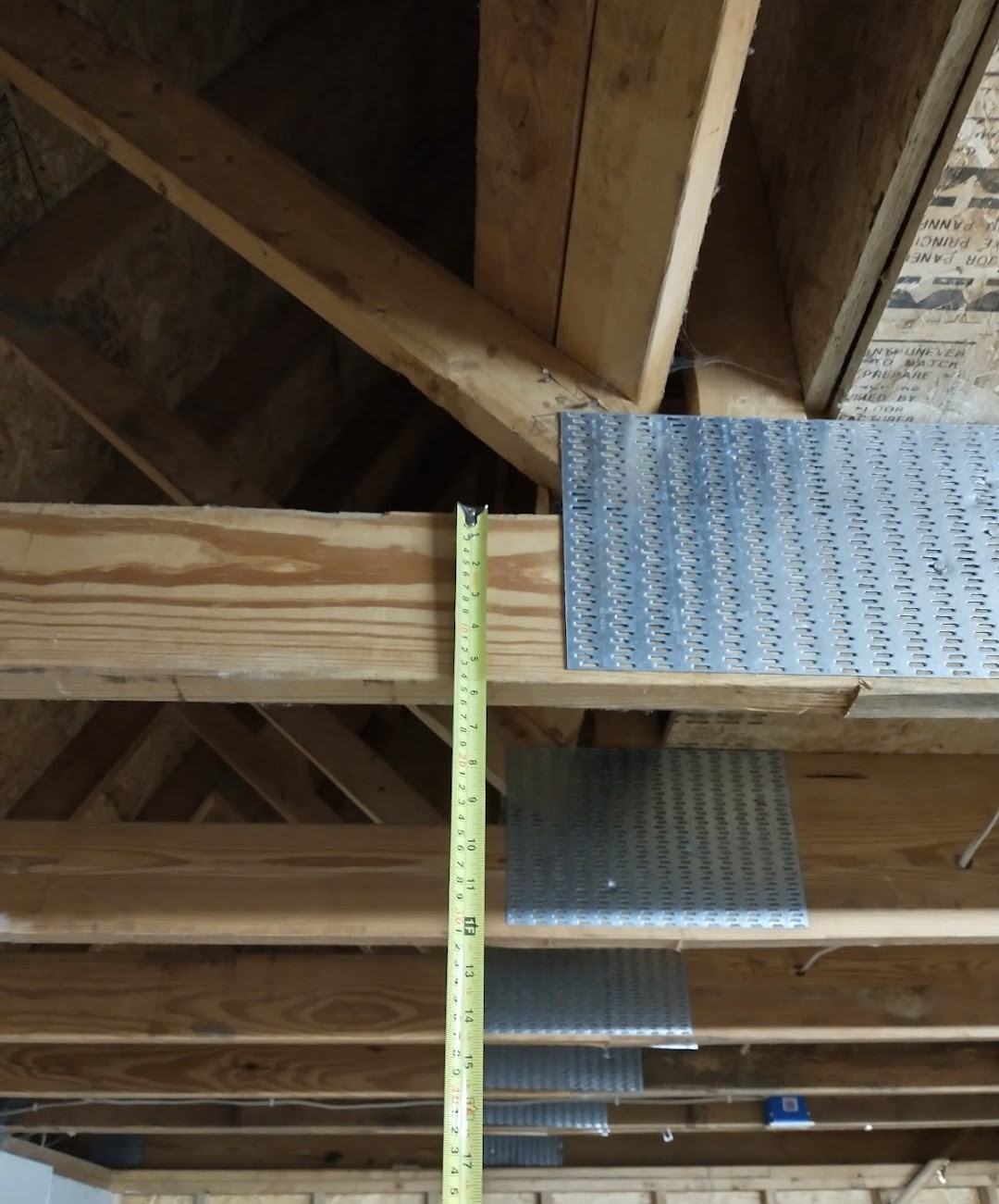
The garage is 24' wide. The floor of the loft is 2x10s 24" OC. Those are 2x6s to the left of the plates (the 2x10s run all the way from those left plates to the right wall). All the vertical lumber is 2x4s. 2x6s under the garage roof. The garage walls are 16" OC.
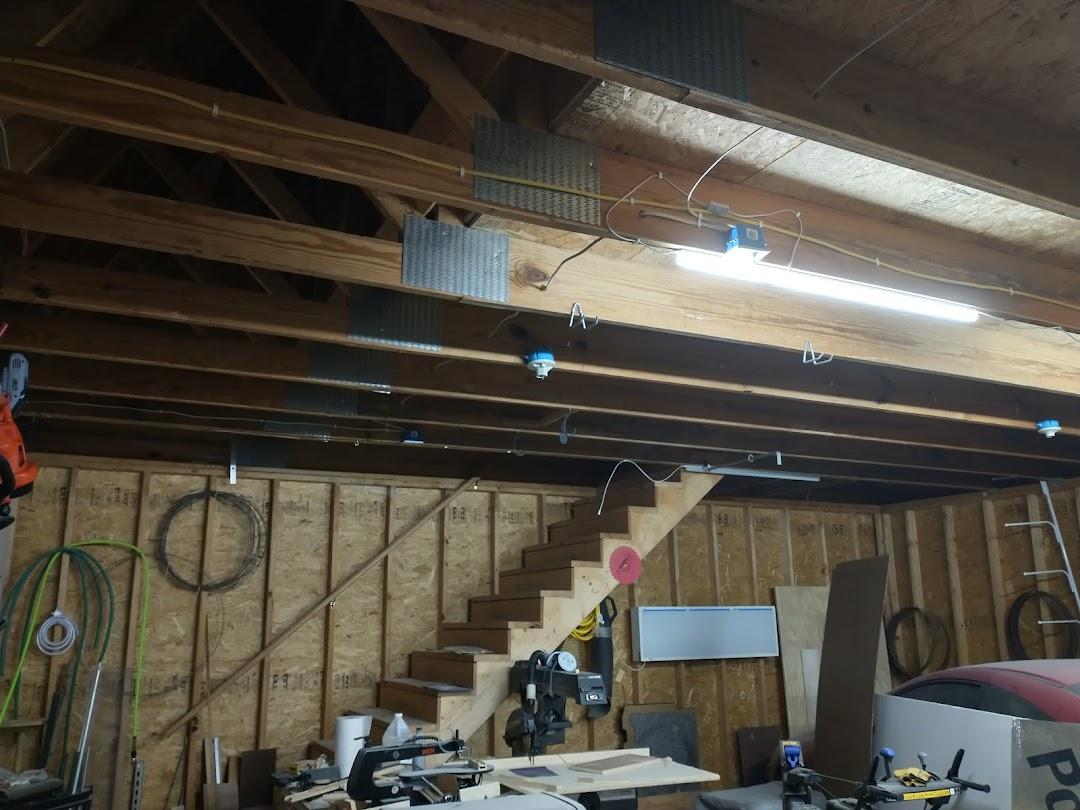
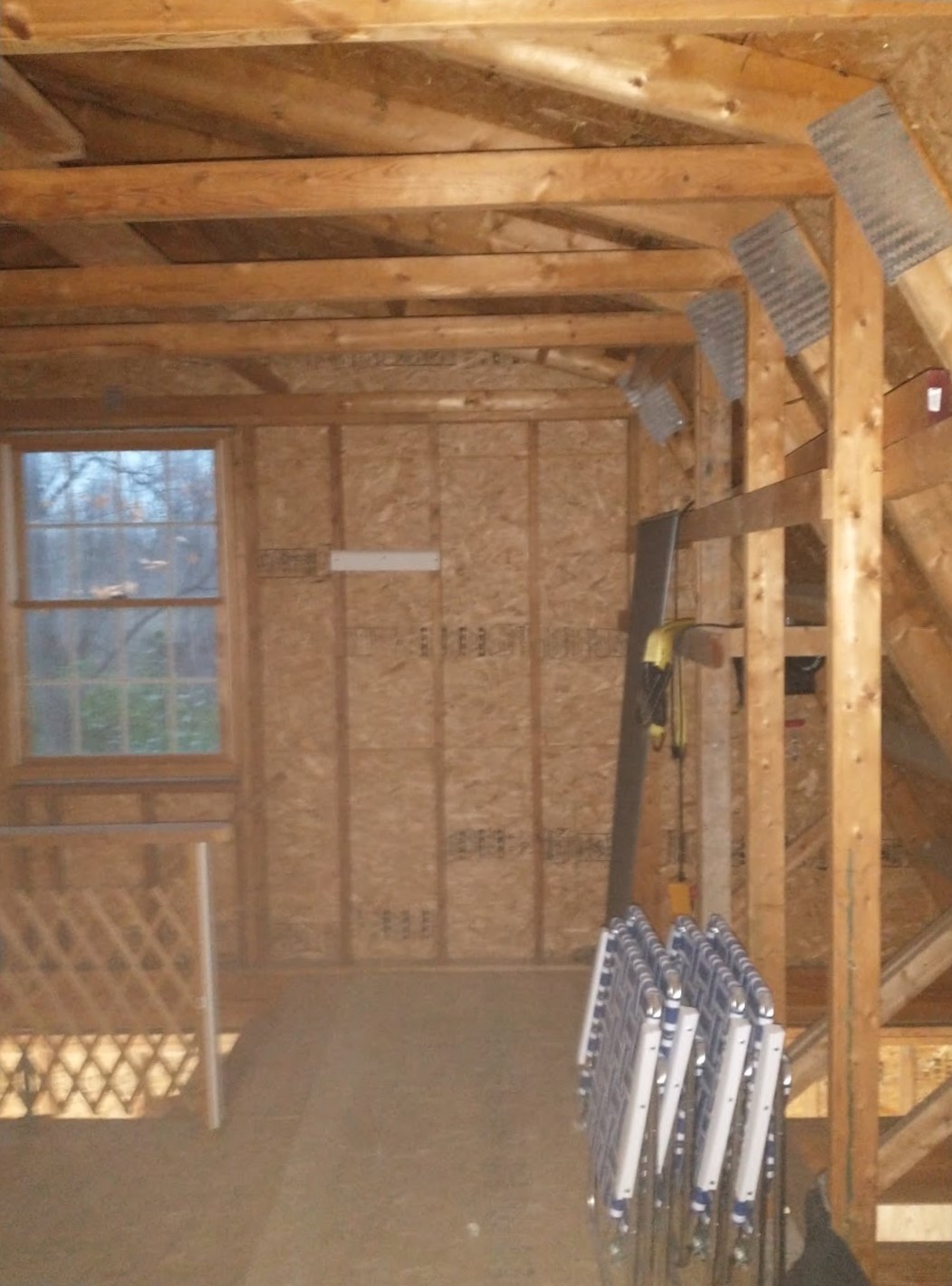
Bottom of loft View in loft Some dimensions 2' on centers 2x10 on one end 2x6 on the other end

I'm hoping to move some power tools up there and grow that space into woodworking shop. But I'm not sure if the space will support the added weight (or if it'll be a good idea... I'd much rather have a shop on the concrete pad and without having to climb stairs... but that's another topic).

I understand any advice given on this site is not legally binding. I'm just looking for an informed guess.

Matt Thomas
  • 407
  • 4
  • 11

4 Answers4

8

The Code requires trusses be designed to support the Live Load (snow loads, etc.) plus Dead Loads (lumber supporting the roof and ceiling) plus 10 psf Live Load in the ceiling. (10 psf is not much… and you can’t stack it high in one area just because you don’t have anything in another area.)

I don’t have an idea what your trusses will support, but I’ll bet it’s far more than 10 psf, because a 2x4 bottom chord will support 10 psf for just a 24’ span.

I’d go to your local lumber yard where they make trusses and ask them. They have software that can calculate the size of the chords and webs in about 2 seconds. You can do this in two ways: 1) The hard way: Take all the sizes of the chords and web members to them and let them input the members sizes into their program , or 2) Tell them you want 40 psf , or 50 psf , Live Load etc. on the bottom chord and let them calculate what size the chords and web members sizes. Then take their printout home and match it up with your trusses.

Lee Sam
  • 3,836
  • 1
  • 6
  • 14
3

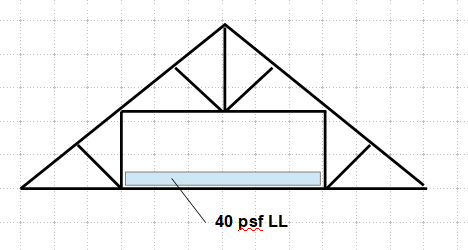
From the second picture and your opening statement, For permitting purposes, I think the structure was categorized as the "garage with attic for other uses (non-sleeping)", and designed accordingly.

For the open space between the vertical truss hangers/posts, the code specifies a minimum of 40 psf design live-load on top of the material dead load. It could be higher, but can't be safely assumed or calculated without resorting to the original truss supplier or a structural engineer.

enter image description here

r13
  • 3,422
  • 1
  • 8
  • 23
3

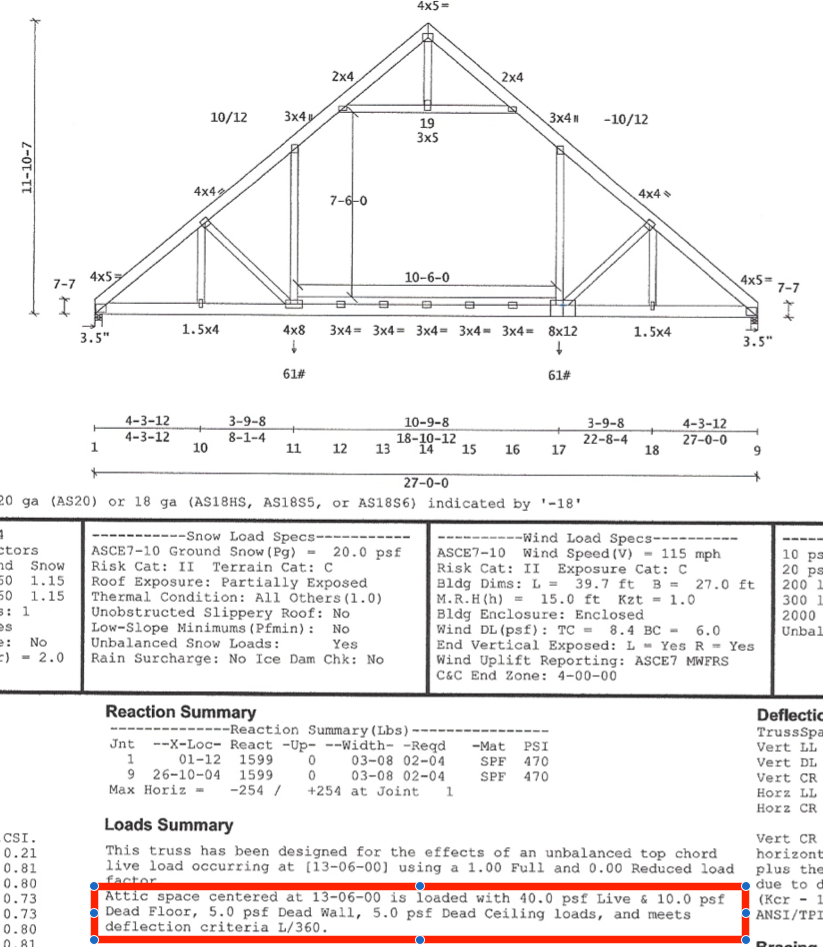
Your span of 24 ft is slightly smaller than my house's 27 ft span, but your photos indicate the truss dimensions are similar to mine.

My attic trusses are rated for 40ft psf live and 10ft psf dead load, within the open space. I have a 2x6 bottom chord with an additional 2x4 on top of the ~10ft wide opening.

Here is a screenshot from my truss calculations.

attic truss calculations

Daniel
  • 31
  • 1
2

I would suggest you cut a single pole to measure the concrete-to-under-span height.

Compare the height difference between empty, and with an assistant standing exactly over that beam, or a decent weight of about 100 kg focussed in that one spot.

Then estimate the load you might put into the wood shop and scale up the measured deflection. This will give you an idea of how the trusses will react to the full weight.


Personally, that looks like a storage space, and not a workshop. You may have problems with:

  • Getting longer lengths of timber in there,
  • Extracting finished items safely
  • Installing larger machine tools like a drill press
  • Excess heat, and fresh air ventilation.

I would suggest you build the workspace you want downstairs, and plan on adding a new garage or carport for vehicle protection outside.

Criggie
  • 11,950
  • 2
  • 26
  • 79