23

We are currently renovating our bathroom ourselves on the 2nd floor. We were going to redo the tiles only, and we found a newspaper from 1947 around the old pipes which means it was installed a long time ago. We started to wonder if the pipes have to be replaced, but it’s not what we planned at the beginning.

One day we had to call a boiler technician, so we asked him if the bathroom pipe should be reinstalled. He strongly recommend to reinstall the entire bathroom pipes. He assumed the cost might be 10K to replace the entire pipes because it’s the 2nd floor, but he wasn’t a plumber. He told us to get a plumber for an accurate cost. I know it’s a good opportunity to replace them since we already opened the floor and the wall, but 10K is too much money for us.

As a non-professional, I think the pipes are in a good condition. They seem very sturdy and no leaking at all. I think they can stay 50 more years. I’m thinking about closing the floor without replacing the pipes. Please tell me if I’m an idiot.
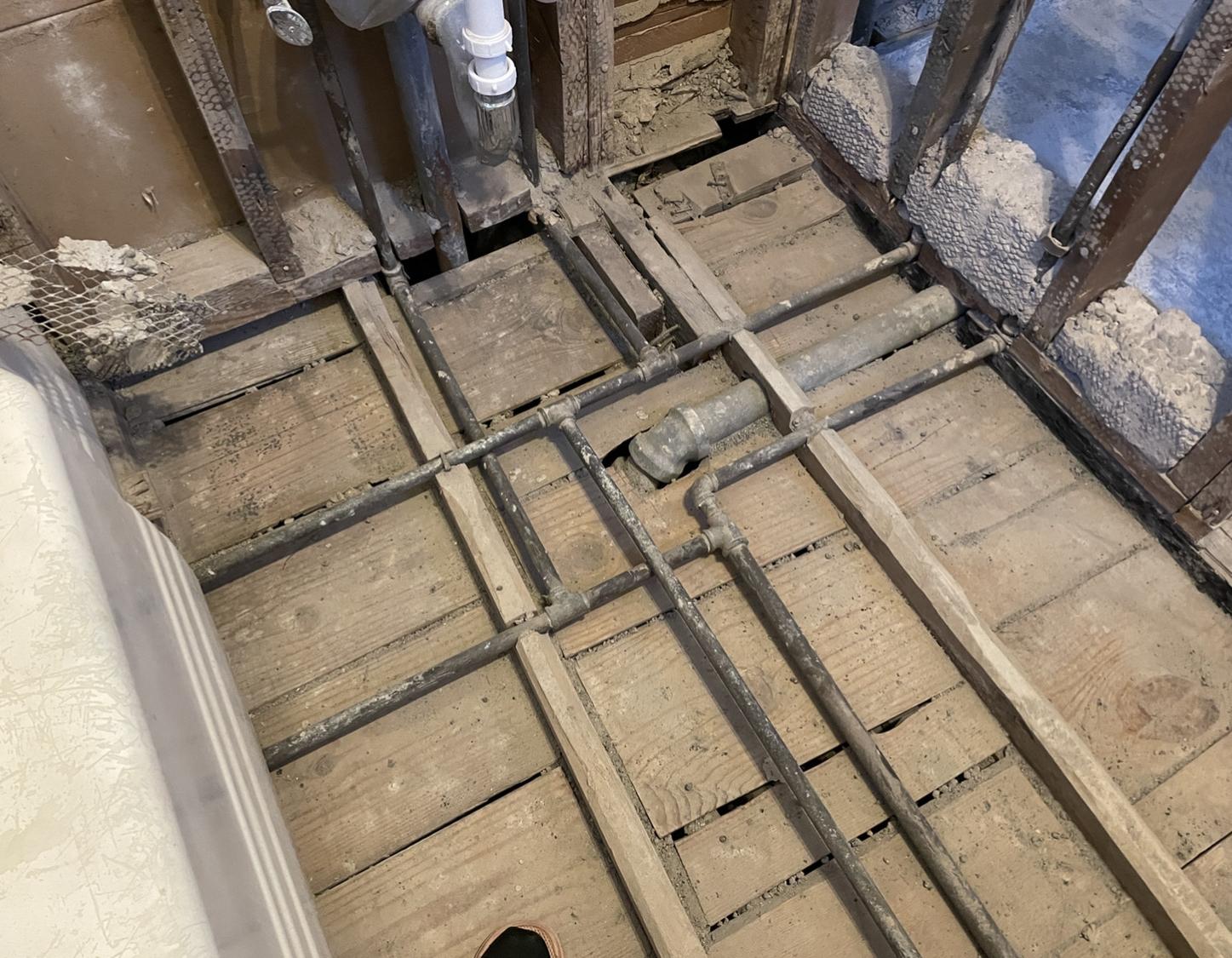
bathroom floor with exposed plumbing

Machavity
  • 26,498
  • 8
  • 44
  • 100
sol1000
  • 384
  • 1
  • 4
  • 11

6 Answers6

38

You're not an idiot because you asked an intelligent question!

The problem with old iron/steel pipes is they rust on the inside which narrow downs the interior which results in reduced flow which gets worse over time and eventually they might even rust thru and cause a leak.

You've got it opened up, now is the time to upgrade. You'll hate yourself if you have to rip up a remodeled bathroom to replace 70 year old plumbing. PEX isn't hard to install and would make a great replacement and if you get the right tools (like a PEX expander), you can DIY, but if you're not comfortable with it, a decent plumber should be able to replace all that with PEX for a LOT LESS than $10K. I know pricing is off topic here, but just wanted to say.

The other advantage of PEX is even if it freezes, it is far less likely to burst like iron or copper would. DK where you are, but if in a cold climate area, that can be a plus.

EDIT NOTE: I updated my answer to include information provided by other comments and my further research. In a nutshell, PEX is far less likely to burst than copper or iron pipe, but it's still a possibility. Thanks for the other contributors comments.

George Anderson
  • 23,304
  • 5
  • 41
  • 83
21

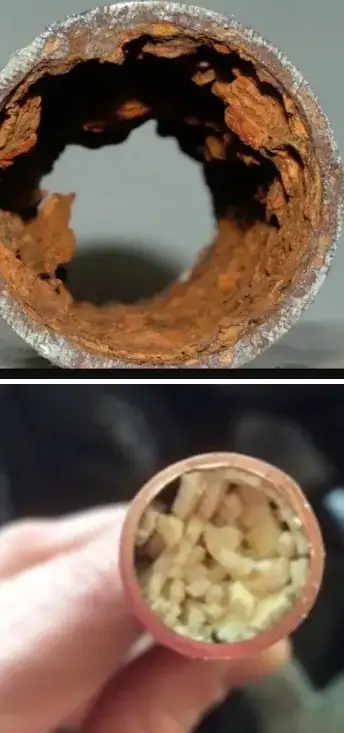
Example images of damaged pipes: rusted and with calcium deposits

Top image is a pipe rusted through, bottom image is a pipe with calcium deposits

The lifespan of old galvanized pipes depends on water balance. If the water is alkaline over 7 pH the pipes will eventually close up with calcium deposits. If it is acid under 7 pH they will rust out and start leaking ( you may see rust at joints.) If the water is balanced this kind of pipe is expected to last 75 years. Hot water pipes generally deteriorate faster than cold pipes. 10k is more than I would expect to pay for this job, DIY would cost a few hundred $ at most for PEX. If there is no rust, and you have good pressure, I would expect to get another 8 to 30 years from these pipes. Weigh this against how long you expect the remodel to last.

coppereyecat
  • 103
  • 2
Danieljamar35
  • 311
  • 1
  • 5
7

The price the guy mentioned might be accurate for a whole house replacement including wall repair and painting. You only need to do what is under the tub and in the floor before it is covered back up. It should be replaced to the point where if any leaks do occur, it will not mean tearing up your new floor or anything in the bathroom. This will mean smaller repairs needed in other rooms if not accessible from the bathroom side to do a tie in. This will depend where the threaded ends are in walls or floor to set an adapter on to transition it to PEX or copper. There are 3 kinds of PEX, it is advised to stay away from "C". "A" and "B" PEX is the type to use, PEX A being the best.

Back at the tie ins. The most you would need I expect, and this is a guess that there would only need to be 2 to 4 holes in other areas at the worst to tie in the hot and cold in 2 different places. That is a hot and cold going into the bathroom, and a possible hot and cold going out to feed another area if it is set up that way.

Your biggest issue is the drain line. That will look like that picture on another answer since air gets in drain lines to allow rust to start. Water lines, perhaps not as much, but other deposits do form inside those types of pipe, calcium being the biggest offender of water pipes.

Jack
  • 38,117
  • 2
  • 30
  • 66
5

Must these old pipes be replaced?

No, unless your town has a code which states that galvanized plumbing must be replaced during an opportune time such as a remodel.

Should you? Yes. Don't wait for a must situation or else you'll be replacing a lot more than just pipes. Consider everything below your bathroom trashed.

My house was built in 1940 and 2 years ago I replaced all of the the downstairs galvanized water pipes with PEX; costed about $900. Once I'm ready to tear into the second floor you can bet your last dollar that I'll be replacing the galvanized pipes.

When removing the old galvanized pipe I was curious as to how difficult it is to unscrew these joints as opposed to using my sawzall so I grabbed some pipe wrenches and twisted a tee right off; the threads were left inside of the tee.

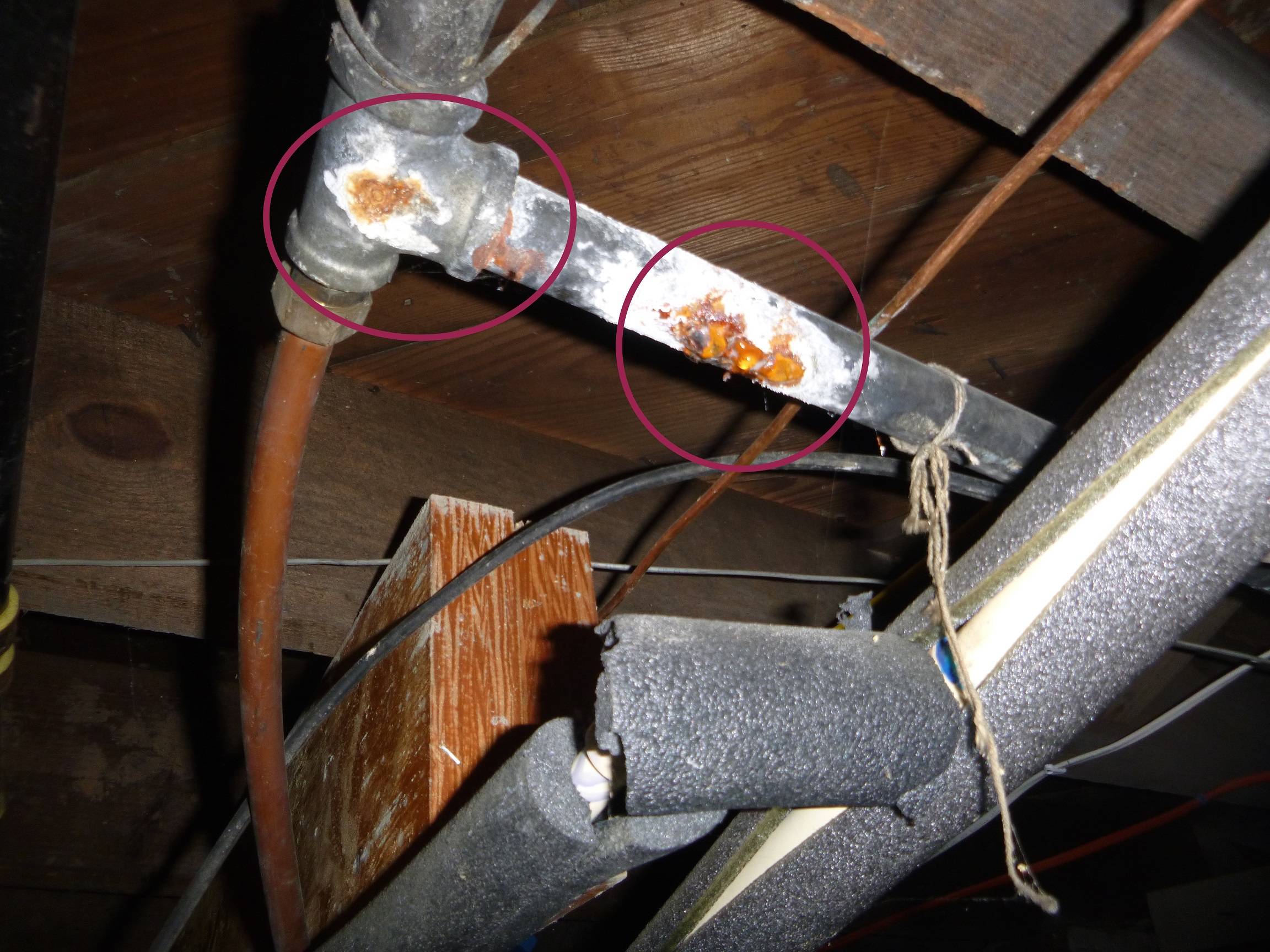
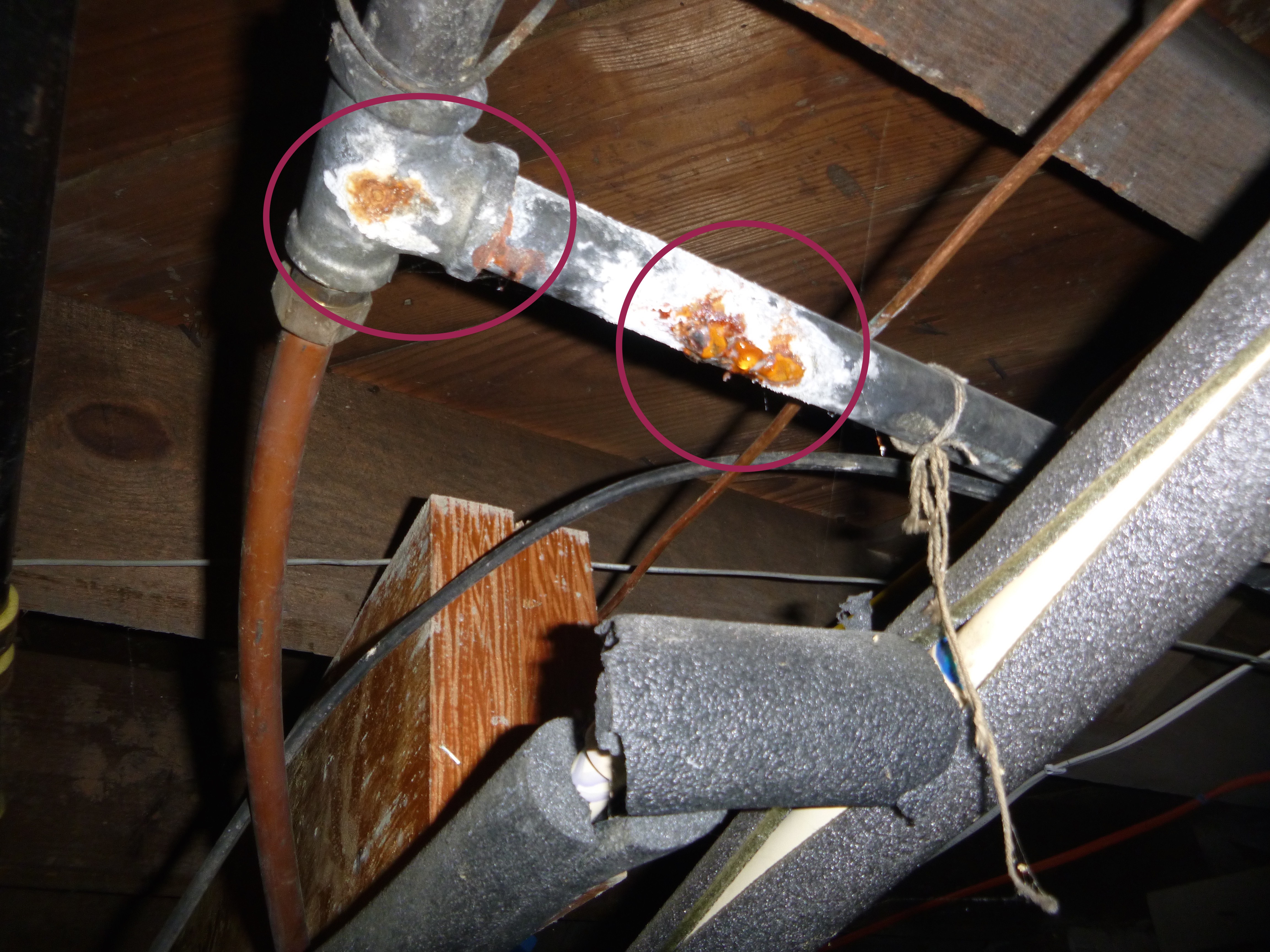
This particular joint would probably have failed in the next few years. It was rusted down to a pinhole about 1/8" in diameter and was the source of terrible hot water flow for our kitchen and upstairs bath.

Rust begins life on the inside of the pipe and if you start seeing surface rust that that means it has breached the entire wall of the pipe.

Make note of the water leak from the rust spot on the right.

Galvanized water pipe rusted from the inside-out and is leaking

Source

MonkeyZeus
  • 17,328
  • 2
  • 27
  • 64
1

While galvanized pipes were originally expected to last 80-100 years, the quality of the water in your area can shorten the life of these pipes. Hard water with minerals breaks the galvanized coating from the inside and allows rust to start. If you can find a location to inspect the inside of a section, you can check the inside of the pipe for damage. Damage could also be mineral deposits that have effectively reduced the inside diameter of the pipe. If the pipes are clean on the inside, you probably have no real reason to replace them. IMHO.

Programmer66
  • 2,782
  • 6
  • 11
-1
  1. Metal tubes tend to have less biofilm than PEX tubing. Although it is not clear if PEX material does really increase the probability for legionnaires' and other diseases. Metal tends to block germs to some extend. Some users complain about a different water taste after installing non-metal tubing, but that could also happen after switching from non-metal to metal tubes (that happens much less frequently).

  2. The very robust inner coating with minerals, which is mentioned in other answers, protects the metal against direct contact with water. This contributes to a very long life expectancy. A cleaning with acids tends to increase the probability for pit corrosion - it should be avoided with old metal tubing.

  3. A "circuit breaker" for domestic water nets can be very helpful for a better sleep. It protects against big damage caused by water leakages or failing installations or Alzheimer's disease and opened faucets.

  4. The visible holes in the floor could be covered/filled in order to prevent insects or rodents to enter the floor/wall. A warm water line can attract animals.

  5. If there is enough space for tube insulation, it can save energy, reduce micro circulation and reduce noise.

  6. To prepare for a later substitution, PEX tubes could be installed under the floor without connection to the water net (no water stagnation if not yet used). Or bigger empty tubes with pull wires could be installed.

  7. Freezing water lines do crack most of the time if the freezing takes place in more than one place and 2 freezing zones are growing towards each other. In that case, PEX lines can also burst. If a line freezes from one side only, the pressure can be often released by the pressure relief valve next to a boiler. If the provider's line is not frozen, the pressure can be often released into the outside water net, since back flow preventers often do not work 100% reliable.

  8. Many problems in old metal installations are caused by the ignored golden rule: installation from less to more noble metal in flow direction. F.e., substituting a part of a steel tube with a copper tube resulting in the sequence steel - copper - steel will most likely cause (pit) corrosion in the downstream steel. Isolating plastic parts between the different metals will not prevent this type of (local) corrosion.

  9. If the boiler's sacrificing anode is consumed, small metal parts could also start pit corrosion, especially if hot water circulation lines are installed. If the current can be tested, it should be less than minus 0.3mA, measured against the boiler mass/housing. F.e., a value of minus 2mA is an indicator for a working anode, which does not need to be replaced.

xeeka
  • 2,615
  • 1
  • 9
  • 10