6

After mounting my television on the wall, I would like to put a receptacle behind it so the power cord will be hidden. While planning this I was trying to figure how to get a surge protector to be hidden behind the TV as well, then I came across a surge protection receptacle.

Has anybody used these before? Are they worth the price? Will I get acceptable surge protection from one of these?
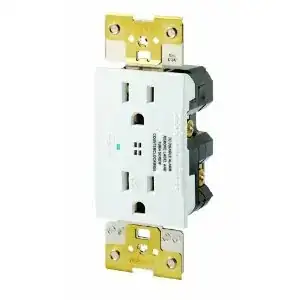
alt text

They seem like a great idea if they actually work, I can't believe I have not seen these before.

EDIT:

An article from the Family Handyman says this about knowing when to replace the receptacle.

Some types of surge protection receptacles (available at electrical supply houses and online retailers) have a signal to alert you when they’re no longer providing surge protection and need to be replaced (surge suppressors do wear out).

So I guess that's one thing to look for before buying one.

Aarthi
  • 1,143
  • 7
  • 20
  • 29
Tester101
  • 133,087
  • 80
  • 327
  • 617

4 Answers4

5

The number that I look for is in a surge suppressor is the energy or Joules rating, with the higher the better. This one is rated for 720 J, which is middle-of-the-road. You can find surge strips from about 200J to 4000J.

The thing with any modern TV is that you're probably going to be using a co-ax input for cable TV, and potentially an ethernet input too. For that reason, I'd try to find something with protection for all three: power, co-ax and data. Even if it does mean compromising on the aesthetics of your installation.

(FWIW, I use Belkin protectors on my equipment and have never had problems... but I do live in a low-lightning part of the world).

Niall C.
  • 20,909
  • 19
  • 95
  • 135
4

One thing you could do is install a whole house surge protector in your breaker box. These typically come with a large $ warranty if something does get blown. They come in may forms, the easiest ones simply install into a single circuit slot in your breaker box. Others hard wire in and have a small box that mounts right next to your breaker box.

Depending on the make / model of your breaker box, there would be various choices.

mohlsen
  • 6,359
  • 14
  • 39
  • 47
1

One problem you need to consider is that nearly all consumer grade surge suppressors rely on the properties of a varistor (voltage dependent resistor), which will self destruct when presented with anything beyond a fairly minor surge or spike. Unfortunately, there is rarely an indicator to tell you this has occurred. Surges and spikes could happen at any time, so unless you have a reason to suspect it has occurred you will be oblivious to it. Consequently, many people are using surge suppressors which have done their job and no longer offer any protection whatsoever.

Things are different when you get into good commercial/industrial grade gear but that gets very bulky and very expensive.

John Gardeniers
  • 1,745
  • 11
  • 10
0

If you only want to surge protect your TV, this might make sense. But since you're going to be connecting that TV to various video sources, either they need to be surge protected too, or you need to surge protect the connections.

If you're worried about aesthetics, what are you doing with your video cables? If they show, why care about your power? And if they don't show (in-wall cable run), can't you run your power cable through there too? Then you can surge protect the TV using a normal UPS along with the rest of your entertainment stack.

Steve Armstrong
  • 783
  • 1
  • 9
  • 14