This is a 'pop rivet'.
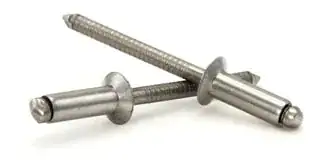
Example from Amazon
You need to drill a hole in your plastic plate that's just large enough for the 'fat' end to fit through, with the shaft sticking out towards you.
You then place a pop rivet gun over the shaft and squeeze the handles (or whatever mechanism your particular gun has) a few times.
This action pulls the shaft of the pop rivet out towards you, and in so doing squashes the body of the rivet up against the inside of the plate you're riveting through. The "nobble" at he end of the shaft is too large to fit through the body of the rivet, and as a result, pulling on the shaft causes the body of the rivet to expand and squash up against the inside of the plate you drilled through.
The shaft is manufactured with a weak spot (not visible in the pic because it's inside the body of the rivet) and once you've squeezed the rivet enough, this weak spot "pops" and most of the shaft pulls out of the hole in the rivet, leaving only the body of the rivet permanently stuck in the hole you drilled.
Pop rivets are made in various lengths, diameters & materials. I've found the most common ones are 3mm or 1/8" in diameter and about 1/2" long (10-15mm). You'll probably want to get ones which are 3-4 times longer than the thickness of the plate you're riveting through, and unless you particularly need extra strength, you should probably choose the aluminum ones rather than steel (in either case the shaft is typically steel, but the body of the rivet could be aluminum).
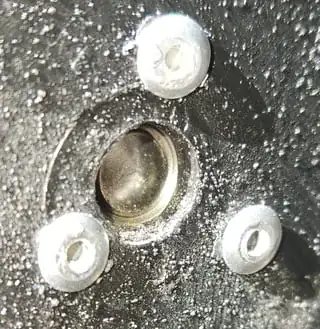
This is a pic of 3 pop rivets I installed this past weekend (they're 1/8" aluminum). In these you can see the remains of the shaft, since they were short rivets in a thin metal sheet. With longer rivets and a thicker material you probably would not see the remains of the shaft in the hole.