11

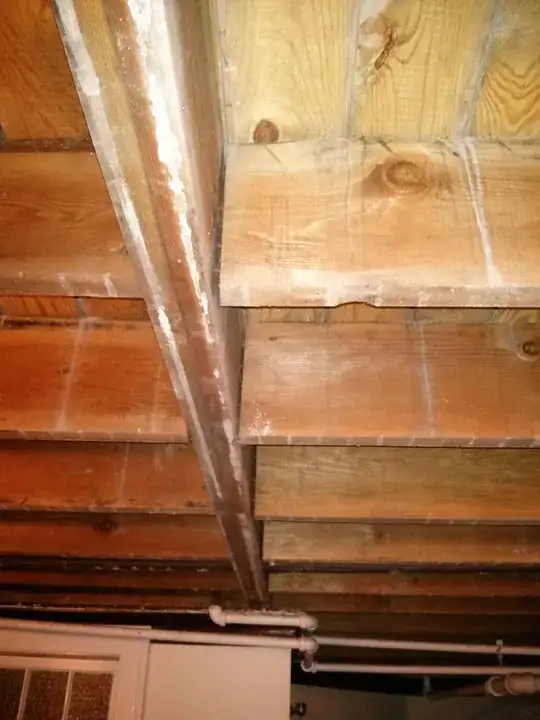
I am having the ceiling in the finished part of my basement redone, and have it fully open now. I can see the connection of the joists to the headers have given somewhat, as the house is 85 years old and the joists are not in hangers. The separation laterally varies from 1/8" to 3/8" from joist to joist and vertically some are fine while others are displaced 1/8" to 1/4". There is no visible deflection along the length of the joists, and from the floor above there is one minor but noticeable (when standing on it) low spot in the floor.

Picture attached, should I be concerned or is this normal in a house of this age and not likely to worsen? Would it be advisable to retrofit hangers?

enter image description here

Paul D
  • 497
  • 2
  • 8
  • 13

2 Answers2

13

Good question Paul, The situation with your framing is not really normal, but not uncommon for a house that age. Any time there is separation of framing members, it is a reason for concern and should be addressed. However, I would not say it is a major or alarming problem. There could be a couple of different reasons for this separation. The joists may have shrunk over the years from not being well dried at the time of construction. The other reason could be settling of the outside supporting structure or foundation. A good first step is to confirm level of the joists using a long level or a laser. I prefer using a laser as you can check level and deflection at the same time. This may also help you determine the cause of the floor sag. Any irregularities can be corrected by slight jacking, sistering, shimming or adding supports.

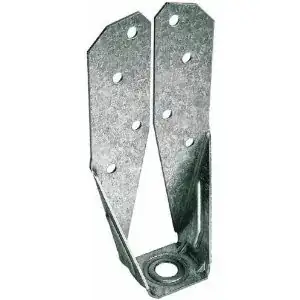
Assuming your framing is fairly level or corrections are made, I would recommend adding joist hangers to all the members. It would be impossible to close the existing gaps, and the gripping force of the existing nails has been compromised over the years from wood shrinkage. Simply hammering them in tighter would not be a permanent solution. When selecting the hangers, be sure to get the ones that have holes that allow securing to both the joists and center beam. Use the appropriate size joist nails or screws for the holes in the hangers, don't under size and never use drywall screws. If you use joist nails, get or rent a pneumatic palm nailer, it will make the process a whole lot easier.

Once you have properly installed hangers, you can go ahead with your finishing project being confident there will be no further separation of the joists from the beam.
shirlock homes
  • 58,628
  • 3
  • 87
  • 168
5

I agree with everything Shirlock said regarding adding joist hangers, but first I would advise you to stabilize your joists from whatever is causing separation. Edit The gaps you are seeing are not caused by shrinkage. The gaps were either there when constructed or have developed over time. On a positive note, the joists you've shown don't appear to be sagging.

A fairly new product that is code required (IRC R502.2.2.3 for decks is the lateral load connector device (LLCD). This device will, at a minimum, stabilize the joists from further separation. New decks require 2 of these devices per deck. I would suggest every fourth joist to start. They must be carefully torqued to specification. Careful retightening of the connectors may be able to reverse your pull away condition. Care must be taken to make adjustments slowly and to monitor the other end of the joists for new pull aways. If that is the case, hanger bolts (special screws with 1/2 wood threads and 1/2 machine threads) with connector nuts could pull in the rim joists at the same time (using only 1 lateral connector and the hanger bolt).

enter image description here

I am not saying all the gap can or even should be taken out, but as Shirlock has noted, the joists are not presently up to code.

Careful placement of the hole for the LLCD will allow use of joist hangers at the same time as the LLCD. It may be that the connector bolt may have to be removed during joist hanger installation, and then replaced afterwards.

HerrBag
  • 12,225
  • 1
  • 21
  • 37