Yes, road noise causes stress
Road noise is often underestimated as a cause of tension and stress, so you are on the right track.
There are of course windows with better noise attenuation available but this could be outside your budget.
Adrenaline and another stress hormone called cortisol bring on physiological changes, including a spike in heart rate and blood pressure. Your body reacts so fast; you often can’t tell these changes happened. Chronic exposure to noise keeps this stress response activated continuously. Eventually, it starts to wear the body down, causing mental and physical health problems.
Ref: https://www.brainfacts.org/thinking-sensing-and-behaving/diet-and-lifestyle/2018/noise-pollution-isnt-just-annoying-its-bad-for-your-health-062718
Shrubs and Curtains
A simple solutions involves placing a combination of heavy potted shrubs and heavy curtains inside and/or outside at the window, plus heavy carpeting inside.
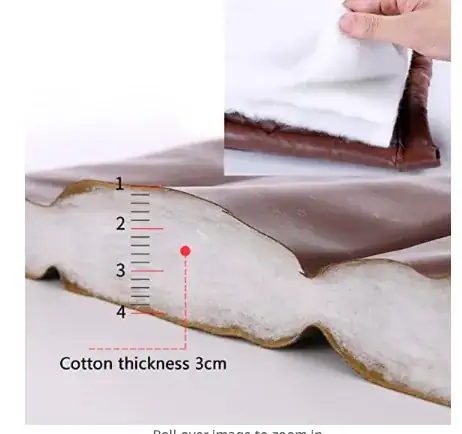
Image: Sound Proof Curtains, Amazon
Mask & Distract
Additionally you can reduce the stressful aspect of the noise by masking it with a table top fountain inside or outside near the window.
This is generally a low cost and low effort measure that can be quite effective.
There are real water options of course, but also electronic sound machines. These do not reduce the noise itself but work by masking the noise (noise can make other noise less perceptible) and they distract the brain with more soothing and pleasant sounds, thus reducing stress.
Personally I find a real fountain far more effective than an electronic one, due to the quality of the sound from real splashing and how it is spread around in the room (the sound spectrum and radiation pattern).

Image: Cascading-Bowl-Brick-LED-Fountain, Amazon
Noise Shield (Plexiglass and/or Plywood)
For heavier attenuation you can build a noise shield, which can be applied in addition to the above options.
This is a noise attenuating insert, box or panel that you place outside or inside, against the window, depending on space, weather and other aesthetic considerations.
If it's a box or a wooden panel it may contain a glazed window opening (glass or plexiglass) to let light pass through. The size of such an opening determines how much noise still gets through. You can make it removable so that it is only mounted when needed.
There are also all-glazed noise attenuating "inserts" which you install snugly against the existing window. But attenuation is only 50 5o 70%, which really is not enough (see below)
A noise attenuating box or panel is made of heavy material, such as a few layers of plywood or particle board, and noise absorbing material such as foam or fabric placed in the box or attached to the panel on the face that faces the window. This panel or box must fit snugly against the window to seal off the noise. You can lean it, hang it, lock/arrest it etc...
You can build your own with thick plexiglass (the thicker the better) that is cut to size at a shop, and a vinyl edge guard or foam bumper around the pane's edge to form good acoustic seal with the window.
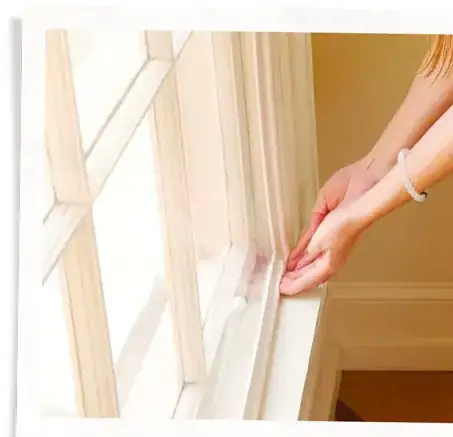
Image: https://www.bobvila.com/articles/soundproofing-windows/
50% is really not enough
Cutting noise or sound reduction by half actually doesn't do much; "half" is a perceptible difference but it's far from making a difference in terms of stress. You need more like an attenuation of 1/10 to 1/100, preferably 1/1000.
What factor is sensible is not only a matter of the desired attenuation, but also a matter of what can be accomplished despite the noise transference of other surfaces, such as the walls and doors. If walls and doors a poorly insulated, say at 1/10 attenuation, then bringing the window to 1/10 is a great improvement, but going beyond to 1/100 will do little more incrementally.
What about studio foam panels?
Studio-style acoustic foam panels can be used to attenuate sound, but beware their function is to limit reflections. Hang them on a wall and you'll have less of an "empty hall way" sound in your room. This certainly can help, in the same way that faux-curtains and carpeting can help. But they are actually quite poor at attenuating sound transference, i.e. stopping sound from going through them. Moreover, the low cost ones are made of a light foam pad, and although better than nothing, they are not at all to be compared to studio grade panels. They can be recommended for a pod-cast box in the corner of an office or bedroom, to improve recording quality, but not really for sound proofing.
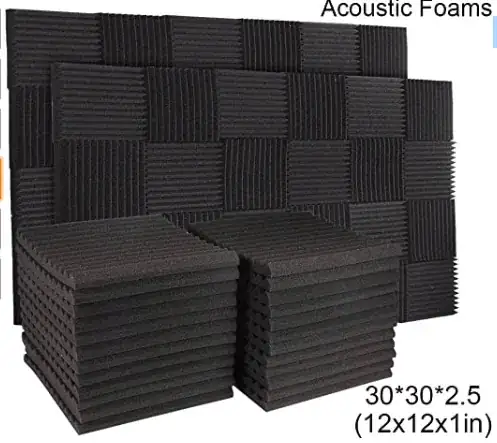
Image: https://www.amazon.com/dp/B07VDTR22R


