11

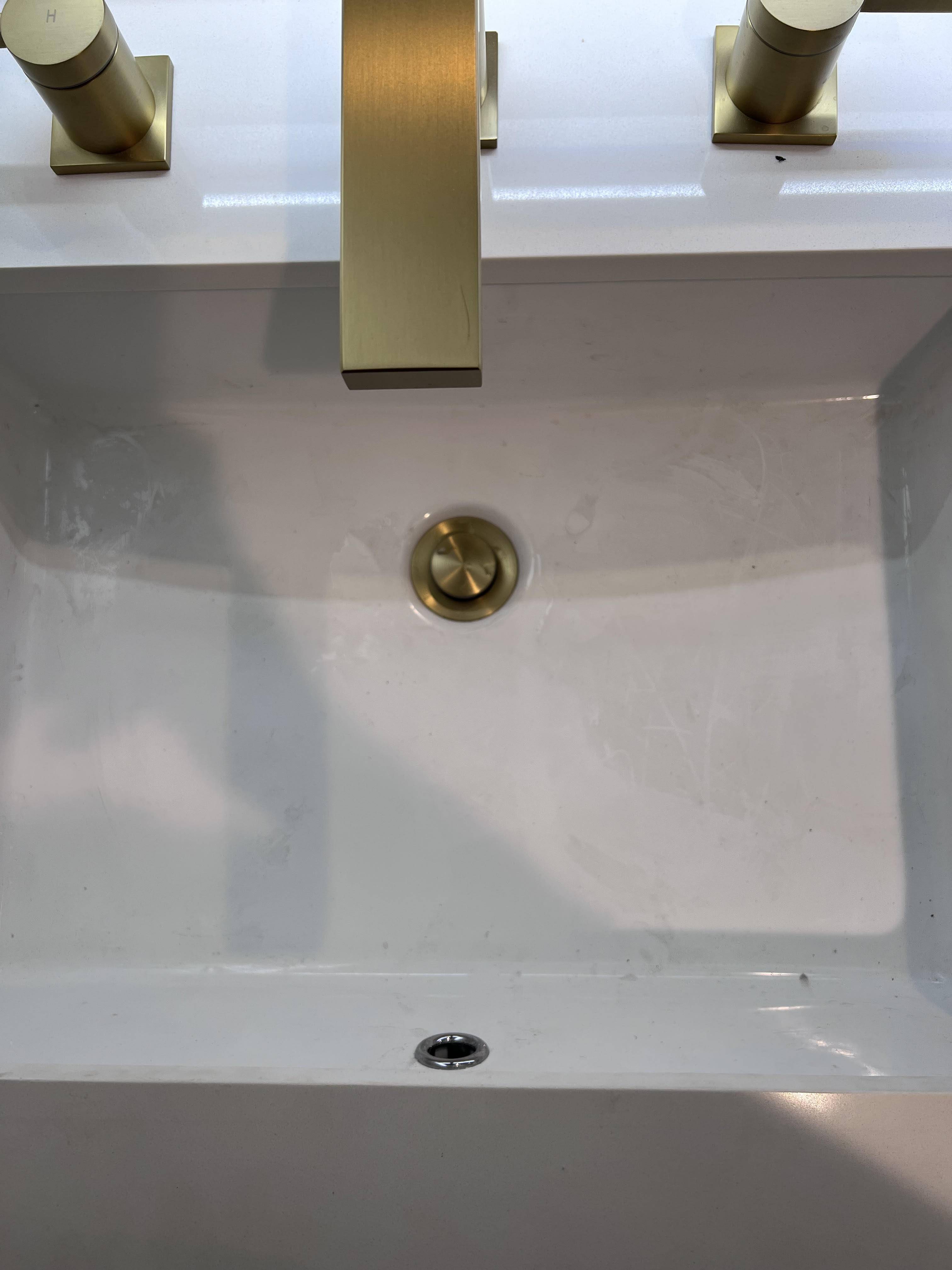
Does anyone know why water starts leaking from the hole under the sink, or why this hole is even there to begin with?

It seems like as the water builds up in the sink when running through high pressure and volume, water starts to leak a lot from that hole.

enter image description here

enter image description here

FreeMan
  • 48,261
  • 26
  • 101
  • 206
Jason
  • 111
  • 1
  • 1
  • 4

8 Answers8

23

First of all there should not be any water there and coming out.

The hole is probably a part of sink manufacturing process.

So where does the water comes from.

Probably from leaking faucets.

Your statement that it gets worse with high pressure and flow would support that theory.

Inspect the faucets installation

DIY75
  • 20,686
  • 3
  • 23
  • 47
22

Try pouring water into the sink instead of from the faucets. That will tell you if its the faucets leaking or the drain. Like Ruskes said, that hole looks like a manufacturing aid. I would call the maker of the sink and ask them. It could be the sink has an internal flaw/crack.

BrianK
  • 5,475
  • 8
  • 30
  • 38
7

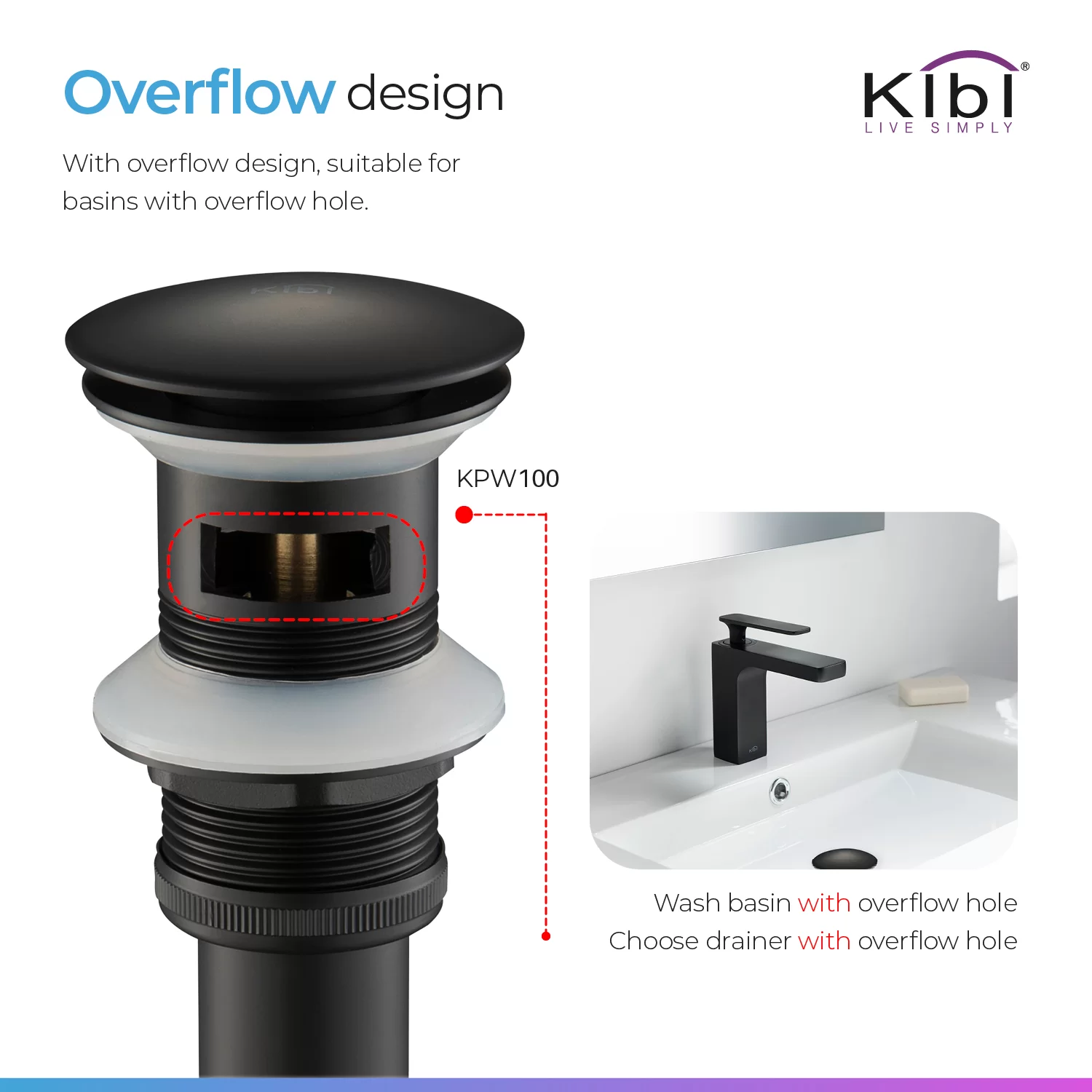
This is how your pop-up drain look like:

enter image description here

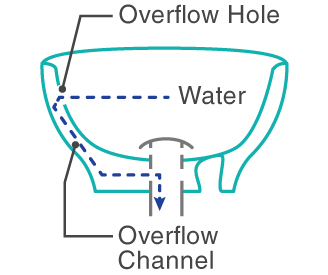
It is designed for the sink like that:

enter image description here

The sink has an internal compartment that connects the round hole in the sink bowl to the drain hole that is leaking. It also continuous with the drain hole in the pop-up drain.

Water from the faucet gets inside the pop-up drain internal hole and fills in the internal compartment of the sink, causing the leak.

You need to install a separate drain connector that joins leaking hole to the drain. You are using wrong pop-up drain for the sink design you have.

4

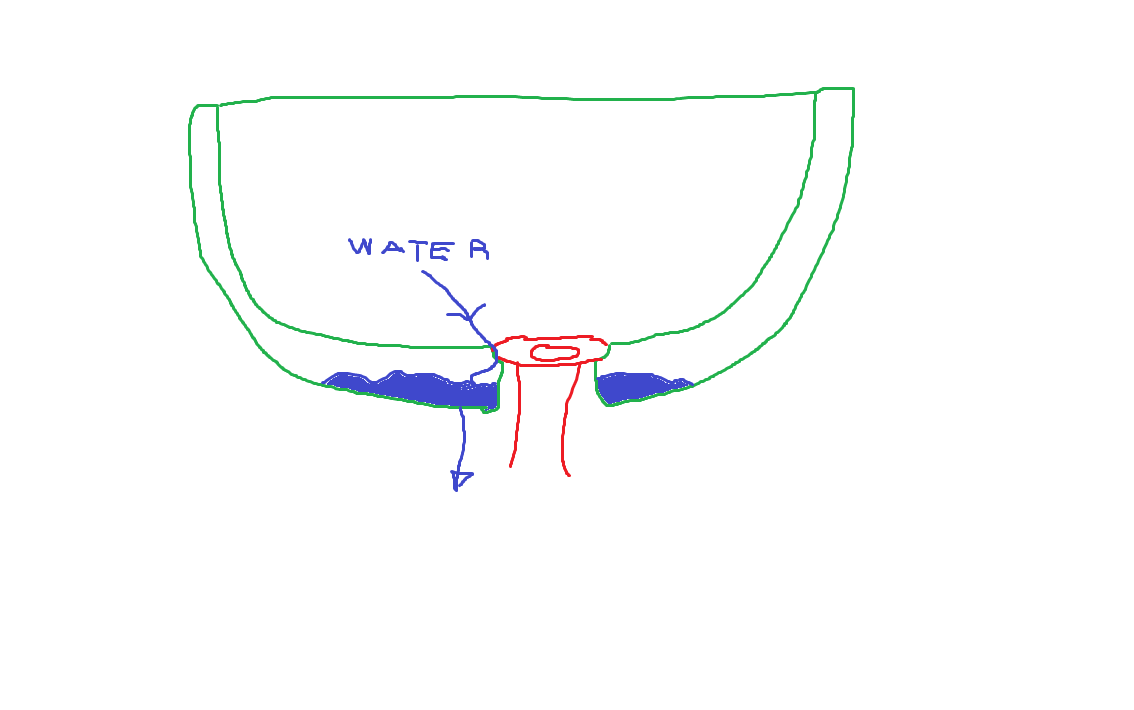
Drawing of sink

Hello, I believe the issue is with the seal between the waste fitting and the sink itself. With the waste shut, the sink should hold water, but instead it's bypassing the seal and starting to fill the hollow sink before flowing out through the hole left from the casting process. You will need to remove the waste fitting and inspect and likely replace the seal. Please note that this is not the seal for the plug itself, as if it was bypassing the water would go down the drain and you'd only notice the level dropping.

1

That hole is too perfect to not be man made. OP stated it is a new sink. I believe it is a manufacturing defect. The faucets look to be mounted to the counter, with the sink undermounted. Therefore they would not have any bearing on the water leaking from the hole. Perhaps the drain is not compatible with an overflow and not sealed well. Any water leaking from around the drain backs into the overflow channel and makes it's way out the hole. So this could be a combination of issues resulting in water from the hole. ( just a thought.)

RMDman
  • 52,615
  • 3
  • 36
  • 113
1

Something similar happened to one of my bathroom sinks but it does not have that hole. Water would leak from the faucet down the back of the sink. Maybe the water coming out of the hole is actually from behind the sink where the faucet is mounted. Use a mirror and flashlight to check.

The faucet I bought was a name brand from Home Depot and like a lot of these new faucets looks nice but is just painted hollow plastic with a plastic tube that runs to the end of the spout where the aerator screws on. When the water was running high volume it could not overcome the resistance of the aerator and would leak at the aerator connection. It was visibly different, I could see water running outside the sides of the aerator, not just the bottom of it. And when that would happen a tiny bit of water would run down the outside of the tubing inside the hollow area of the spout, and out the back of the sink.

The aerator did not have any debris in its intake screen and that surprised me. It was simply either the aerator was not tightened enough or the washer was bad. Replacing the washer and tightening the aerator (just until water didn't run out of the sides, hand tight don't crank down on it) solved the problem. Good luck.

Jay
  • 131
  • 1
  • 3
0

Let's start off with some basic diagnostics before calling a plumber (who will do the same thing for an hourly fee).

Testing the sink

You should engage the stopper at the bottom of the sink and then fill the water to just below the overflow hole of the sink (the chrome port in your picture). Dry everything off underneath and let the sink sit for an hour or so. With water just sitting there, you should have no leaks. If you do, it's most likely the drain assembly at or below the bowl.

Testing the faucet

If at all possible, turn on the faucet to where it leaks and crawl in on your back with a flashlight. Can you see where the water is coming from? If so, you've solved the mystery.

If you can't see where the leak is, the next step is to disengage the faucet from the sink. There should be a ring or set of screws to do that. Don't disconnect the water lines yet. Now, lift up the faucet, turn it on to leaking, and lift the center assembly up to look for leaks. You may have to repeat these steps for the handles, since they are a separate piece.

These are your only potential sources of a leak. Be tenacious and you can find the source.

Fixing the leak

If it's the drain, re-seat the assembly and make sure to tighten it up. Use some petroleum jelly if need be to help the seals engage better. The "wedge" screw-in seal at the bottom of the assembly can sometimes be problematic if the sink has slight manufacturing defects in the hole.

If it's the faucet, it could be the supply lines weren't tightened properly. Some of the fancy faucets have "goof proof" push connectors that aren't as easy as the manufacturers would like you to believe (I had a brand new one that took 5 re-seats to ensure it didn't leak). If it doesn't screw down with a gasket, it could still leak.
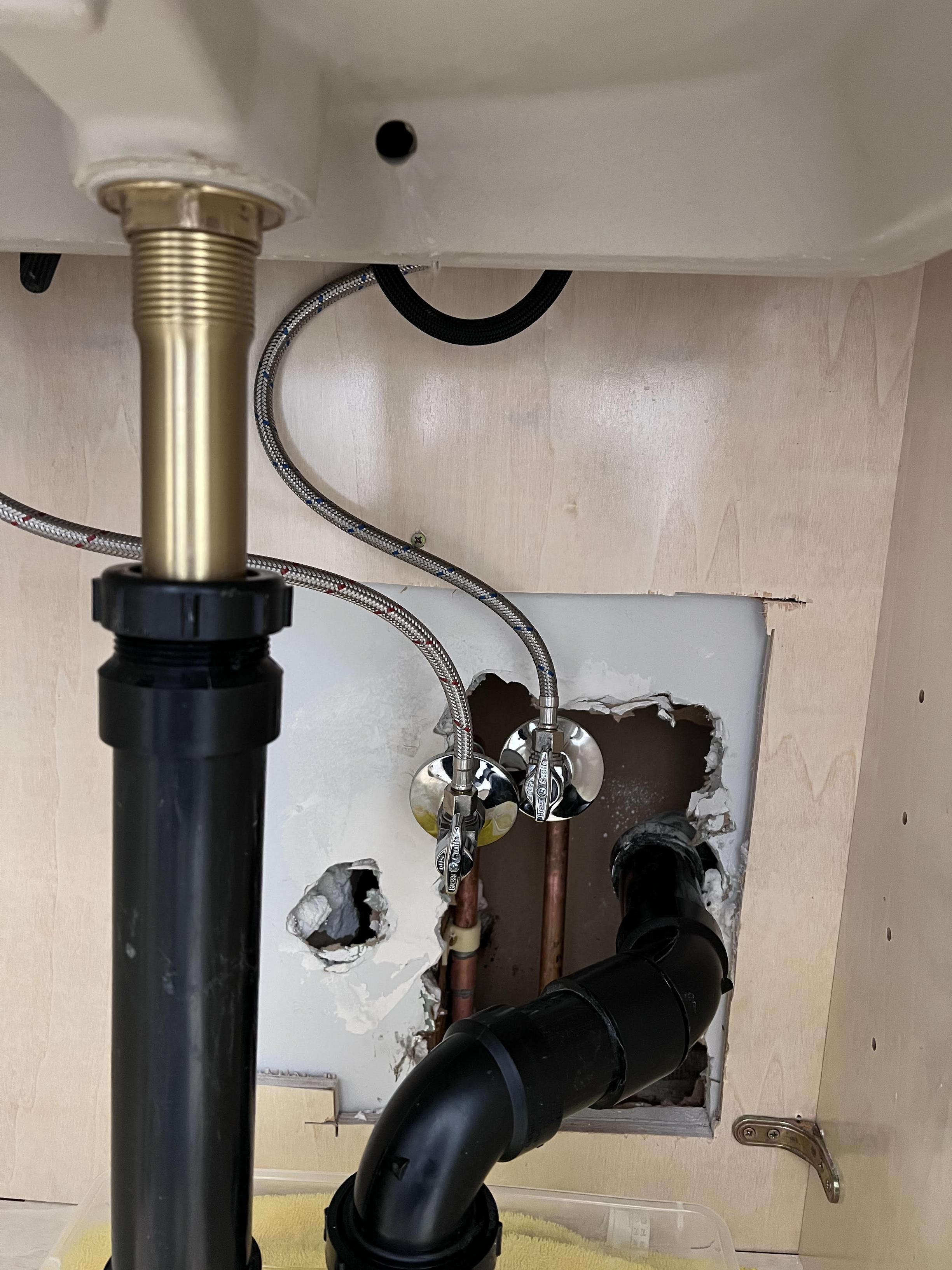
Machavity
  • 26,498
  • 8
  • 44
  • 100
0

@Ruskes stated the correct answer in the comment: "incomplete sink drain installation. That one would be for sink overflow. But considering how the rest of work looks like it is not a surprise."

FosCo
  • 11