20

Here is a picture of what I intend to use:

Enter image description here

I believe (and could be wrong about this) that over time as the structure is moved, the nut that was fastened to hold the structure together will gradually loosen. Is there way to make the nut so tight and fixed that it will never become loose automatically, but only when the user needs to open it?

Peter Mortensen
  • 335
  • 2
  • 8
quantum231
  • 707
  • 1
  • 9
  • 18

15 Answers15

32

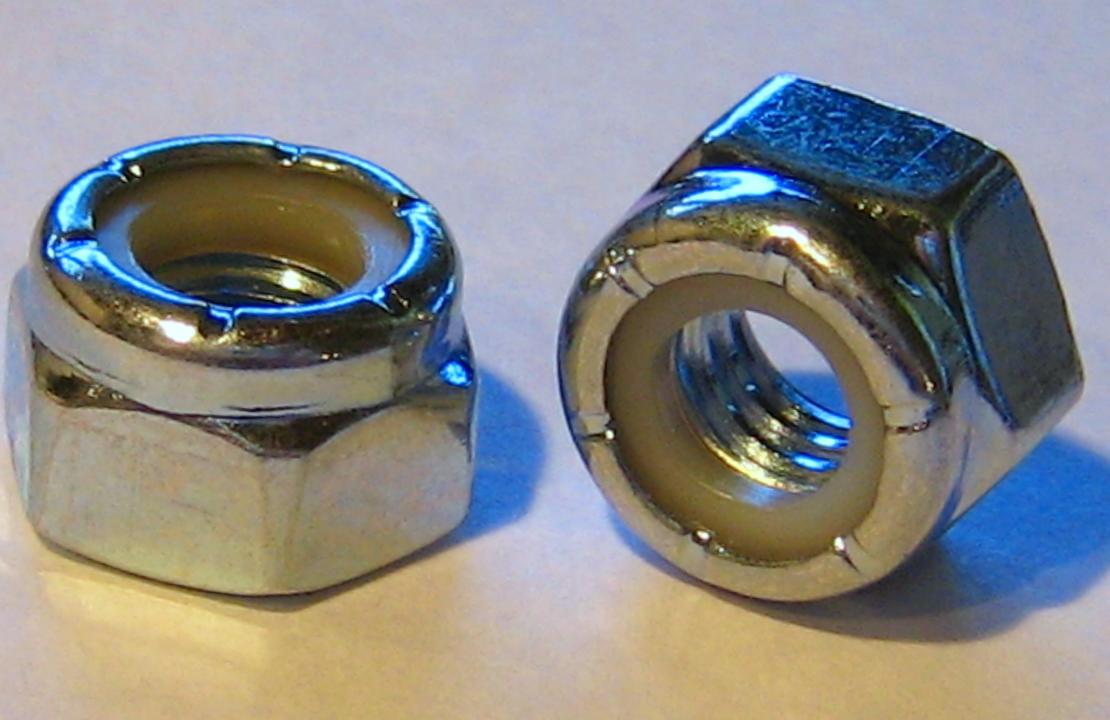
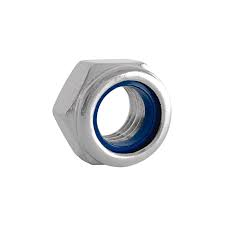
The easiest way is to replace the nut with a Nylanut AKA Nyloc nut: enter image description here By Original uploader was Btarski at en.wikipedia. - Originally from en.wikipedia; description page is/was here., CC BY-SA 3.0, https://commons.wikimedia.org/w/index.php?curid=5047606

These provide resistance such that it will not (easily) unscrew unless you use a wrench/socket to remove it.

You could also use a lock washer between the nut and the washer.

FreeMan
  • 48,261
  • 26
  • 101
  • 206
DoxyLover
  • 14,216
  • 2
  • 30
  • 56
30

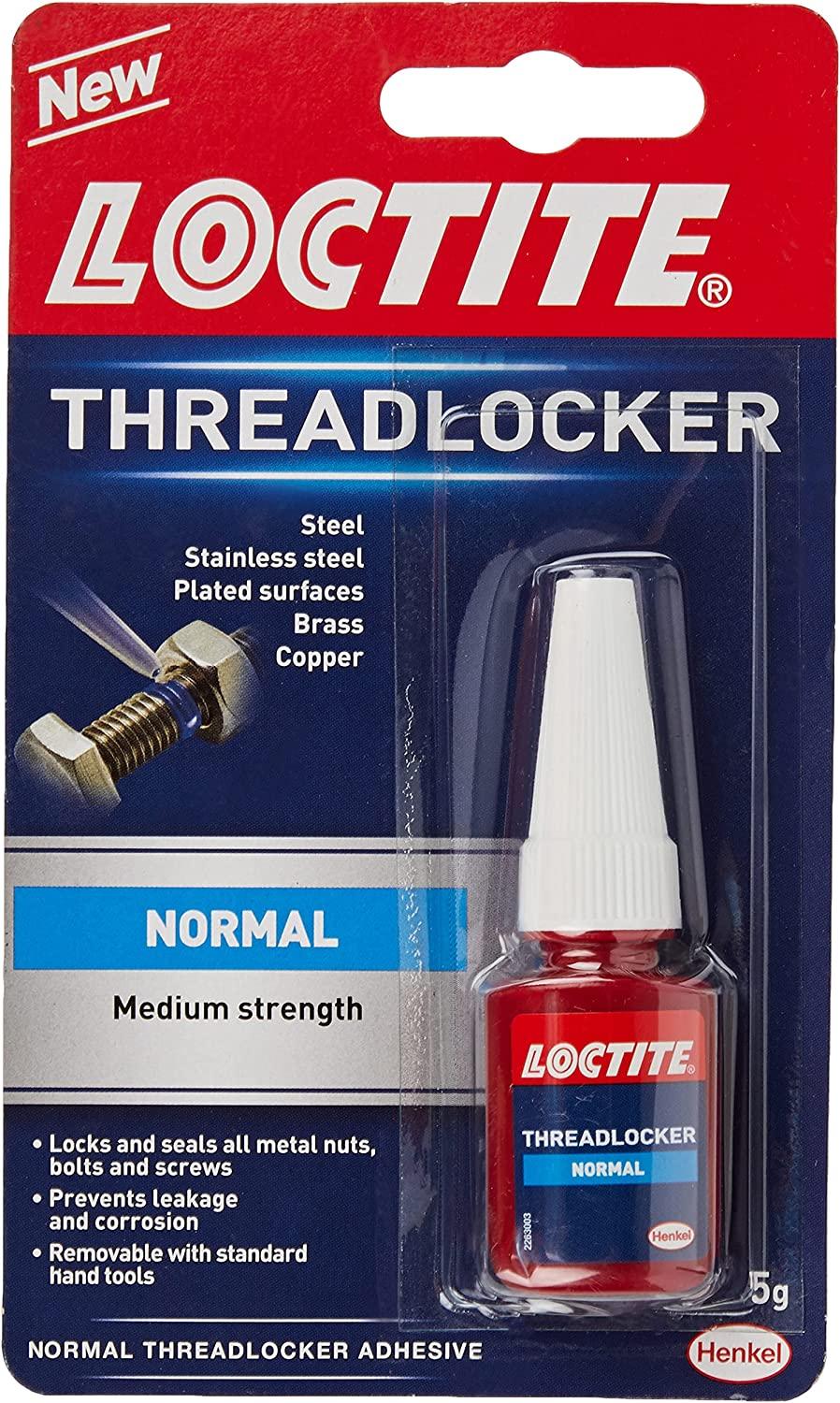
Thread Lock Adhesive

You can use a thread locking compound, such as this. enter image description here

user296800
  • 401
  • 3
  • 2
25

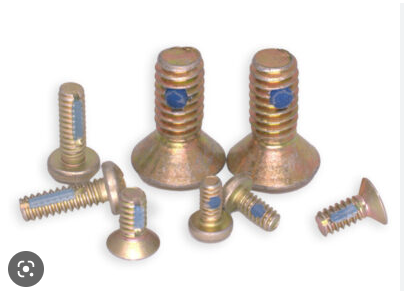
You can also find bolts with a locking nylon patch applied, like these from Nylok: enter image description here

These are useful if the bolt is going into a blind threaded hole.

Added The Following

As I said in a comment below, these are considered superior to even locking adhesives in that chance of an assembler applying the wrong amount of locking compound is eliminated.

For our hi-rel applications, there's a specified process that's followed when using these, and similar fasteners, which include the following:

  1. The bolt is torqued to the proper setting, using a calibrated torque wrench. There are always two operators involved, one to do the tightening and another to witness that the proper torque was used.
  2. Depending on the application, we may apply a dab of structural adhesive to the head of the bolt to further ensure that it won't back out.
SteveSh
  • 7,107
  • 2
  • 15
  • 31
19

Lock Nut / Double Nutting

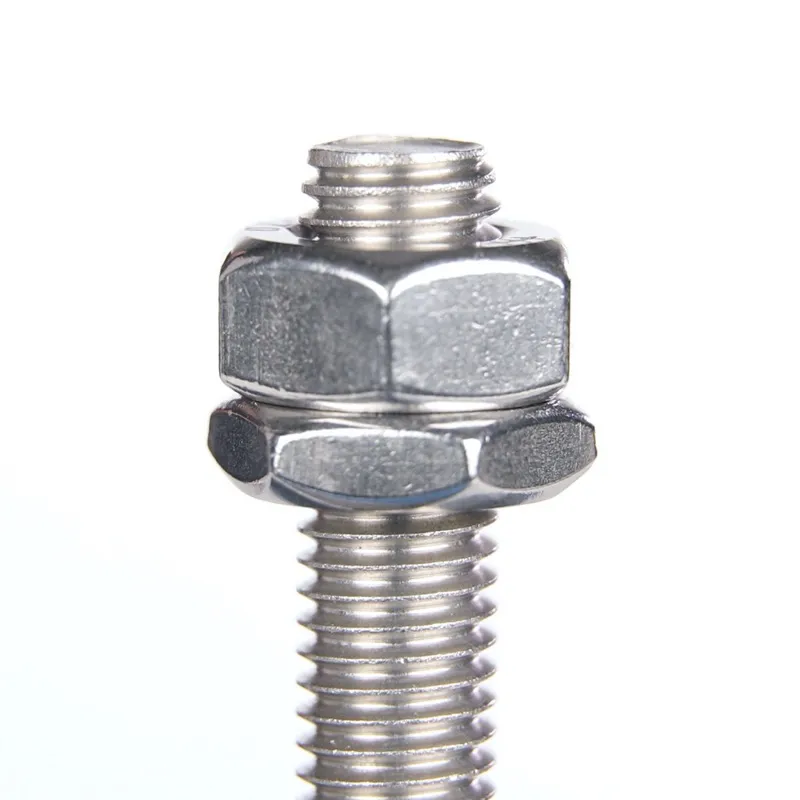
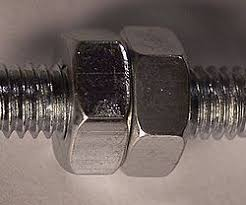
If there's enough thread exposed through the joint, then you can fit two nuts. The first nut is tightened to the required torque for your application, and the second nut is then tightened against the first nut, to a higher torque value.

Traditionally the locknut has been thinner than the main nut, but it is possible to just use two of the same nut.

Example - the locknut may have a larger diameter than the original nut, or it may be the same.
enter image description here

There is some debate about whether the thin locknut should be on first (as pictured) or the correct way where the main nut takes the load and the thinner lock nut goes on last.

Criggie
  • 11,950
  • 2
  • 26
  • 79
17

To round out the smorgasbord a bit:

Drill a hole through the nut and bolt when tight, insert a cotter pin.

Or drill a hole only through the bolt and use a castellated nut. Actually two holes at right angles allows finer adjustments (1/12 of a turn rather than 1/6th of a turn to line up one of the holes with the slots in the castle-nut)

Or use safety wire after drilling the hole. https://en.wikipedia.org/wiki/Safety_wire

Ecnerwal
  • 235,314
  • 11
  • 293
  • 637
14

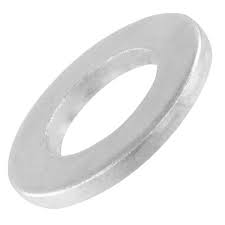
instead of (or with) a regular washer:

enter image description here

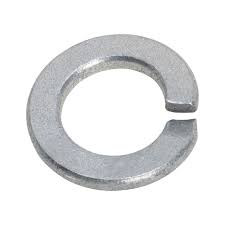
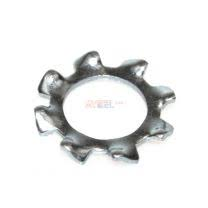
you can use these tension ones:

enter image description here enter image description here

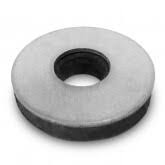
then there is also one with a rubber side:

enter image description here

as for a nut already suggested:

enter image description here

or two regular ones and lock the first one with the second:

enter image description here

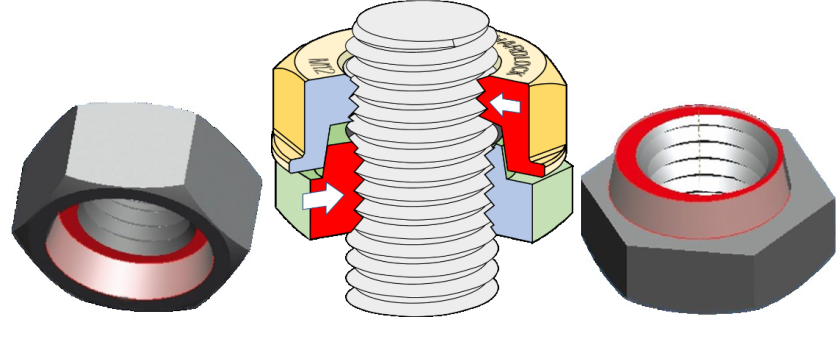
or hardlock nuts:

enter image description here

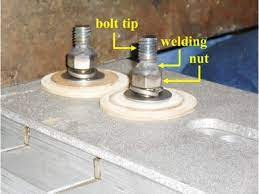
of course the best (one time) securing is to weld bolt and nut:

enter image description here

servant0
  • 417
  • 2
  • 10
9

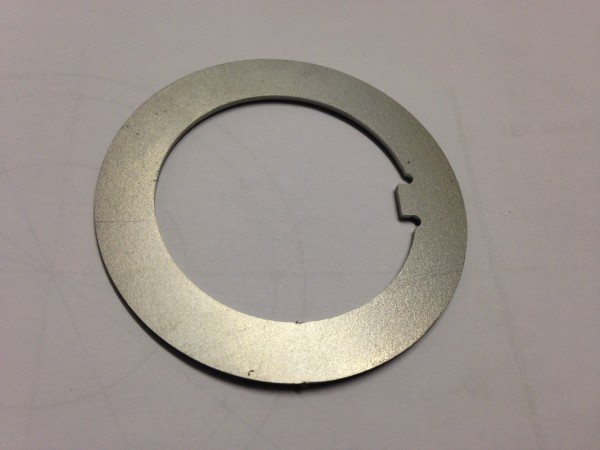
Flange washer

This solution requires modification to the bolt, in the form of a channel or slot running up one side.

Then a washer with a tab/flat is slid on before the nut, something like this:

enter image description here

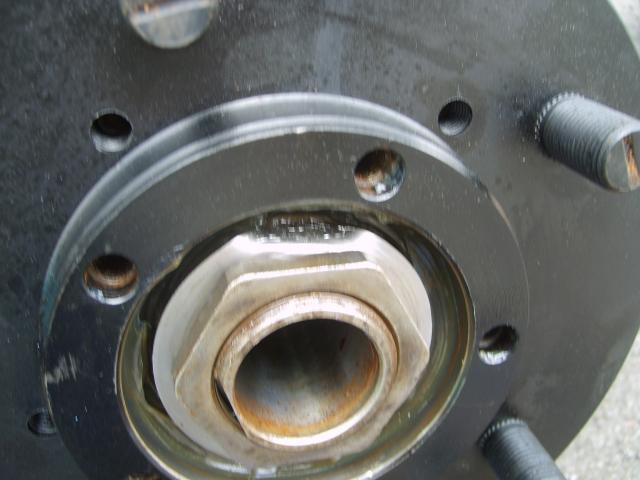
Once assembled and torqued down, the washer is deformed around at least one side of the nut, by using leverage often from a large flathead screwdriver/crowbar and hammer.

This mechanism is common on car wheel bearings. Here's a photo from an old landrover. In this example, the washer is sandwiched between two nuts and one segment of the washer has been folded back (away from camera) and another sector is about to be folded forward around the visible front nut.

enter image description here

Criggie
  • 11,950
  • 2
  • 26
  • 79
9

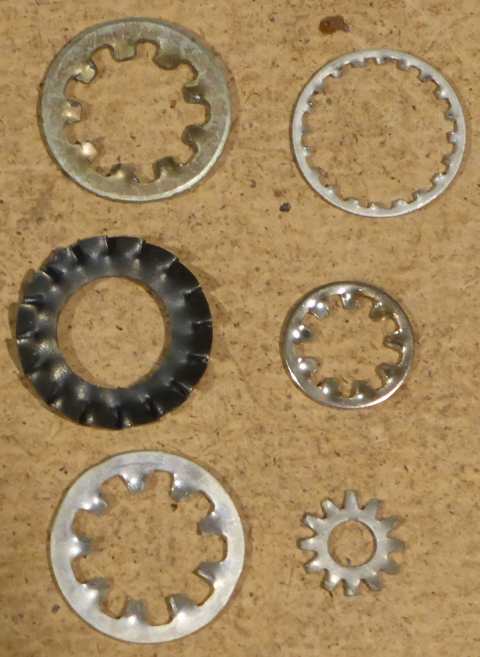
Lockwashers like these can be useful in some applications.lockwashers

QTX
  • 316
  • 1
  • 3
7

Torque the bolt properly.

This preloads the bolt up to some percentage of the breaking load. Under normal use the clamping preload should be greater than the dynamic load the bolt sees.

As a consequence of the clamping force being larger than the preload, it will not deform elastically during use, and then nut will not work loose under most conditions.

vidarlo
  • 2,400
  • 13
  • 20
6

Another, way more permanent plan is to have the bolt about one thread's worth protruding out of the nut. It may well involve cutting said bolt. Then peen the extra thread over, and the two will never work apart.

If the structure needs to be moved frequently then perhaps a different fixing would do a better job. Pop rivets, welding, for example.

Tim
  • 5,501
  • 14
  • 31
4

Lockwasher, locking nut as shown above, threadlocker blue (the removable kind) (choose all three)

BrianK
  • 5,475
  • 8
  • 30
  • 38
4

Depending on the application, you can tack weld the nut to the bolt. Of course this weakens the nut and bolt, and you'll need a torch or grinder if you ever want to remove it, but I have seen this technique successfully used many a time.

Joel Keene
  • 962
  • 1
  • 5
  • 9
4

Aircraft used safety wire through the nut/bolt for critical applications. ( May have changed in the many years since I saw them.)

blacksmith37
  • 8,401
  • 2
  • 18
  • 33
2

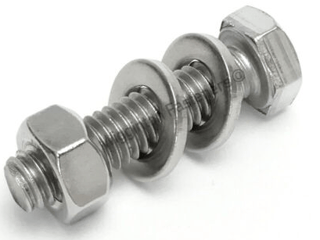
The most important thing to do is to ensure that, in the final assembly, there is no rotational degree of freedom around the axis of the bolt.

For example, I have a number of cooking pans where a single bolt holds the handle to the pan. They all repeatedly come loose and require re-tightening, because the handle can rotate slightly back and forth around the axis of the bolt. But the same can happen in arrays of multiple bolts, e.g. corners of a rectangle where sides are independent pieces, where the positions of the bolts aren't held rigidly relative to one another, allowing them all to rotate back and forth. No matter what you've done to try to prevent loosening, bolts that act as pivot points will always loosen.

To solve this, you need to have enough bolts, in the right places, to rigidly constrain the whole assembly against this. At that point, you can think about other measures to eliminate loosening from vibrations and other smaller-order effects.
Toby Speight
  • 481
  • 3
  • 11
1

Linseed Oil

If you are working on odd-jobs and have an average garage at your disposal, linseed oil congeals to a rubber consistency (See info about polymerization of linseed oil) .

enter image description here

bandybabboon
  • 179
  • 8