That's what happens when you combine neutral and ground
... and why it was outlawed as of NEC 1999 or 2008 for sub panel feeders. And 1996 for ranges and dryers. And 1966 (pre-moonshot) for everything else and as early as 1955 for some things.
I'm using the big font in the hopes that they can hear me across the pond :)
"I don't need separate neutral and ground! They're the same thing!" Actually, they're not. Neutral is the normal current return. Ground is the safety shield. When you mix them it's not ground anymore. It's neutral and you don't have a ground.
In fact, as we stamp it out in the USA it's resurfacing in the UK. They don't have local ground rods on their dwellings, they take ground from the utility. (called TN-S in their scheme). And of late, the utilities are treating N and G as the same thing and combining them, in a single PEN (Protective Earth and Neutral) wire. This scheme is called TN-C-S. This may be done silently without notice in the course of maintenance on supply lines. And when the PEN wire breaks, it does the same thing as you experienced - energizing all the "grounds" which aren't really grounds, since PEN isn't ground.)
But even worse, it breaks the GFCI protection. John Ward has a lovely video on the topic.
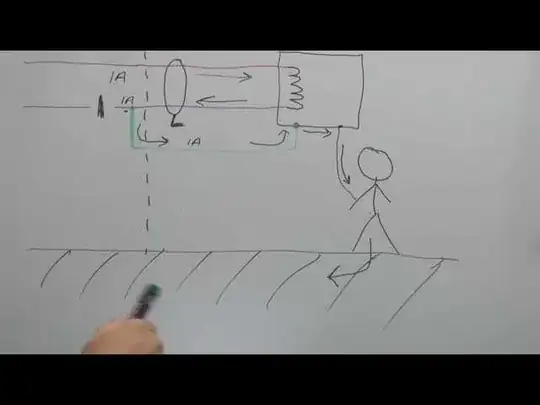
(not a perfect metaphor because the British only have one "hot" wire. Imagine a second hot.)
And all that would be something UKers mostly live with, as people call when the power goes out, and with the high-density housing there, only a minority of people have electrical tools in their hands while in contact with actual dirt. However, the UK is starting to charge electric cars, and that has pushed the problem to the forefront and demanded positively byzantine schemes to protect you from "protective earth".
4-wire feeders are your friend. Run quadplex.
Here's the important part: when you run 4-wire feeder to a subpanel, you separate neutral and ground at the subpanel. (and bond your local ground rods to the ground, not the neutral).
The trick with this is... most people with any experience installing overhead lines do most of their work for the power company. Who follows different rules, as you may have noticed. So when you ask for an overhead line feeder, they will automatically reach for the triplex. You will need to jump all over them and say "no no, quadplex. REALLY." Best to just fib and tell them you have a 3-phase converter in one building and want to distribute 3-phase to the other building. Fix it after they're gone lol.
I suppose you could obtain an XHHW wire and furl it onto the existing overhead line.


