11

I need to replace my water heater. I've happily been using gas for the last 30 years and will continue to do so.

I have a minivan which will easily swallow the heater and all its packing material, but I'd have to lay it down to get it in. Are there any components inside the heater (or welds, etc. holding them together) which might be damaged by being transported for ~30 miles on its side?

The exact brand/model of heater to be purchased have not yet been determined, so I cannot consult the manufacturer's information to determine if this is permissible. Also, I've seen the boxes at the store and they all have a "This way up" arrow, so, of course, they're intended to remain upright.

I can get a truck to transport it upright if necessary, but that'll add 60+ miles to the trip to pick up the truck then the heater, then return the truck, and it'd be easier if I can avoid that.


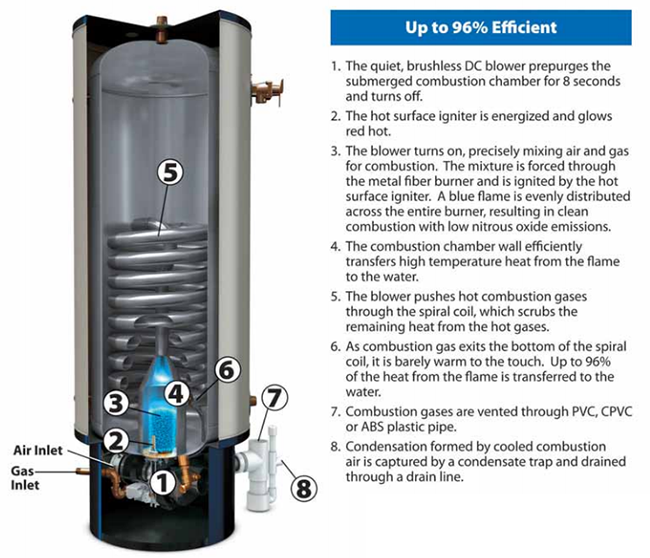
My concern, which wasn't well articulated, may have been based on the assumption that there are a lot of internal workings in the heater itself, somewhat like this:

enter image description here
image courtesy of americanwaterheater.com. No endorsement intended or implied

While it appears that the majority of gas, tanked water heaters are probably more like this:

enter image description here
image courtesy of mrrooter.com. No endorsement intended or implied

i.e., I thought there were a lot of internal gubbins that might get broken if transported horizontally, while it appears that, most likely, I'll be buying a very simple (non-condensing) model that will have very few internal components to break if they're laid on their side.

FreeMan
  • 48,261
  • 26
  • 101
  • 206

7 Answers7

18

I recently purchased a direct-vent water heater, and after consulting the salesperson I learned that certain markings on the carton indicate which sides are acceptable for transport. Every unit will have different packaging, and it's critical that gas-carrying components are not stressed. You could experience hidden leaks.

Also, be aware that the central part of a carton is often not shielded or supported--most such support is high or low. If you were to tip the carton against a truck bumper, for example, you could damage the heater cabinet.

When in doubt, carefully cut a window in a hollow area of the carton and have a look. It should be fairly apparent what the manufacturer intended, and then you can see where the fragile components reside.

isherwood
  • 158,133
  • 9
  • 190
  • 463
13

A water heater can be transported laying on its side, as long as it's not violently bounced or rattled. I would keep it in any packaging if possible until it's being installed.

I called a plumber friend. He said every tank, gas or electric that he ever I installed he placed on its side, in his van... never was a problem.

isherwood
  • 158,133
  • 9
  • 190
  • 463
RMDman
  • 52,615
  • 3
  • 36
  • 113
8

Radical suggestion: Ask the manufacturer how to transport it safely in a minivan? I would bet most purchased by consumers get brought home that way, and the manufacturer can probably tell you what precautions to take. Try to get them to promise that this does not void the warranty. If they won't, it might be worth considering finding a manufacturer that does approve ... or pay the surcharge to rent a truck to bring it home.

keshlam
  • 33,603
  • 5
  • 56
  • 110
3

Based on one I helped decommission from gas (dented outer shell and discarded in new condition) for use as a solar storage tank, there may be parts important to gas safety that could bounce loose laid sideways.

The one that comes immediately to mind is a large ceramic plate with many small holes that serves to let combustion air in, while (I presume from the small holes) keeping flame from going back out the same path - this was set just below the burner, and was not held in very firmly (I took it as an object of potential but as yet unrealized use) - we filled the flue-hole with foam for storage tank use. Of course, that same function may be realized differently on other model of gas heater. But I could see that getting jolted loose and needing to be restored to its proper position.

Ecnerwal
  • 235,314
  • 11
  • 293
  • 637
1

I would not think twice.

After all, this is how people (including the average plumber) transport big items and the manufacturer should be aware of this fact.

Also, the new water heater is in fact a big empty container made of sheet metal and styrene/urethane foam. The rest is a feet or two of gas tubing and some electronics. Neither is particularily heavy to be sensitive to acceleration.

If ever in doubt, RTFM (read the fancy manual).

Whatever the make and model of your water heater is, chances are it has its both user manual and service manual somewhere online. The manufacturer website is a good place to start searching.

Failing that, I will look at the box for symbols like this:

enter image description here

(Image credit: Adobe)

Chances are there will be none.

fraxinus
  • 3,817
  • 8
  • 15
0

Ok...this end up or this side up are the same they refer to how to stand the box when opening so you have item correctly oriented after cut box away from it...its not a fridge(which is why most are asking this question)...if there were issues with transporting sideways or upside down the manufacturer would say so just like they do with items with refrigerants inside compressors and they tell you if you must transport sideways do not immediately plug in until its been upright for x hours. These things are jostled during shipping to the stores more than you think just be careful handling it you won't break it in its orig packaging. Yes I've installed a few myself. I find it ironic those who say why would they tell ya how to open it if the letters on the box are correctly oriented!! Youre talking about a world where you have put cautions on grinders not to put your body parts in them or fan blades not to touch them lol yes they idiotproof the world

Jus
  • 1
  • 1
0

So many people say to look for "this end up", but doesn't that simply tell you which end is the top? I would assume that unless the box states "keep upright", or something of that nature, you should be fine to transport it in your van. If all else fails, ask whoever you buy it from.