12

The room is at south-west on the second floor, so a lot of sun exposure. The temperature got unbearable up to 36.5°C (97.7°F) yesterday. The outside was 37.5°C (99.5°F). I live in a hot and humid country. There are 3 windows in the room. I've already blocked all the windows with cardboard, which helped a little but it is still too hot. Is there any way to reduce the heat without air conditioning? We are trying to reduce the electricity bill.

The room is shaded in red, and the blue is windows.

isherwood
  • 158,133
  • 9
  • 190
  • 463
user165673
  • 121
  • 1
  • 4

8 Answers8

14

First of all cardboard is not a good reflective insulator.

Second, hanging cardboard on the inside will not help much since the heat has already entered the room through the glass.

Get some aluminum cooking foil that will reflect the heat and attach it to the window from outside.

DIY75
  • 20,686
  • 3
  • 23
  • 47
7

You need to do your best to cool the whole building overnight, then keep it cool with shade during the day. External shading of windows (and walls if not well insulated) is better than internal, but the latter can still help.

Stopping solar gain in the rooms below is important because the hot air will convect into the room where you're suffering. Summers here aren't regularly all that hot, so we don't have air conditioning - in a heatwave I shade the downstairs south windows with large parasols, but upstairs have to make do with silvered blackout blinds on the inside.

You can also look into reducing solar gain from the roof. I've lined my attic with foil emergency blankets partly to keep it cooler in summer (also so I'm not always in my own light moving around up there). Again, anything you can do externally will help a lot.

Chris H
  • 9,091
  • 1
  • 22
  • 40
7

We have used two techniques on one of our properties.

  1. Retrofit Double glazing (Secondary Glazing) - Where another window is installed on the inside of the existing one. The outside were sash windows, the internal ones are slides.

  2. Window Film - this is an adhesive film applied to the interior of the windows and reflects some of the heat back. We used this on windows where it was not possible to install the second glazing.


We got a company to do the work, but you should be able to apply the film yourself. We are happy with the results. Obviously, these are not as good as replacing the joinery with double or triple glazing, but they worked for us. We elected to do this after we saw the result on a demo setup at a home show.


Example of Glazing

Retain your existing joinery and the natural character of your home with our retrofit double glazing solutions. Your existing window frames, aluminium or timber, can be retro-fitted with new, genuine double glazing. By choosing The Double Glazing Company’s retroGLAZE® system, you will save significantly and increase the health & comfort of your home.

From Retrofit Double Glazing


Example of film

Virtually invisible insulation. Enhance comfort and efficiency year round. This low emissivity window film helps improve the insulation value of a typical single-pane window close to that of a double-pane window, and of a double-pane close to that of a triple-pane.

From 3M All Season Window Film


I am not associated with either company. I have deliberately linked to a different company's site than the one we used. The links are where the quotes are from.

Rohit Gupta
  • 8,055
  • 12
  • 26
  • 38
3

If you have access to lower floors a good solution is to draw cooler air from there:

  • Open windows on lower floors
  • Close curtains on lower floors and in this room to minimize sunlight, but make sure to allow air flow through the open windows.
  • Open all doors between this room and lower floors
  • Open one window in this room and place a fan blowing out in the window. This will bring air from lower floors into the room, and fresh air from outside into the lower floors.

If you do this very well, you can get the room down to the outside temperature. You can't do much better than that.

This will also bring a lot of dust into the house.

jay613
  • 49,543
  • 6
  • 70
  • 201
1

White paper (for reflectance/radiance) over cardboard (for insulation) should work better than either alone. I have thermal drapes which have a white plastic layer in the side facing the window; sane principle.

But you may be getting heating if)through the whole wall.

If the air temperature outside is lower than inside, a fan in a window can help a lot. It outside is hot too, running a fan at night when it's cooler can at least help start the room at a more reasonable temperature. Opening a window elsewhere and setting the fan to blow outward can help make that more effective, or using a pair of fans in that room with one blowing out and the other in. Fans will also make people feel cooler by evaporating sweat more quickly.

Note that how much power an AC will demand depends on how low you try to push the temperature. If you're willing to settle for bringing the room down to 28 degrees, that should burn less power than trying to bring it down to 20... assuming the AC is capable of doing either against this load. You can also consider running AC only during hours when the room is in use; I typically start my bedroom AC an hour before bedtime and turn it off around the time I wake up.

keshlam
  • 33,603
  • 5
  • 56
  • 110
1

Reducing the amount of sunshine that reaches the facade would help keep the walls cool. Here in Berlin I noticed that even a thick stone wall facing south was warm to the touch after a few days of intense sunshine in the summer (days are long here in summer).

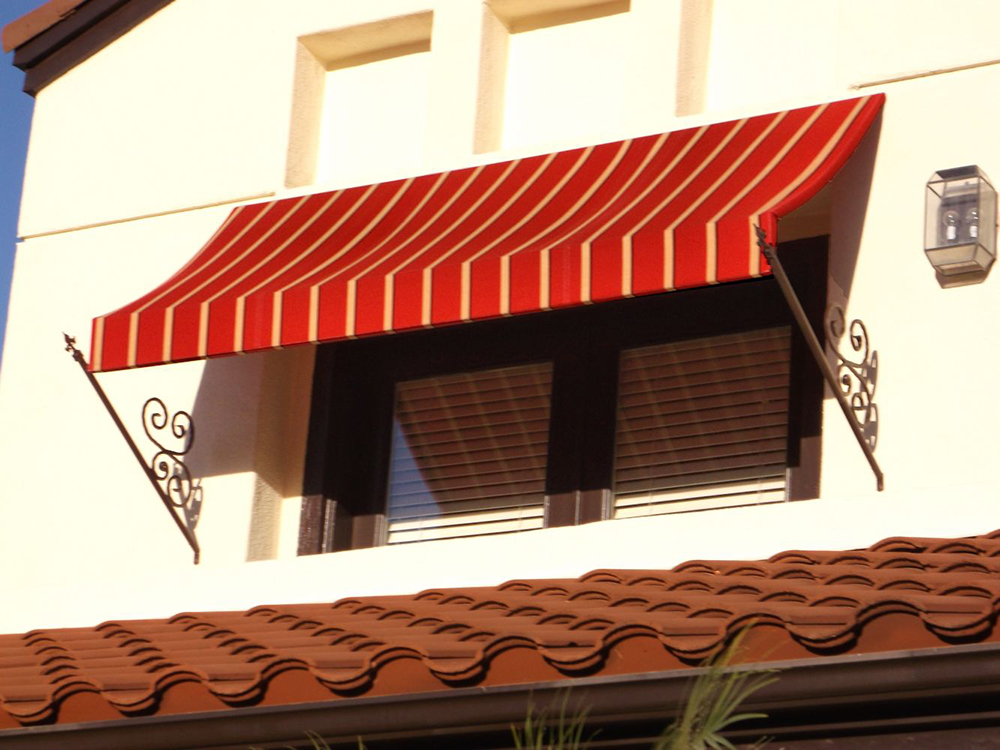
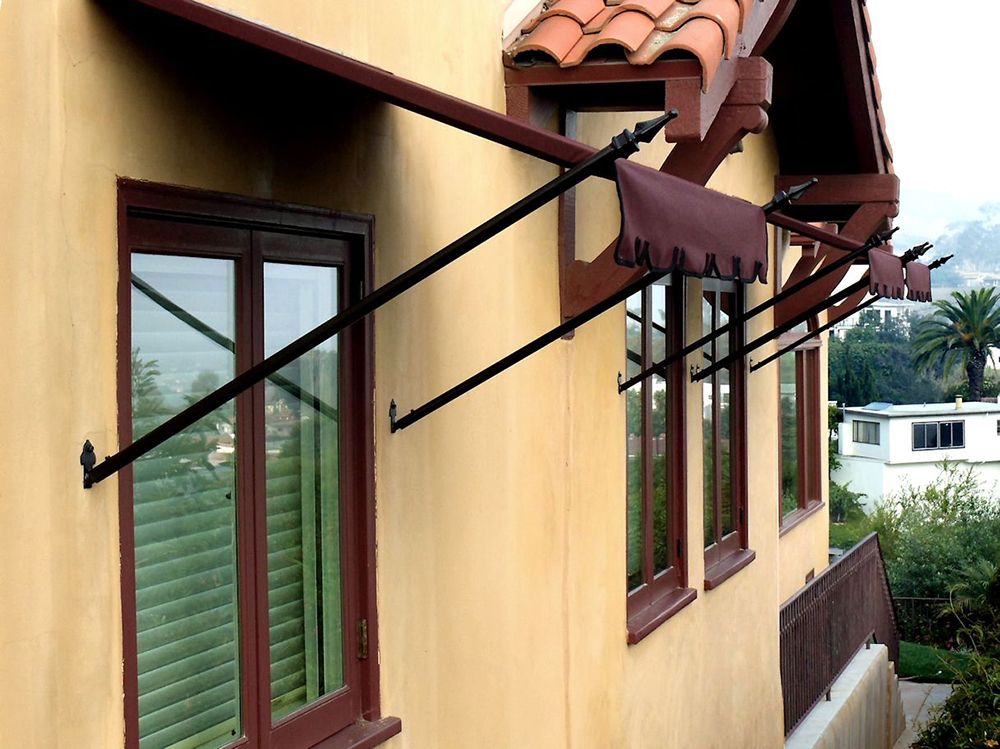
Installing an awning or some sort of reflective insulation on the outside would help (although I realize that that may be impossible or too elaborate). It is important that it be on the outside: The wall is a buffer, averaging night and day temperatures. It cools the room during the day, while it will absorb some of the day's heat. It is essential to minimize this absorption, but you want to expose the wall to the inside for day cooling, so no inside insulation.

If there is not too much wind you may be able to rig something up with a sail-like fabric attached to ropes from windows and the roof etc. A commercial awning like this or this could be a permanent solution within reach, depending on your budget or DIY skills and your landlord's cooperation.

Of course, water is a very effective cooling method. Even in a humid climate, water on a hot facade will readily evaporate and cool the surface. Traditionally, water is sprinkled on streets and gardens for coooling, as in the Japanese tradition of Uchimizu. There are commercial solutions using evaporative cooling of facades, and evaporation is what keeps gardens and parks cooler than cities. Regularly spraying the wall of your apartment from the outside during the hottest hours should have a strong effect.

0

As you're keeping the room very slightly cooler than outside, you're already doing well, considering the sun is shining on it.

I live in temperate climes, where 30+ degrees is fairly rare & cooling was not a consideration at the time the house was built. My most exposed room, however, if exposed to direct sunlight all day [two outside walls and the roof directly above], can easily reach 38° whilst outside is still <25°.

Various answers have raised methods of shading it further from the sun, either externally or internally. All positive ideas.

To take another tack entirely, what temperature does it drop to overnight outdoors and indoors? This could materially affect what you need to do to keep it cooler during the day.

As the building seems reasonably effective at keeping the heat out, it's also likely to be good at keeping the heat in.
This would mean your optimum time to cool it would be overnight, by a form of air exchange. Residual heat stored in the walls & roof is going to slow this process down but drawing in cooler air whilst expelling warmer may reduce your internal temperatures towards those outside at night; at least making the whole heat cycle have to start again each morning, as you then close down this airflow.

At minimum this could be by simply opening all the windows, or better by channeling simple fans to provide a distinct through-flow of air, like inside a computer case - cool in the bottom at one end, hot out the top at the other.

Nothing other than 'true' air conditioning, of course, is going to be able to do anything about the humidity.

Tetsujin
  • 11,635
  • 1
  • 22
  • 40
0

Get an external share or blind. Blocking the sun with cardboard from the inside will not help much, because cardboard will dissipate the heat to the air in the room.

However, blocking heat from outside, with automatic, solar-powered screens, will make your house cool without using any electricity.

Highly recommend this company. https://www.youtube.com/watch?v=w1ATAvjX-cM

very big cat
  • 101
  • 1