15

I contracted a company to remove a closet partitioning wall along with a header and a few small pieces. That work was all approved by a structural engineer in an official report.

However, I was also having the company install a power outlet in the same location as the now removed wall.

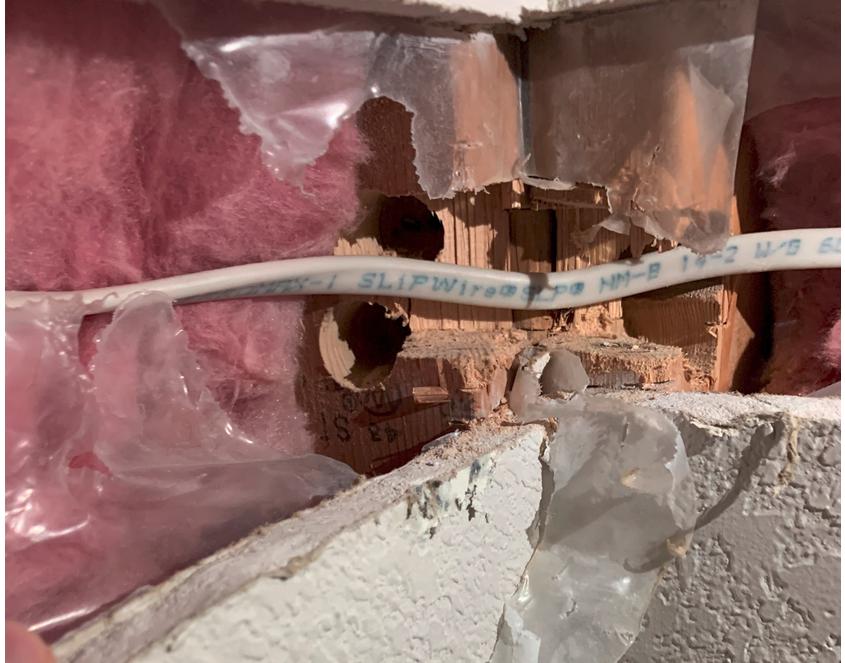
In the corner of the room, the electrician drilled four holes into what I believe to be a load bearing stud while trying to route a cable before abandoning that tactic and cutting squared pieces out of adjacent 2x4s. the guy seemed flustered and rushed, which is making me feel like he may have messed up here.

I've attached photos, some are the holes, and others are contextual to show the stud's location. Is this a problem?
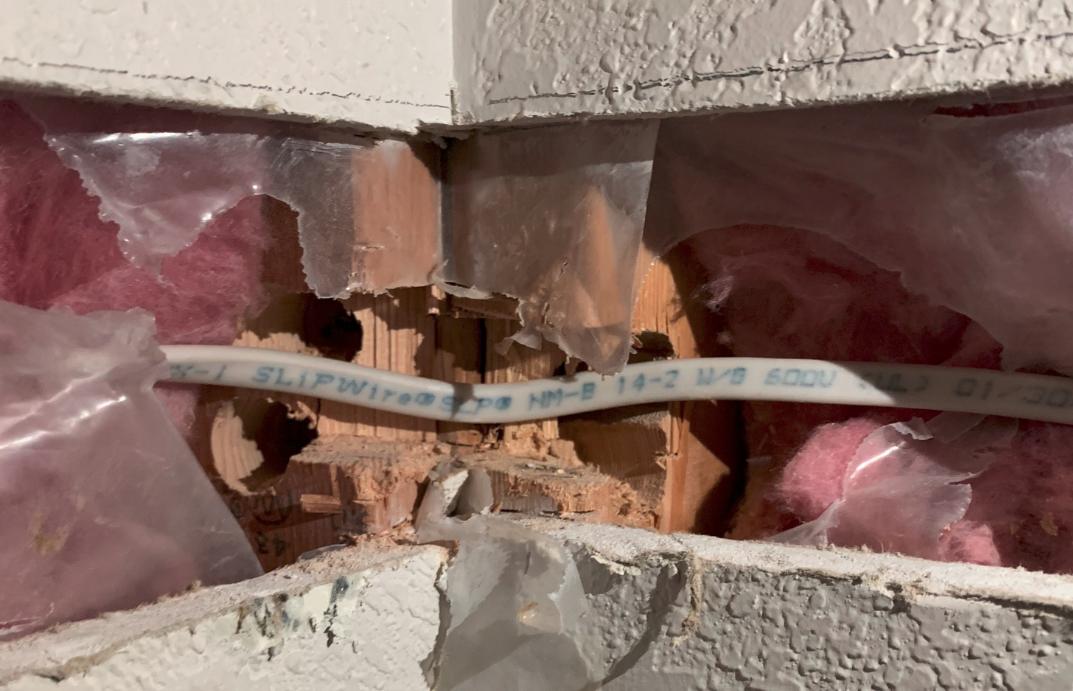
Holes enter image description here

Alternate angle enter image description here

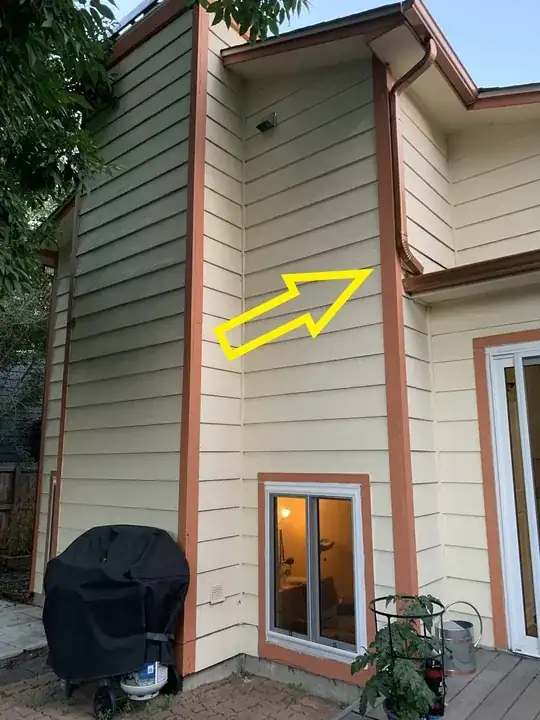
Exterior location

Exterior location

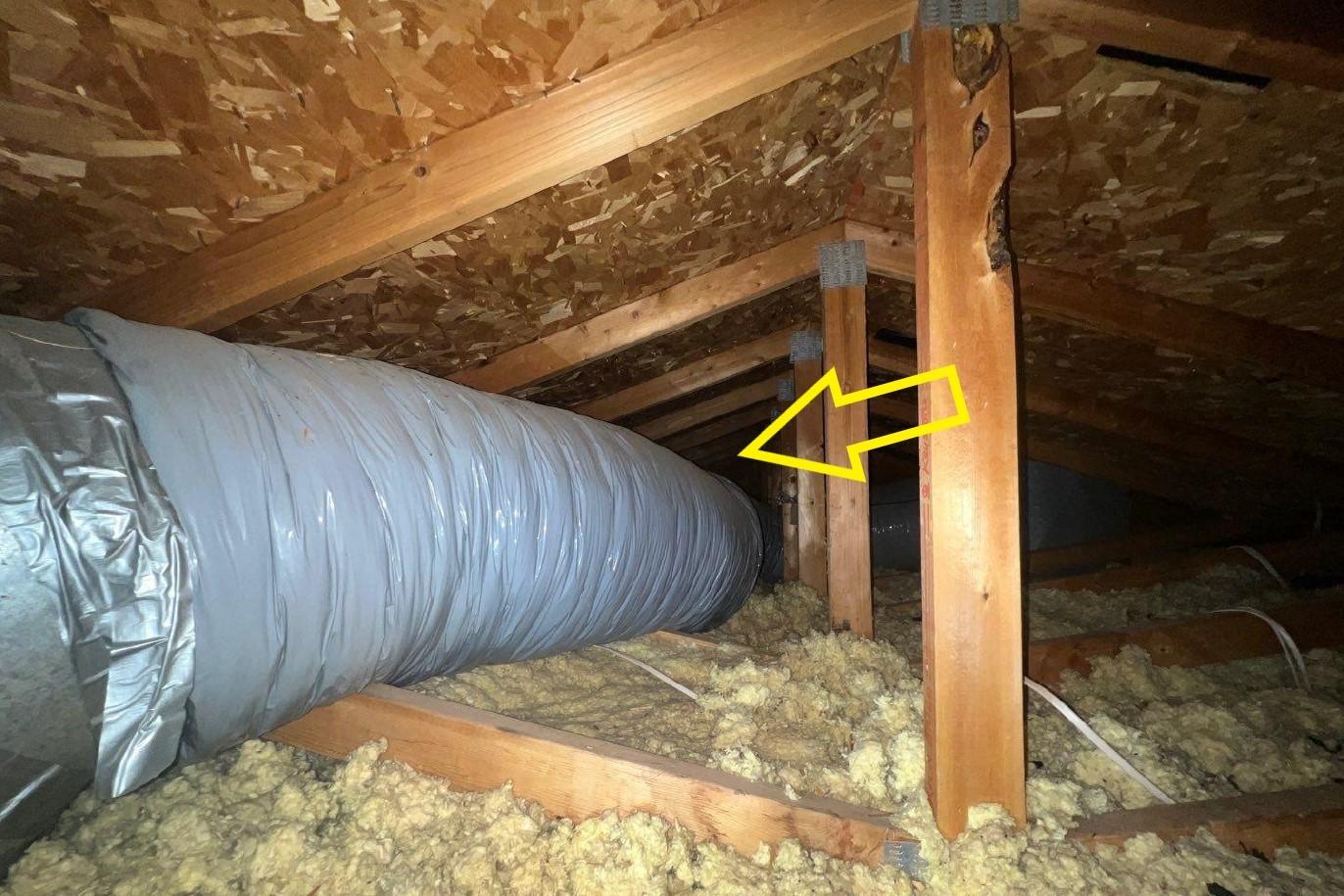
Attic Location enter image description here

In response to the other commenters advising caution, my engineer was a pretty generous guy and I sent him what I sent you all plus some more. Hopefully he won't mind putting my mind at ease "under the table". Additionally, the contractor will be out today and I'll show him exactly what happened and ask that he at least do something to both protect the cable and put our minds at ease. Thanks again.

isherwood
  • 158,133
  • 9
  • 190
  • 463
Kyle
  • 153
  • 1
  • 5

2 Answers2

25

That is a little rough. It's not a problem.

  • Any stud is part of a system, which includes many other studs, wall plates, wall sheathing, the roof structure, etc. You could take just about any common stud out of a home completely and nothing would happen. The fact that this is a double stud (maybe triple with the sheathing backer outside) means that this damage is even less of a concern.

  • It's on a corner, which means that it's locked in place on both wall planes. There's no concern that the stud can bend whatsoever.

  • There's not much load there. The gable end is basically a giant shear wall. Not much of the roof's load is transferred to that corner.

  • There's actually quite a bit of wood left--probably the equivalent of a whole stud.

  • Inspectors know the things above and aren't concerned with one gouge here or there unless it's in a much more critical member. I've seen much worse in new construction where rigorous inspection passed just fine.

I would ask the sparky to put plates over the cables to protect them, though, and they should be gently let into the studs so they don't bulge the drywall.

Folks here will wring hands over this, but that's partly because they take individual, minor code violations as harbingers of doom and partly because they don't understand the big picture very well. After demolishing many structures in part or whole, modern and archaic, over many years, I have good insight into what makes a structure unstable. This isn't it. Sleep well.

isherwood
  • 158,133
  • 9
  • 190
  • 463
1

I agree it's not a concern, but that is a lot of holes.

For comfort's sake I would fill the holes by getting plugs made out of similar or harder lumber, cleaning up the holes if need be so they are dimensionally tight to the plugs - no more than 1/16” slop. Then mix up some West System 105 epoxy, wet the interior of the holes for good soak-in, then add in 403, 404 or 405 adhesive fillers to thicken it up, heavily coat the hole and plugs with that, and pushing them in until it oozes out everywhere :)

Then use the same process to glue in some blocks to fill in front area of the studs.

That will be as strong as the original stud, if not stronger. Dimensional lumber (typ. white pine or redwood) isn't that strong :)

Harper - Reinstate Monica
  • 313,471
  • 28
  • 298
  • 772