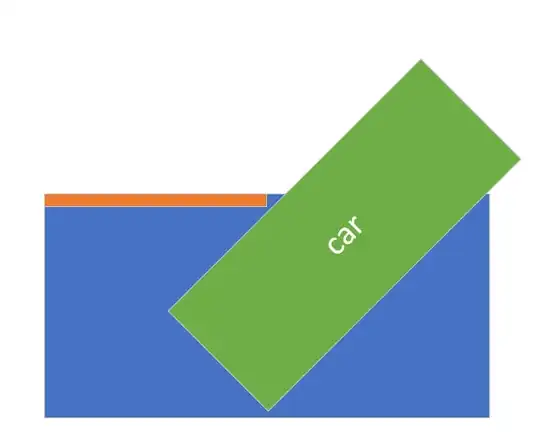
For nearly all cars, I expect the answer to be No, this parking spot will not be usable as currently described. For this example, I've used a 5-door Kia Rio, generally considered a small car. It is drawn to scale below, excluding the mirrors. I drew your spot to scale with the car, including with a gate opening half of the spot. It doesn't allow the car in. You cannot achieve the angle needed to make it between the gate and fence without hitting one or the other.
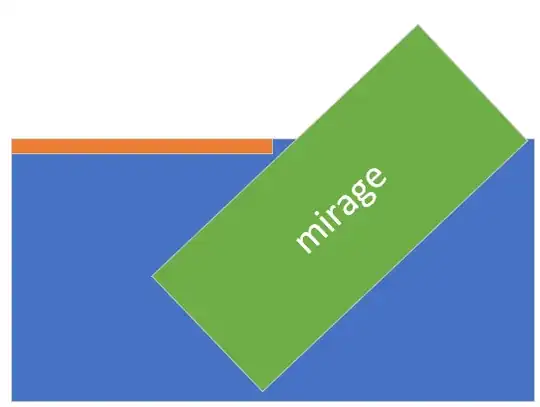
If you use a very small car this can work. Barely. Here is the same drawing with a Mitsubishi Mirage, the smallest car currently for sale in the US. Parking this will be an incredible headache, but it's possible. You'll likely scrape from time to time unless you're an absolute expert driver.
If the car can temporarily exceed the bounds of the parking spot, say if there's a walkway next to it that can be temporarily blocked during parking maneuvers, this will work slightly better and perhaps allow a bigger car such as a MINI to park there. It will still be incredibly tight.
If you come up with a gate that opens wider, to say two-thirds the width, parking a few more cars becomes possible. It will still be tight but won't need quite the perfection of the above plans.
If you remove the need for a gate, so it's just an open spot, it becomes almost trivial. It's an ordinary parallel parking spot at that point. Parking in it will be quick and easy with a bit of practice. Most midsize and smaller cars will fit just fine.
Oh, and just for giggles, here it is with a Smart Fortwo. With a car like that, parking in this spot is easy.

Note that all of these scenarios will require you to back in, parking in a parallel parking style, to have any chance of success. Trying to go nose in will not work. If there is a gate that stays partway in the way, it must open right to left. Otherwise you will be trying to parallel park facing the wrong direction to traffic, which sounds awful. The only vehicle that will make it in nose first is the Smart.


