3

I am wiring an old garage. I will have 5 circuits. I am trying to install a GFCI breaker and a GFCI receptacle on separate circuits and I can't get either one of them to work. I can get a regular 15 and 20 amp breaker to work, but not the GFCIs.

I think my problem is not knowing what to do with the white neutral pigtail wire. Because it had been previously used with both the ground wire and the neutral wires slotted together, I just thought the same would work for the GFCIs. What am I missing here?

Yes, I did read through the similar questions and threads, but they don't get after my question specifically enough. I understand that this panel comes in directly from the power pole right behind the garage.

enter image description here

enter image description here

FreeMan
  • 48,261
  • 26
  • 101
  • 206
Chip
  • 39
  • 1
  • 4

3 Answers3

8

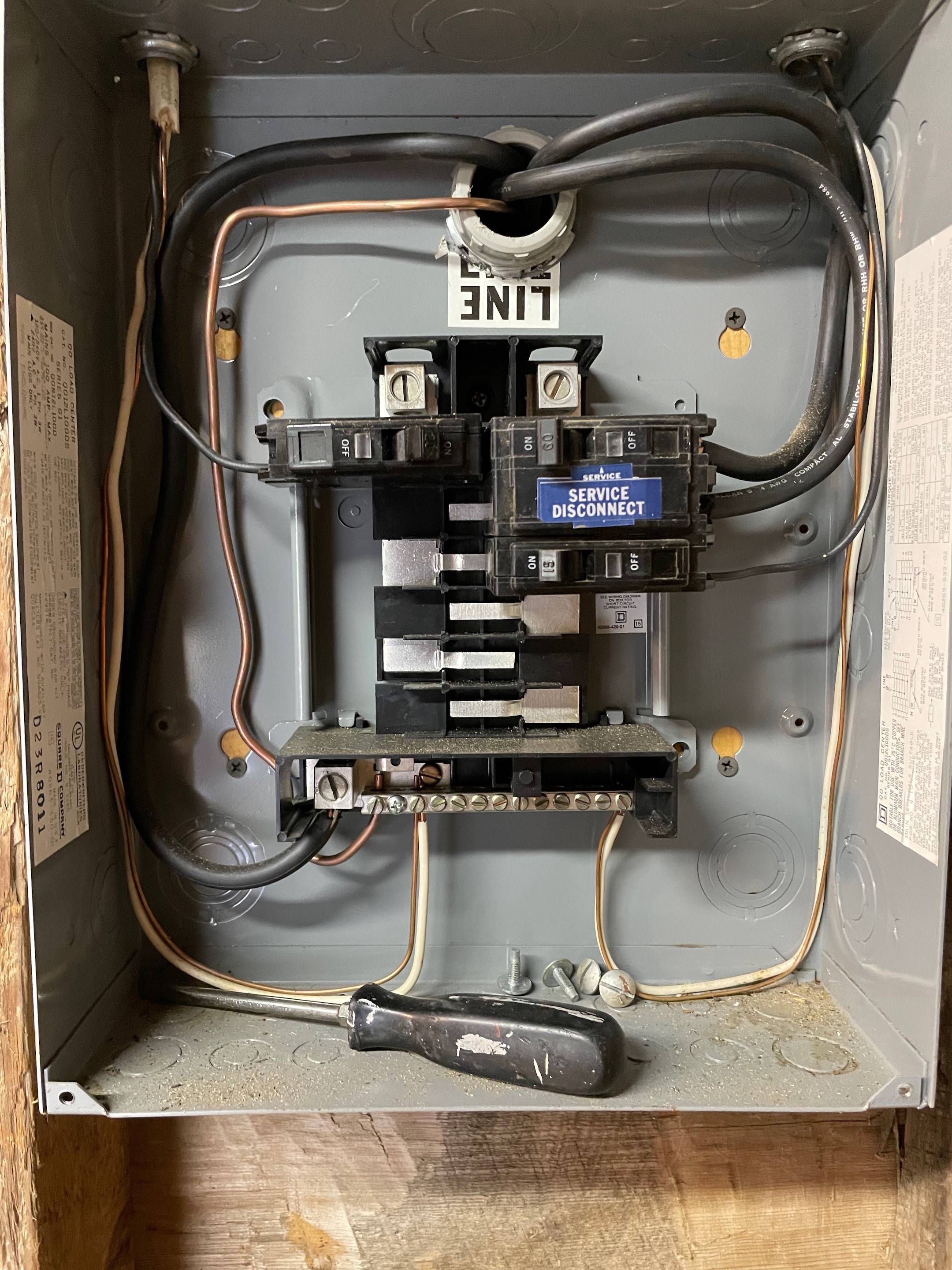
This is your main panel. A tiny main panel - really a 12 space "subpanel" turned into a main panel using a backfed breaker. But that's OK.

The main panel is the one place where ground and neutral wires can go together on the neutral bar. However, when you connect a GFCI breaker (and possibly an AFCI breaker) it needs to have neutral go to the breaker first. Then neutral goes from the breaker to the neutral bar with the pigtail. Many panels have "plug on neutral" to simplify this process, but yours does not.

To connect a GFCI breaker:

  • Hot from circuit to breaker (as always)
  • Neutral from circuit to breaker (there should be a clear place for it)
  • Ground from circuit to neutral bar
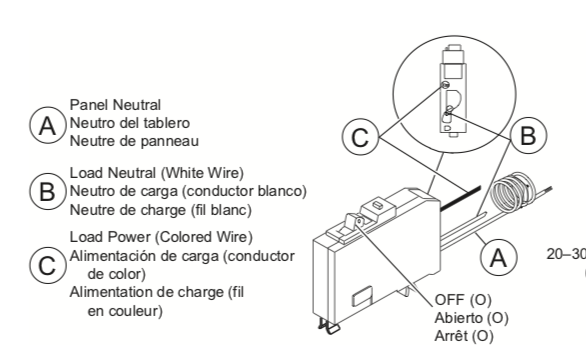
  • Neutral pigtail from breaker to neutral bar
manassehkatz-Moving 2 Codidact
  • 139,495
  • 14
  • 149
  • 386
8

The pigtail from the breaker isn't the problem; the neutral wire from the circuit almost certainly is. Those are incorrect as shown (grounds can share a screw on the bar - neutrals cannot - neutrals are "one wire per hole," whether a pigtail from a breaker or direct from a circuit - that's a code issue, though, not a functional one, but it needs to be corrected) but the functional problem is circuit neutrals don't go to that bar at all with a GFCI breaker. Only the pigtail does.

image from breaker instructions showing connections

Image source https://download.schneider-electric.com/files?p_enDocType=Instruction+sheet&p_File_Name=48840-088-01.pdf&p_Doc_Ref=48840-088-01 because that's the correct breaker for this panel.

The other possibility (since you don't show the GFCI breakers at all and it's possible you are putting the circuit neutral where it belongs when you install those) is that you have an issue [a ground fault, even] in the circuit wiring that upsets a GFCI (but not a plain breaker) when properly wired at the panel. Those are typically either a ground-neutral short, or neutrals shared between circuits. Third possibility is that you need to throw the handle off and back on to reset it. If the breaker trips when you apply power, but does not trip when you apply power if you remove the circuit wires, the problem is with the circuit, not the breaker.

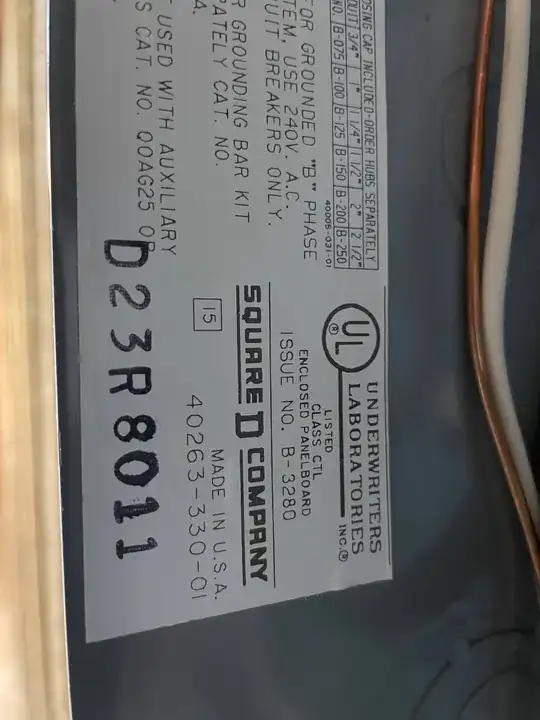
Also - you need a torque screwdriver (or torque wrench with low enough range) to do any of this correctly. Prompted by the prominently displayed "not a torque screwdriver." Get one, they are easily available in the electrical aisle as that's been called out for years now. Read the labeling on the right and on the breakers to find the torque values you should be using. Both too tight and too loose cause problems.

Separate issue: the main breaker/service disconnect should have a hold-down/retainer on it, and I don't see anything that looks like that here. I don't think that has a "not required before" date. Also missing a "Backfed Main Circuit Breaker Barrier" that recent code requires, and less opportunity to kill yourself even if the installation is old enough to be grandfathered makes a good idea. Both of those items would (IMHO) require a brief service disconnect for safe installation.

And yes, that [service disconnect, comes straight from the pole] means it's a main panel, so neutral and ground can share a bar.

Ecnerwal
  • 235,314
  • 11
  • 293
  • 637
2

First, it's a code violation to put each circuit's neutral and ground together on the same lug. Neutrals cannot share with ANYTHING especially their own ground. NEC 408.41. Grounds may be double-stacked if the panel labeling allows.

Also, this panel appears to have a 4-wire feeder. I'm not sure why it would unless it was a subpanel, but that conflicts with the "SERVICE disconnect" marking on the handle. Service (from the electric meter) is not the same as feeder (from main to other panel). Perhaps the marking is not proper, there are many other errors, fortunately I see none costly.

If this is a subpanel, the grounds need to be separated onto an accessory ground bar. That panel label will list suitable model numbers of ground bar which will dock right up to pre-made sites in the box.

Also, a backfed breaker must be tied down.

With GFCI breakers, the circuit hot and neutral need to go to the GFCI breaker. You may wonder, then, "how the beans can the GFCI breaker give neutral to the circuit, when it does not have neutral ITSELF?" The answer is that pigtail wire. That goes to the neutral bar.

Lastly let's talk about that main breaker and EV charging. If that's a subpanel, the main breaker is unnecessary and the wires can simply go to the main lugs on this subpanel. (It's a $20 breaker, no great loss). However if you do that, you must make sure to have no more than 6 hand throws to shut off all breakers in the panel. 1-pole breakers can be "handle-tied" in groups of 2 or 3 to make them 1 hand throw. EV charging is possible here, regardless of any Load Calculation concerns, using Load Management. Ask about that, and that might re-use the 60A breaker.
Harper - Reinstate Monica
  • 313,471
  • 28
  • 298
  • 772