8

How can I tap a hole in hardened steel?

I am trying to make an extended support for my tiny Sherline lathe, to turn items longer than the bed. Essentially it’s a steady-rest that bolts beyond the end of the bed.

As part of the POC I've got a ball bearing with an extended flange on one side. There are two M5 threaded holes in this flange with grub screws, and they are about 120 degrees apart. I want to add a third hole to balance this out and provide a positive grasp on longer stock.
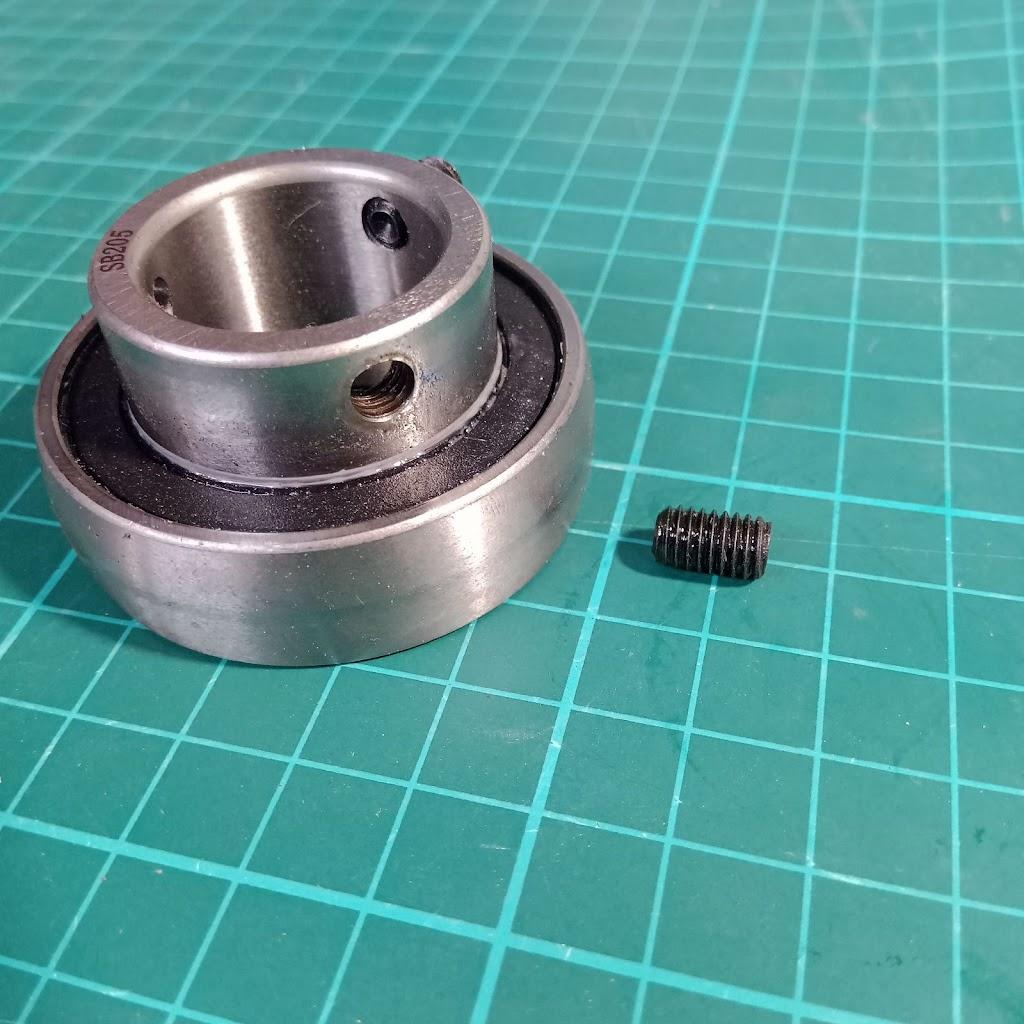
Enter image description here

I managed to drill a 4.2 mm hole using a carbide drill and a pillar drill—a HSS drill barely made a scratch.
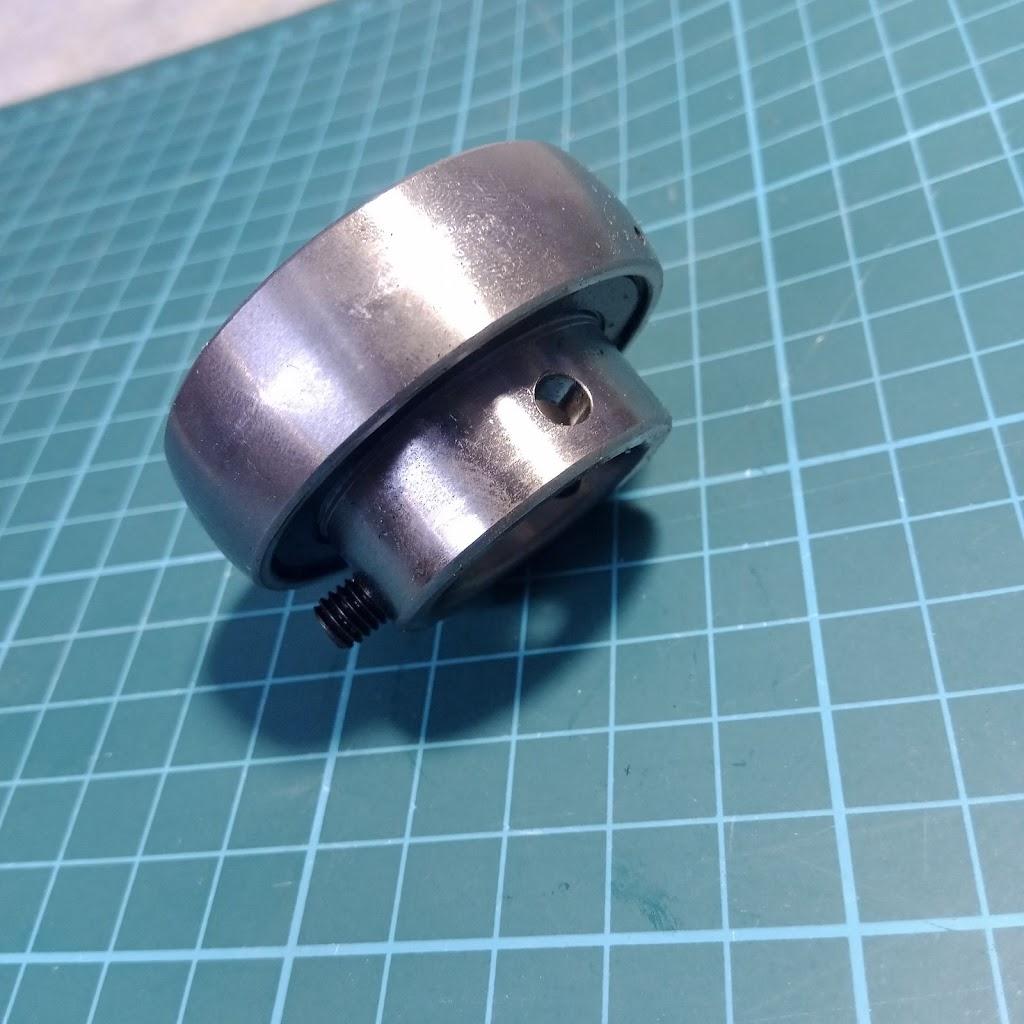
Enter image description here

I tried tapping by hand with a M5x0.8 tap, and it simply can't start. My taps are not high quality and my technique barely reaches newbie levels.

Any carbide tap I've found online is very expensive and also most of them say "for CNC use only", not hand tapping.

Do I have to anneal/soften the flange somehow? I've removed the dust seals and disassembly looks risky with no obvious removal process.


My plan B is to drill the existing holes to 5mm and then epoxy a thin M5 locknut on the inside of the bore. This should work, because the forces will mostly be radially outward, but it will also take away from the limited through-hole space.

Peter Mortensen
  • 335
  • 2
  • 8
Criggie
  • 11,950
  • 2
  • 26
  • 79

3 Answers3

7

You'll destroy the bearing seals if you try to anneal the extended flange.

You can drill out the hole to a larger size, insert a piece of copper inside the main bore and then fill up the drilled hole with weld metal. TIG might be the best process, using rod suitable for mild steel. Once the hole is filled up with steel, drill the hole again and tap it in the usual fashion. The weld metal that fills the former hole won't be hardened steel.

The copper inside the bore prevents molten steel from running out of the hole. Molten steel won't stick to copper.

You can keep the working parts of the bearing safe from heat by stuffing the bore with soaking wet cloth.

MTA
  • 15,038
  • 1
  • 22
  • 53
5

You'll probably have to mill threads. This doesn't use a tap, but rather a cutting tool with the thread form. The cutting tool is smaller (in this case 3.8mm) than the hole, so it's inserted, and moved in a circular fashion to cut threads around the hole.

You will need a CNC milling machine, to perform this. Sandvik provides some information on the process (Not affiliated in any way). Thread milling also means that there's no risk of destroying the part with a stuck tap.

A well equipped machine shop can do this milling for you.

vidarlo
  • 2,400
  • 13
  • 20
5

I don't know if it fits in your project: you could also shrink-fit an ring of mild steel on the outside. In the ring you can easily make aligning threaded holes.

An alternative idea (Kudo to @Sanchises) would be to make the bearing larger and insert an tube of mild steel, similar the entended flange bearing.

Martin
  • 3,084
  • 15
  • 18