14

My house was completely rewired by the previous owner. They tore out all the old knob-and-tube and replaced it with modern wiring. I definitely appreciate this, but unfortunately they left absolutely no extra space on the new breaker box. Every single slot is filled with a circuit breaker.

It's not that the circuits are doled out too liberally either. Its just a small breaker box. It fits the requirements of the house exactly, but leaves no room for future expansion.

So, what are my options for adding more breakers? Can I add a sub breaker box? Or should I just replace the whole thing with a larger one?

Steve Armstrong
  • 783
  • 1
  • 9
  • 14
bengineerd
  • 491
  • 3
  • 8
  • 15

6 Answers6

13

You have two options:

  1. use tandem breakers
  2. Install a sub panel

There are caveats with both routes. When using tandem breakers on a 120 volt system (i.e. with a neutral present), you want to avoid something that is called a multifeed. This is, two circuits on the same phase sharing the same neutral. When using tandem breakers, its very easy to inadvertently do this.

If you are in the US, you will see two feeders from the meter, one of them probably has some red tape on it, the other is black. These are your phases. Normally, every other breaker is on a different phase, but tandem breakers put both circuits on the same. Take care that both circuits attached to a tandem have their own neutral (white wire).

While you might be able to install a tandem breaker yourself (I highly recommend calling a qualified professional), you will surely want an electrician to install a sub panel. They aren't much different from a regular panel except:

  • Ground and neutral conductors are isolated, not bonded on sub panels
  • You want to watch your loads
  • You'll want to be careful about where you place the breaker that feeds a sub panel, so that you don't develop a hot spot on the main panel bus. For instance, you don't want a 100 amp sub panel breaker right in the middle of a water heater and an air conditioner.

In either case, I really recommend calling an electrician.

Tim Post
  • 1,702
  • 12
  • 24
13

The only reason to replace the entire box is if aesthetics: if there isn't enough room on the wall for two boxes, or the box is in a closet or cabinet where there isn't physical space.

Putting in a new breaker box is much easier than replacing an entire box. If you replace the entire box, you will need to rewire every breaker. When the original box was wired there was lots of slack on each wire, but after each breaker was installed the wires would have been trimmed. A good electrician will allow slack in the wires for reconfiguring breakers, etc. but if it's a small box you may not have enough wire, or you may end up running the wires in ways that aren't as neat or professional as it should be.

With a new box, on the other hand, you only need to remove one 220V or two adjacent 110V breakers. The old wires can be run into a junction box to provide as much length as you need for wiring into the new box.

As Mike Sherov noted, you need to be sure that your service can handle the load and number of circuits. That'll be a location specific code issue. If the knob-and-tube wiring was recently replaced I'd be surprised if the old service (probably 50 or 60 amp) wasn't upgraded as part of that process (likely to 150 or 200 amps).

If your new circuits are within the capacity of your service and local regulations permit, this is a job you can do yourself. If you choose to do it yourself, in some jurisdictions you can ask the inspector if your plan will keep you in code, to save the cost of a consultation with an electrician. (In some places of course, they're too busy for such questions.) Or you can research it yourself: it's not difficult if you have access to a code book.

Rod Fitzsimmons Frey
  • 2,672
  • 1
  • 17
  • 23
3

It really depends on how many breakers you intend on adding and what level of service you're already getting. Most of the time, the number of circuits in your breaker box corresponds to the level of service you're getting.

Personally, I'd recommend getting an electrician for this to calculate your energy needs.

However, if you know you have adequate power, and you're only interested in adding one or two circuits, you can use piggy back breakers to split the space normally reserved for one breaker into two.

As always, make sure you're using parts that are specified as appropriate by the manufacturer.

Mike Sherov
  • 1,489
  • 7
  • 23
  • 26
1

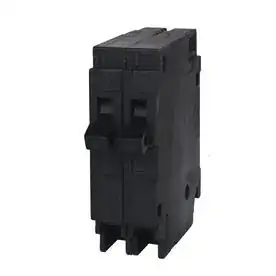
Assuming your service can accommodate the additional circuit(s), you can install tandem circuit breakers to replace your 15amp circuits - basically two breakers siamesed into a single breaker form factor. If you replaced all your singled up breakers with tandems that should plenty of space to add in any extra circuits allowed by code. That's really the only way you can get additional circuits into your breaker box short of replacing the entire service.

Tandem Breaker

kkeilman
  • 3,441
  • 1
  • 21
  • 17
-1

I believe that it is against NEC Code to install a tandem breaker in an electrical panel code says you can not exceed the number of poles that a panel was designed to accommodate like a 30 circuit panel with 2 stacked or tandem breakers makes it using 32 poles as each single breaker is 1 pole and a double breaker is 2 poles so if the panel is full and you put in a tandem breaker in place of 1 normal breaker you are adding 1 more pole than the panel was designed for I know I can not get away with that on a new construction panel it would fail inspection not saying that as a home owner you can't do it just saying it is against code for an electrician to do it

-3

If your panel is loaded to capacity then chances are you need a service upgrade. Sub panels are the cheap shorcut and will only cause more stress on your main circuit breaker, and when that goes you could be looking at an emergency service change which will be BIG bucks.