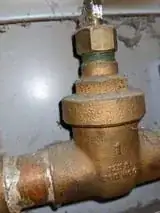
I have a ~20 years old Weil-McLain Gold oil boiler connected to the forced hot water baseboard heating system in a 2-story house (two zones with separate pumps, one for every floor). The same heater is also used to heat up tap water.
Recently, the hydronic part started to work very inefficiently: it was kinda able to maintain the temperature, but only by running without stopping for hours (instead of usual minutes). The return pipes were absolutely cold to the touch, and it was heating up only about 20 feet or so of the pipe along the baseboard. The tap water part was and is OK.
Upon investigation, I noticed that the pressure in the system dropped to about 5 PSI (which seems to correspond very roughly to the pressure of 10 feet of water, that is the elevation of the second floor baseboard). This figure comes from a built-in pressure gauge in the heater.
The system has an autofill valve (Watts TB1156F), which is supposed to be set to 15 PSI.
I turned off the boiler and opened the drain valve which is located on the return pipe close to the boiler. All the water had drained out, and the pressure dropped to zero, but the autofill didn't kick in.
The valve has a lever connected to a rod that you can push to temporarily turn off the valve pressure regulating mechanism and directly connect the heating circuit to the water main. When I pushed that lever, the system filled up very fast, and water (almost black, with a lot of sediment in it) started flowing out of the drain valve.
I waited until the water coming out of the drain valve became clear, then closed the drain valve and refilled the system by pushing the lever. It filled up unexpectedly fast and tripped the safety pressure release valve (set to 30 PSI). Next time, I was really careful with the lever and filled up the system to 15 PSI.
There are no bleeding valves on the baseboard pipes (or maybe I could not find them) There is a thing that looks like it might be a bleeding valve on the pipe downstairs, and also there is a thing which (I think) is an automatic bleeding valve on the top of the boiler. It has a tire-style stem protruding out of it, covered with a threaded cap with holes in it. When I unscrewed the cap, some air went out, then it started weeping water, maybe one drop every 15-20 seconds. The valve is covered in limestone deposit, which suggests that it is used to being exposed to water drying on it. I left it unscrewed just a little bit.
Over the next couple of days, the pressure dropped to ~7-8 PSI and the system became inefficient again. I downloaded the manual for the autofill valve and noticed that it had a screw to adjust the pressure. As I turned the screw just a smidge (maybe 15-20 degrees) clockwise, which is supposed to increase the pressure threshold, I heard the noise of water inside the valve and the system filled up to ~20 PSI.
This was yesterday morning, and during the day the pressure was steady (rising to ~23 PSI when the boiler was working and dropping to ~20 PSI as it cooled down). However, overnight the pressure has dropped to ~12 PSI and it looks like it keeps dropping.
I'm almost sure that the valve is broken and needs to be replaced, yet I have several questions:
- Is my understanding right and the autofill valve has failed indeed?
- Is it normal that the pressure is dropping during the normal course of operation? I looked closely but didn't find any leaks under the pipes, and most of them are not inside the walls (except maybe half-foot of each wall as it goes from room to room; and about 10 feet of the pipe hidden inside the concrete slab as it leaves the boiler). How can I test for leaks more reliably?
- Is the "automatic bleeding valve" I'm describing indeed that? If yes, should I leave its cap open?
- According to the manual, the autofill valve is supposed to be serviceable, and Watts even used to sell repair kits for it (although they have been discontinued). A new valve like this is around $80. Is it feasible or worth it to buy a new valve and replace just the mechanism by putting it into the old casing (to save on the plumbing labor costs)? Is it a DIY job?
Images (clickable)
Autofill valve
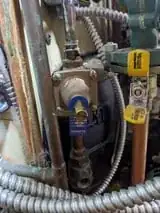
Automatic bleeding valve (?):
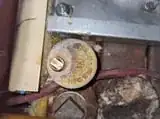
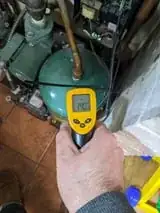
Expansion tank (top and bottom temperatures)
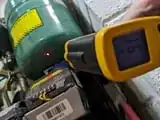
Taco 241 check valve (?) on the return pipe downstairs, closer to the boiler
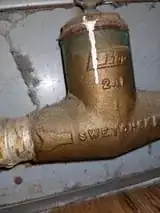
Bleeding valve (?) on the return pipe downstairs, farther from the boiler.