5

My Fiance and I were walking through Target to find a lamp for the corner of our living room. We saw this one that we kind of liked
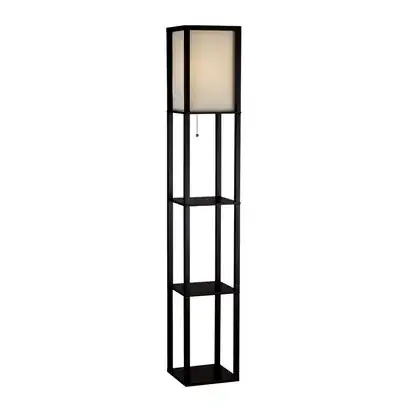
enter image description here

But the price was way too high and the panels were too small. I thought that I could possibly make it and I want to know if I'm considering all the right materials (since I'm new to this). I think I would need:

  • Screws (specific size?)
  • Screw driver
  • 1" x 1" segments of wood
  • 3' x 3' panels for each base
  • Stain
  • Finish
  • Some linen for the top
  • A lightbulb base with a cord running out the bottom of it
  • A bit to drill a .5" hole in the top panel (for the wire to route)
  • Some staples to route the cable along the top panel and down the leg (to look nice)
  • A light bulb
  • Some wood glue for extra stability

Also I'm not sure how I would use the linen to recreate the top part. Notice how the fabric/material is on the inside of the wood segment/leg. How would I recreate that?

Michael Karas
  • 67,833
  • 7
  • 68
  • 153

2 Answers2

3

It is great to begin woodworking with a custom made project that fits your needs. Often doing it yourself can result in a significant savings, but I think you may find that purchasing the components for the lamp may well cost more than the amount they are asking. But your version will be the size and finish you want.

For the linen panels, you could try mounting the linen on thin plastic, such as acrylic, cut to size. You could use spray adhesive, such as this one, or you could tension the cloth and glue the edges with a thin bead of a general adhesive. Just make sure it will stick to the type of plastic you select and do a small test to make sure it does not discolor the fabric.

Screw length should be enough to go through the first piece and 1/2 to 2/3 of the way through the second. You need to pre-drill all holes. Glue will stabilize the piece.

Finally, be sure to leave the top of the lamp open to allow heat to escape, and be careful when stapling over wire not to nick the insulation. You should consider attaching the wire with a bead of glue along the length instead. You can hold it in place with tape until it dries.

bib
  • 33,975
  • 10
  • 68
  • 102
3

My guess is you are trying to bite off something moderately ambitious for your current abilities, but there is no reason not to try it. Go SLOW. Spend some time reading. Find a good book on beginning joinery first, and read it.

Personally, I don't think that screws are the right way to join these pieces. It will leave screw heads showing that should not. While you CAN cover the screw head with a plug, those plugs tend to show. The grain NEVER matches exactly unless you cover with paint. But worse, a screw driven into end grain to hold a butt joint is a terribly weak way to create a joint. Screws simply don't hold well in the end grain of wood. They are far stronger when driven across the grain, where the threads grip the grain much better.

I WOULD use mortise and tenon joints, something that you can cut by hand. This takes no more than a sharp chisel and a decent hand saw. Just do it carefully. Cut each piece according to a careful plan, then test fit. Some glue in each joint will give a good strong joint. (By the way, I'd suggest making some practice joints first.)

Use a good hard wood. I might suggest maple or cherry, woods that are both strong and beautiful and won't need more than an oil finish to look great. Many other woods will be as nice though.

As for the linen shade, make sure that the top has some way for air to flow. A light bulb can dump out a fair amount of heat.

So, CAN you do this? Yes. It is not that much different from how I started in woodworking, with a few simple hand tools. My shop now, many years later is nice, but starting off with hand tools is a good way to learn. A nice thing is you can buy antique hand tools pretty cheaply.