2

I am finishing my basement and have an insulation question. I have roughly a 30 ft exterior wall that I plan on building a wall in front of to attach the drywall. Only a small portion of the exterior wall has concrete exposed. Maybe 10 feet of the wall has a 1 foot tall concrete section and another 5 foot section has maybe a 3 foot tall concrete wall.

Is it worth the time to cover the concrete with foam board and then maybe insulate in front with fiberglass or just leave it exposed and frame/drywall around it? I live in Zone 3 and the house was built last year. enter image description here
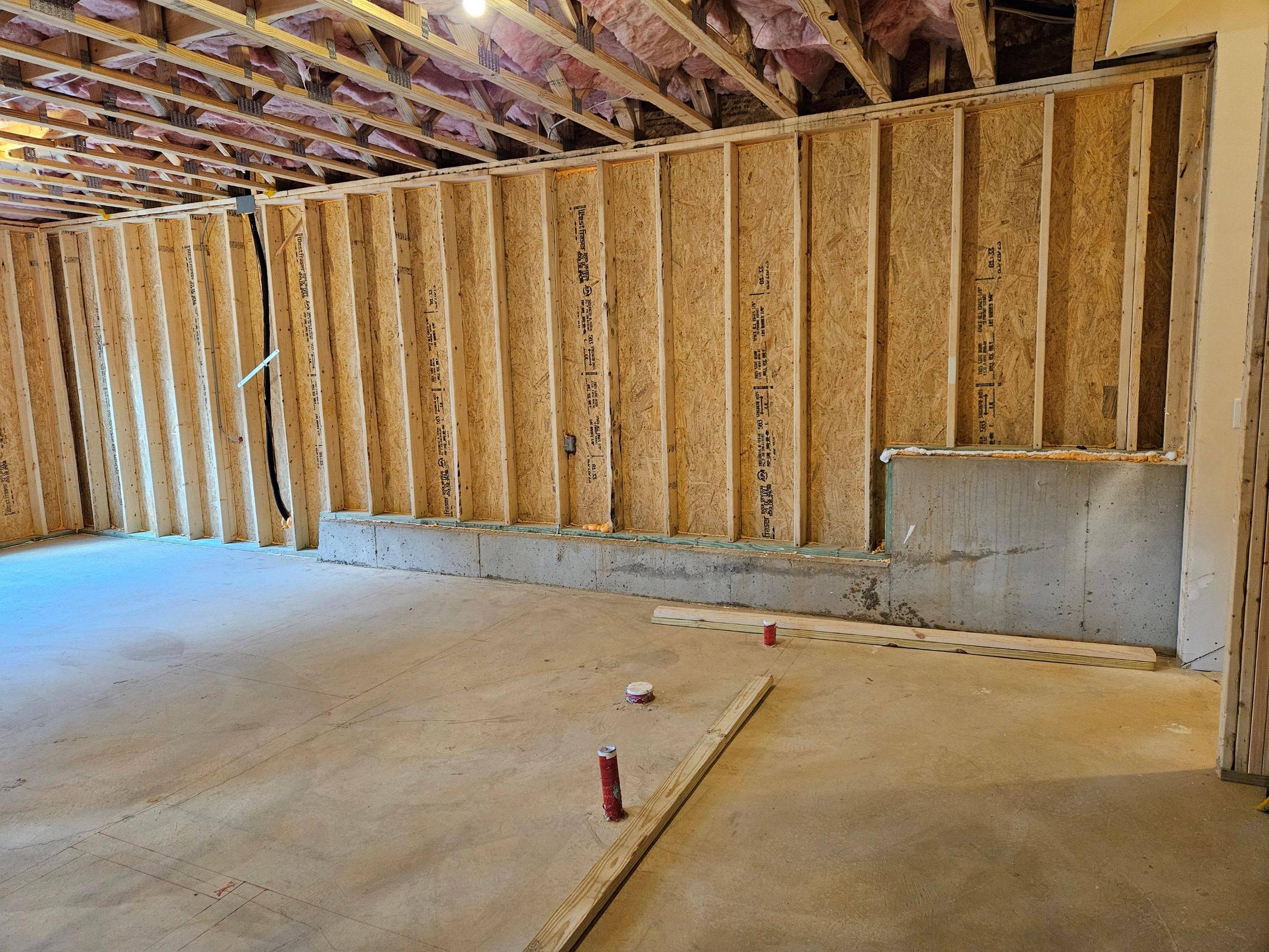
Rick S
  • 151
  • 7

2 Answers2

2

If you're insulating the rest of the wall, then yes you should insulate the concrete.

Assuming R-15 insulation, a 20'x7' total wall area, and 6" thick concrete, the R-15 wall cavities have an area of (20')(7') - (10')(1') - (3')(5') = 115 ft2. The concrete has an area of (10')(1') + (3')(5') = 25 ft2 and an R-rating of about (0.2/in)(6") = 1.2. The whole assembly, then, would have an effective R-rating of

(115ft2 + 25ft2) / [(115ft2)/15 + (25ft2)/1.2] = 5.

See Can R values be averaged? for the reasoning behind the math. And that 1.2 R-rating for the concrete was charitable.

You can take the limit as the non-concrete's R factor approaches infinity to get an upper bound on the assembly's effective R factor. It's impossible to achieve better than R-7 without insulating the concrete.

popham
  • 10,617
  • 1
  • 18
  • 33
1

Below grade concrete is considerable better as you are primarily insulating against the air and you get the R-value of the soil distance from the air to the exterior concrete surface if you look at the isothermos.

That said I'd probably use roxul batt insulation in the stud cavities and then get 1.5" isoboard for the concrete and 1.5" xps for all the rest of the areas and then tape the seams for a continuous 1" layer over your wall. You can then drywall right over that you just have to mark the stud locations on the floor and use longer drywall screws. Use 2x4 on flat against the concrete for your nailing edges and filling in the void with the 1.5" isoboard.

popham is right that concrete is very low resistance to flow of heat - .1R per inch vs 1R per inch for wood.

Not sure where your vapor barrier goes in your zone.

Fresh Codemonger
  • 14,459
  • 3
  • 24
  • 57