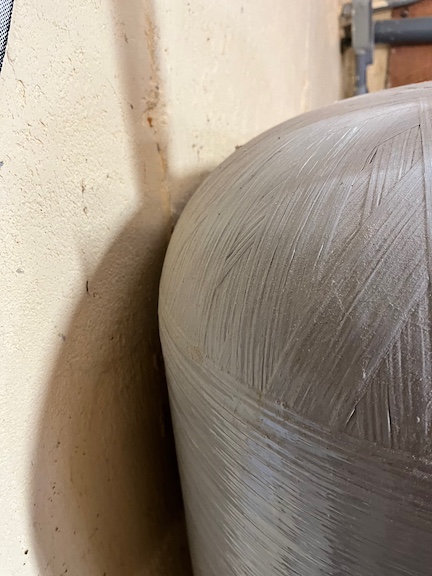
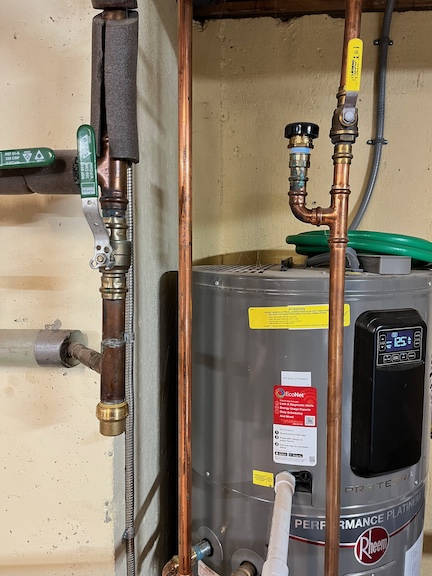
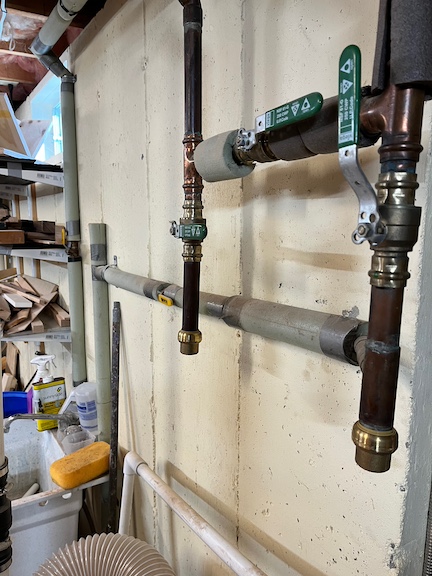
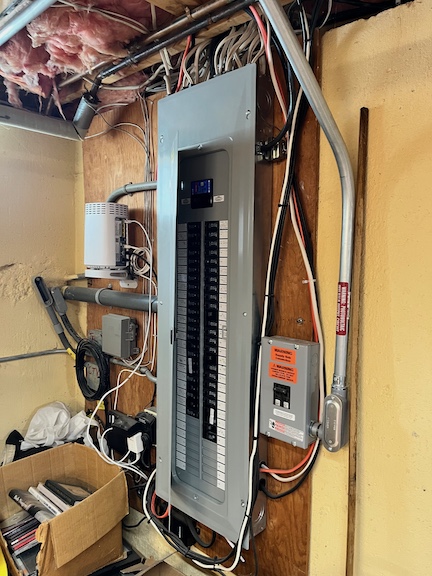
I'm using my unfinished basement as a workshop, and it's really cold in there, so I want to insulate the walls, preferably with rigid board. I've watched some videos, but they don't give a lot of information about how to work around the many obstacles that I just can't move - from pipes and conduit along the walls, to my electrical panel, to my well pump and water heater, which are both so close to the wall that I couldn't get much if anything behind them. A lot seems to be made about making it all fully sealed. It doesn't need to look nice, it just needs to work. Any suggests would be appreciated. Here are some photos of some of the obstacles:
2 Answers
You might want to consider making a "energy" wall in front of those obstacles like they do when finishing a basement. Some framing studs and then attach the rigid boards to the framing. A cheap door to access the area and you'd be set.
- 89,902
- 21
- 80
- 214
That is a challenging scenario. I've had similar, including the mid-century poured foundation.
Some tips:
For insulation to work properly you need to encapsulate the air between the concrete and the medium. If you don't, convection moves heat almost as if you didn't have insulation. If you're using rigid foam bonded directly to the concrete, this could be with a bead of caulk or adhesive, particularly along the top edge.
Fill areas from largest to smallest. Start with panels in open areas and fit smaller ones around objects and penetrations as you can. Use fiberglass batting and spray foam in very small spaces as needed. (Spray foam bonds permanently--use caution.)
Consider insulating around the utility room and leaving it unheated. If you insulate the ceiling above and the interior walls you essentially shift the conditioned space of your home outside the room.
The goal is to reduce heat transfer through both conduction and convection. Install insulation, but also block airflow. Be creative--there's no right or wrong way.
- 158,133
- 9
- 190
- 463