7

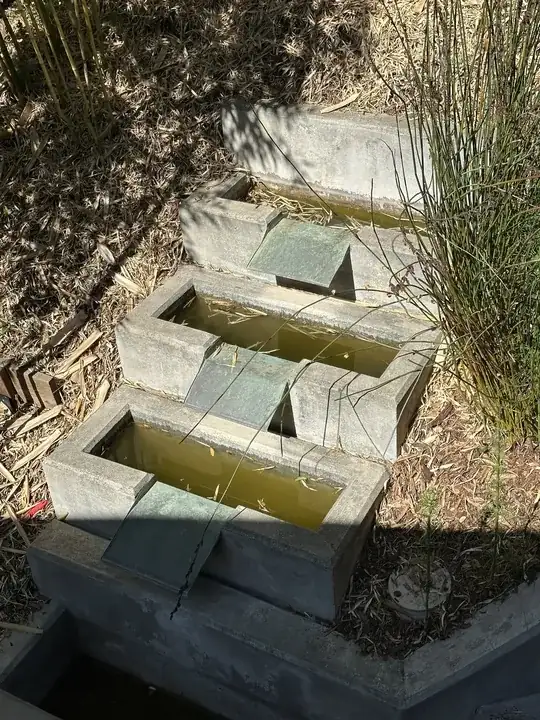
We just moved into this house 1 month ago and the fountain water obviously had not been cared for for months. I tried pumping out as much of the existing water and putting in new water as well as dumping in a bottle of vinegar. It was still a little dirty, but clearer. Within a couple weeks though, it was back to green and tadpoles/bugs swimming around in it.

The pump in there that moves water from the bottom to the top is not very powerful, literally a slow trickle. It also only gets to about a inch of water depth and then it struggles. I'm wondering what's best to try next. Get a better pump that has a filter in it? Add another chemical like algaecide? I've also heard "water plants" can feed on the algae?

Thanks!

Fountain

isherwood
  • 158,133
  • 9
  • 190
  • 463
user3733716
  • 71
  • 1
  • 2

3 Answers3

19

My current home has a small water feature. It's a tiny pond with a waterfall and fountain. The first year of ownership was a disaster--green, stringy algae, cloudy green or brown water, etc. In the years since here's what I've learned works for me.

  • In the early spring (after thaw in freezing climates), clean and refill the basin. I use a wet vacuum to extract all organic material--leaves, sticks, mud. Hose it down well and vacuum it out. Refill with tap water.

  • Install plants. They are nearly all we use to keep our water clean (along with a simple filter with foam particle trap). They utilize the nutrients that algae would otherwise use. Even something simple like watercress does well.

  • Introduce fish, such as koi. They eat both algae and insects and their larvae. Give fresh tap water at least a week before doing so. This will allow the nitrogen cycle to complete and chlorine to evaporate. If you're in a freezing climate, either use a pond heater to keep things above freezing, or bring the fish inside to enjoy, as I do.

  • While the plants are first growing or during very warm weather, use algaecide sparingly to maintain clarity. Remember, algae is actually a sign of a healthy ecosystem. A little can be pretty. Don't expect to maintain a swimming pool appearance. A change of mindset may be needed.

Only use chemicals like chlorine if you prefer a sterile, artificial ambiance. I don't. Keep in mind that wildlife such as birds will love your water feature, and chemically treating it puts them at risk. Consider setting up a shallow area for bird bathing.

isherwood
  • 158,133
  • 9
  • 190
  • 463
7

Assuming you don't intend to grow plants or keep aquatic animals, start by thoroughly killing and removing all existing algae. In swimming pool terms this is called shocking the pool and circulation equipment; massive chlorine treatment with simultaneous brushing/cleaning, followed by filter cleaning/change. The idea is to kill and remove all algae and any algae spores from the environment. Then consistently chlorinate at a level appropriate for your water volume. A pool store can provide the materials for ongoing testing and maintenance. Increasing circulation with a bigger pump will help.

Jimmy Fix-it
  • 37,916
  • 35
  • 62
5

You might pick up an algicide that's safe for animals that may wander by and have a drink. You can get that at a fishpond store or supplier. There are lots of brands which should work. A very small amount (maybe a couple tablespoons) will do the trick but you may need to add more every month or so during the hottest/sunniest parts of summer.

Introducing fish and/or plants could help take care of the algae as well if you're not into using the algicide. I would not recommend chlorine (altho. it will kill the algae) because it will kill beneficial bacteria that also help keep the fountain/pond clean.

Another approach, which is considerably more expensive but 100% effective, is to put an ultraviolet algae filter in the water line from the pump to the top of the water feature. For example, here's a link to the one I use in my ~250-gallon fishpond. The light is fully enclosed, so there's no visible light that leaks out and watertight so it can be submerged in the water feature to help hide it.
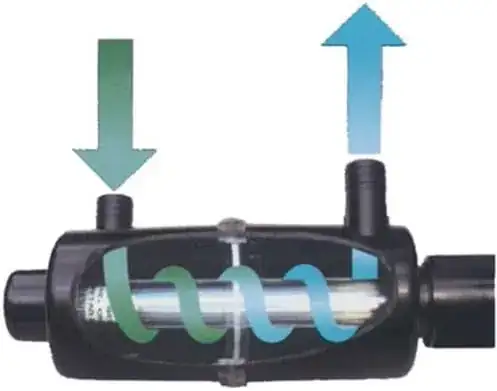
stolen from Amazon - UV anti-algae lamp

The water comes in one side, gets irradiated in the cylinder and exits on the other side. This example might be kind of large for the fountain, I think, but they do make smaller and cheaper ones. Do some shopping for the best fit, etc.

A UV light like this is 100% going to get rid of the algae in a day or two and prevent it from coming back. The one I posted as an example runs about 10W so it isn't something that's going to cost a lot to run. You probably don't need to run it all the time, but it won't hurt to do so.
gnicko
  • 6,251
  • 2
  • 24
  • 42