0

I have a double glazed window with a wooden sash frame - the window faces the street and is noisy so I've put up a DIY triple glazing panel - effectively just a 6mm acrylic sheet secured to the window frame with bolts. The seal is created by a rubber draught excluder strip (e.g. this) stuck to the acrylic and compressed against the window frame when the nuts are tightened.

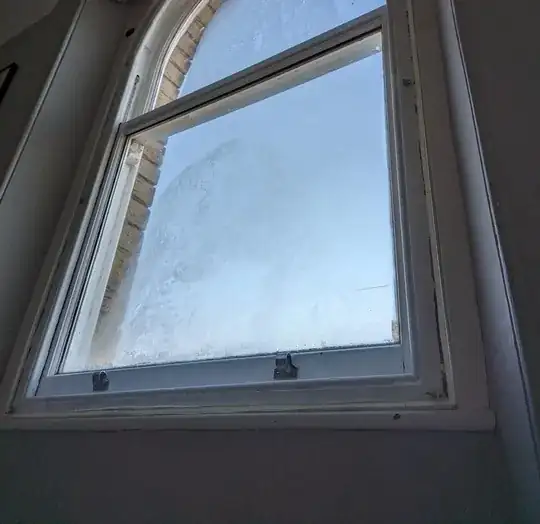
For some reason I still get considerable condensation on the inside of the glass window every morning (i.e. on the glass under the acrylic panel - see photo below). I've put a second layer of the insulation on, I've looked all the way round and it's absolutely compressed so there are no visible gaps in the seal; from a sound point of view it's almost impossible to hear the road and I can't feel any draughts anywhere.

I cannot for the life of me figure out why there is so much moisture in there if it's insulated from the room. We have a dehumidifier running just outside the room so most of the other windows on the same floor have minmimal condensation in the mornings. I assume there must be a leak somewhere to let moisture in but not out, but am not sure how to find it. I've done the same on other windows which work fine.

I have removed the panel, wiped the window down, placed the dehumidifier next to the window all day and replaced it several times without any change.

Am I missing something obvious? I appreciate the DIY job is not foolproof but it works in other rooms and is obviously much cheaper than alternatives..

Thanks!
pfkl
  • 1

3 Answers3

2

Depending on the specifics of how you added & sealed the third pane, you probably have just sealed in the air between the new pane and the existing one. This means any moisture in the air is trapped between the two panes. And whenever the temperature of the outer pane drops below the dewpoint of the trapped air, condensation will occur.

Commercial double pane windows (like Anderson, no endorsement) are made with a dry gas like nitrogen, argon, or maybe just dried out regular air to eliminate the possibility of condensation.

SteveSh
  • 7,107
  • 2
  • 15
  • 31
1

Window construction is complicated. It's not something I would ever attempt at home with high expectation.

In this case, daily thermal changes are drawing air into and expelling it from your not-quite-sealed cavity. Also, moisture naturally disperses even without such action.

You might try a perforated container of silica beads on the sill of the cavity. I don't see how you can otherwise expect this project to succeed.

isherwood
  • 158,133
  • 9
  • 190
  • 463
1

There are several possible causes:

  1. There are no air leaks on the panes you installed but the trapped air had high humidity and the humid air is condensing.
  2. The panes do not have enough air space or are bowed inwards and causing thermal transfer. This is particularly true for the sealed units installed into the existing sash which have small airspaces to begin with.
  3. You have air leaking in from the counterbalance weight pulleys on the other windows. This tends to balance the humidity levels.
  4. You do not have air leaking in from the counterbalance weight pulleys on this window. This is related to cause 1.
  5. The window is facing a location that does not receive any sunlight and so depends on thermal transfer from the room to warm the glass surfaces.
DelphicOracle
  • 3,075
  • 2
  • 8
  • 18