10

I am really a newbie in terms of DIY things so I have a rather very basic question. I have been buying some screwdriver sets both large and small to have handy and whenever I actually needed them none of them fit screws.

On the other hand I see some workers that walk around with just a couple of screwdrivers in their back pocket and somehow these fit in the majority of the cases.

To give an example I want to replace batteries to an old calculator (Citizen SR-260) and even though I have bought a set of screwdrivers that are meant for various small screws none fits the screws of the calculator. So essentially my set of screwdrivers are useless most of the time.

What exactly am I doing wrong? How am I suppose to buy screwdrivers that I can use in the majority of the time?

In case it matters, I bought my set of screwdrivers from commodity stores not hardware stores.

Jim
  • 405
  • 3
  • 7
  • 15

8 Answers8

27

There are a lot of special situations, but I find that most general work can be done with one particular tool and most small electronics can be done with a very different type of tool.

For general work, a 6-in-1 tool with a reversible hex driver that has a reversible screwdriver bit in each end covers 98% of tasks. An example from Amazon, but I have bought many similar ones over the years from various local stores:

6-in-1 screwdriver

Exact configuration may vary, but typical is:

  • slotted 3/16"
  • slotted 1/4"
  • Phillips #1
  • Phillips #2
  • nut (hex) driver 1/4"
  • nut (hex) driver 5/16"

That will handle most screws and nuts in major appliances, furniture, etc.

For the small stuff (calculators, watches, laptops, other computer equipment, etc.), you often need not just smaller Phillips bits but also Torx and sometimes other types. A typical example from Amazon

Screwdriver kit with lots of bits

I don't have that exact set but I have a number of similar ones, purchased over the years both from local stores and online, sometimes just "driver + bits" and sometimes along with other tools for opening laptops, etc.

Using a bit that is way too large or small just won't work. A little too large or small is usually OK but could damage the screw head. Using the wrong type will often damage the screw head.

manassehkatz-Moving 2 Codidact
  • 139,495
  • 14
  • 149
  • 386
12

A single multi-bit screwdriver with a set of bits should handle a wide range of screw heads. You may not really need many dedicated screwdrivers of different sizes, as an assortment of bits may be cheaper and more easily carried/stored. I've found that just a handful of bits work well enough for most common screw sizes, although I have sometimes needed separate small screwdrivers (like from an eyeglass repair kit) for electronics or other small items. All you can really do is have a decent assortment of common options, and add to them if none work.

Nuclear Hoagie
  • 1,390
  • 1
  • 9
  • 25
11

Buy a 1/4" slotted screwdriver and a #2 Phillips screwdriver.

That will get you fitting 90% or more of what you will usually need. Then keep or add any drivers that are smaller or larger for the small to tiny or large to heavy stuff.

isherwood
  • 158,133
  • 9
  • 190
  • 463
RMDman
  • 52,615
  • 3
  • 36
  • 113
8

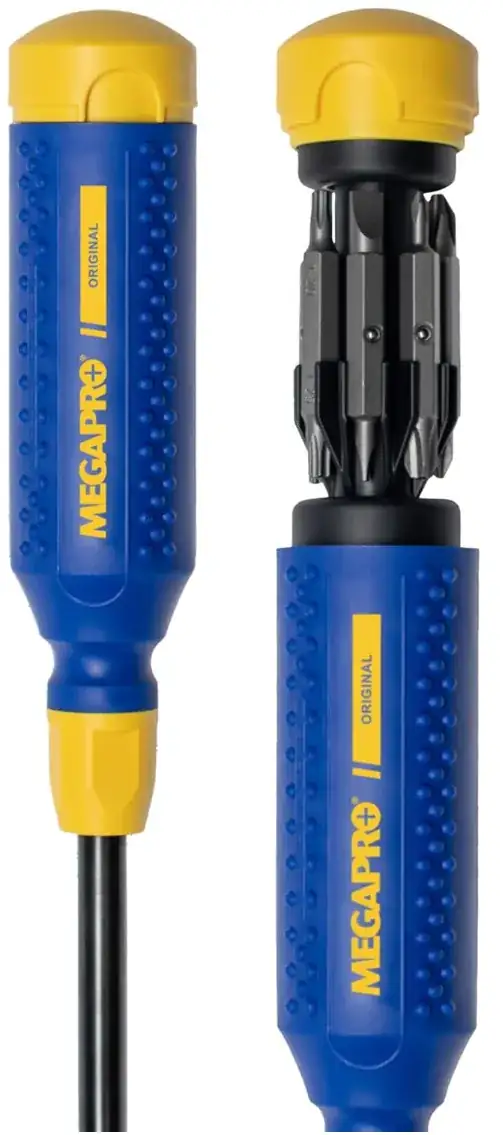
For most home stuff, a good quality multibit screwdriver is good. I have a few of these, including a pink one for the distaff side to use:
enter image description here

There are cheaper knock-offs but these ones have good quality hardened bits and they don't easily break or deform. Torx bits are useful for some appliances. You'll usually need Philips, flat blade and maybe Robertson.

There are all kinds of (more unusual) situations where this screwdriver won't work- it's too long, too fat, too short etc. For that you may need special screwdrivers that you can accumulate as required.

Other than a few situations such as small Philips screws or hose clamps, screwdrivers are not that useful for working on cars- most fasteners require sockets or wrenches.

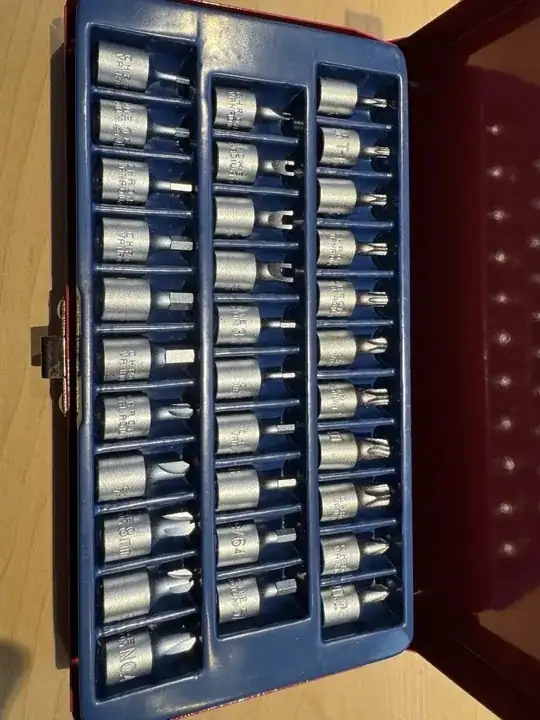
Security bits will fit a driver such as the one shown or a 1/4" ratchet, however they generally come in two types- individual high quality bits sold by industrial distributors at eye-watering prices and poor quality sets with many bits. It's worth having one of the latter around for the times when you need need them, but they break easily. Even to fix a toy you may need a delta bit.

Here is a poor quality larger set I have:
enter image description here

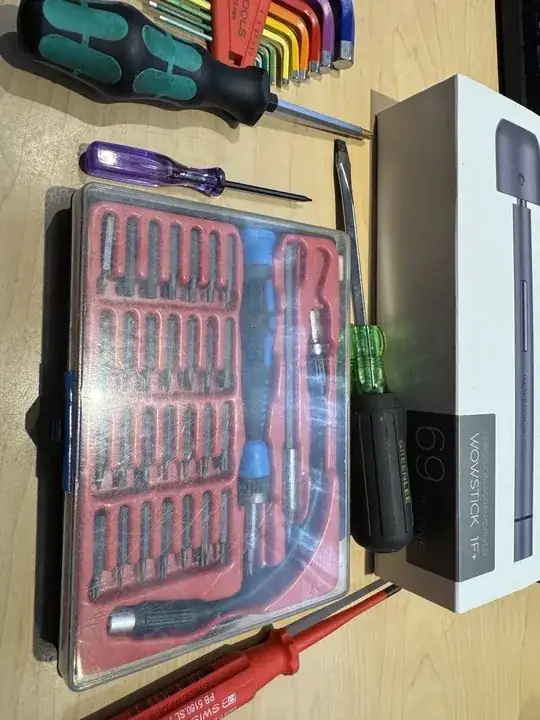
For electronics, a 4mm magnetic bit set is good. That's a whole different subject and probably off-topic here, but having Apple pentalobe and JIS bits around is useful. Try to find something high quality with good reviews. Here is one that I've had for years (red box):
enter image description here

The 69-in one was a gift- can't speak to the value but the bits seem okay and there is a good variety of them. The electric drive is gimicky and I don't use it. The Swisstool is a screwdriver that is insulated and fits +/- terminal block screws. The Greenlee flat blade is solid. The Wera is a Philips with laser cut teeth that help getting stubborn screws out (it sort-of works).

Usually good quality bits are black on the business end, but sometimes you'll find poor quality bits that are black and still soft or brittle, or sometimes even just painted black (looking at you HDX/Home Despot).

6

Almost all Phillips screws in a household are #2. A few are #3, usually on large wooden furniture. Even fewer are #1, usually in compact electronics. I can't count the number of times I've seen #2 screws boogered up because someone thought they need a "small" screwdriver, or #3 screws wrecked because only a #2 was at hand. A small screw head does not necessarily correlate with a small screwdriver. A really big screw head usually calls for a larger screwdriver, however.

If you carry a #2 Phillips* and a 1/4" slotted, you'll be good 98.1% of the time. If in doubt, try the larger size first.


* Or similar Pozidriv/Supadriv, depending on your region. Read more

isherwood
  • 158,133
  • 9
  • 190
  • 463
4

The problem with "handyman with just two screwdrivers in a back pocket" suffers from selection bias.

The handyman that works on roofs has a completely different pair of screwdrivers than a handyman repairing electronics or watches.

Also note that the handyman may carry two screwdrivers in the back pocket but their car is full of screwdrivers and other tools needed in another case but yours.

So for the advice: look at the screws first and then buy the screwdrivers. More general: Identify the task you want to do and buy the tools (sets) for it.

Look for screw head types identification charts. Most notoriously, Philips and Pozidriv heads look similar but they are incompatible and damage is done to both the head and the tool! Inbus and Torx drives fit, but again it is an emergency pairing, not a way to do. Note that Inbus sets can be metric and imperial.

If you buy the screws the proper bit/screwdriver head is (or shall be) written there too.

Toby Speight
  • 481
  • 3
  • 11
Crowley
  • 1,839
  • 9
  • 9
1

I think you need to be aware that there are many many styles of screw head drives and sizes to boot. There is no one or two sizes fit all.

You can have fairly good coverage in several ways. For the smallest sizes of screws (such as you may have found on your calculator) there are available sets of driver bits that have 4mm hex shank bits that fit in a provided small size screw driver handle. I have a set like that from an online retailer that has 64 different size and style of bits that was not very expensive.

For larger sized screws you can consider one of the sets of hex driver bits of the 1/4" size. Online retailers have sets of various collections of bits in a host of styles and sizes. These will work with any number of available 1/4" hex bit driver handles.

Note that there are even some 1/4" hex bit driver handles that support bit storage inside the handle for convenient on site usage of common sizes. I have one of these that actually accommodates twelve different size / style of bits in the handle.

It is not the policy of this site to recommend and specific products for you so I leave you with this general information to search out things that may work for you at price points comfortable for your budget.

Michael Karas
  • 67,833
  • 7
  • 68
  • 153
-1

I have a Sebertool M4. That has a flat-head screwdriver, and a cross-head screwdriver that is some average between the various cross-head standards.

This is small enough to fit in my pocket. If I am up a ladder faced with an unexpected screw, this will let me have a feel of how it fits, and whether it might move. The right thing to do would be to go down the ladder, and go get exactly the right screwdriver head from one of those hex sets. The answer in the spirit of the question is that these two multitool heads allow me to get a feel of the screw. If they are a poor fit I at least have a reference when I go searching for the right size. If I am lucky and the screw is neither seized or worn, I don't have to go down the ladder at all.

You cannot get a Sebertool M4 for love nor money, though this looks very similar. However, any multitool with a couple of heads might serve. The secret is to know when to fold, and go get the right tool.