5

I recently cut two holes in my foundation and installed new windows. I lined my hole with 2x8 PT wood bucks that I attached to the masonry with Tapcon screws. Then I attached my window nailing flange to the wood buck. All seemed to work fine.

Now I would like to replace some of the other windows in the room (basement). The existing windows are a reasonable size, but because they are old steel frame, and the frame is very thin, the effective window area is very close to the same size as the hole in the block wall. If I follow the same strategy as I described above, then by the time I add the wood buck and a modern vinyl window, my effective window area is reduced by about 4.5" on each side! (1.5" for the buck, 3" for the vinyl window frame). The resulting window would be tiny. I am looking for a way to maximize the final size of the window without having to cut away any more block.

Does anyone here have experience attaching the window directly to the masonry opening, and skipping the wood buck? For small windows, I have heard of people essentially floating the window in the rough (cmu) opening with spray foam - no nails or screws! - but I am a little hesitant to pursue this option...

For reference I am in Anchorage AK.

isherwood
  • 158,133
  • 9
  • 190
  • 463
tbc
  • 169
  • 1
  • 1
  • 4

5 Answers5

4

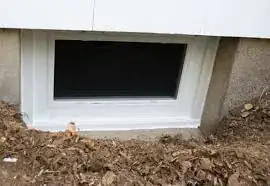
Just get replacement windows instead of new construction and use tapcons to fasten the windows through the sides. Caulk outside good to keep out water. Foundation should also be graded away from the window to keep out water.

enter image description here

Justin K
  • 1,401
  • 9
  • 9
1

I work in Manhattan, and windows are installed like this all the time. Snap off the nailing flange and attach a strap to the window. The straps can be anchored further back. As for a slope to drain away water typically in the city we see stone sills with a bevel to drain out, it's typically only a 5 to 8 degree angle. I would confer to your original conditions.

If you had a steel window and it was in good shape with the original grade then as long as you have a solid caulk joint you should be fine. Basement windows are usually buried in snow and will get a large amount of water during a thaw; I would recommend an awning type window as it will seal a lot better and deal with water issues more so then a slider.

Daniel Griscom
  • 6,319
  • 33
  • 33
  • 43
0

I would just say to use Door and Window foam to seal the gap around the window because it is flexible and does not exert pressure on the frame during the curing process. The foam bonds to the frame of the window and to the surrounding masonry or concrete.

If it is a concrete foundation and you would like to fasten directly into the concrete without a window buck then you would need a concrete screw anchor.

You need to order the right length of screw.

You want the screw to be embedded into the concrete around 3/4" to 1".

You take the embedment depth and add the thickness of what you are fastening to arrive at the length of the screw that you want to order.

If you are using a 3/16" diameter Tap-Con for example, you will need to order a 5/32" masonry drill bit to drill the pilot hole.

If you have an SDS rotary hammer, then order a 5/32" x 6" SDS drill bit.

If you have a conventional hammer drill then find a bit that is long enough to fit in your drill chuck and drill through the frame and into the concrete.

Make sure that you drill 1/4" deeper than the embedment depth of the screw.

Typically concrete screw fasteners come in either a flat, countersunk head or a 5/16" hex head so before you order your window check to make sure that your fastener will work in the application. Otherwise, just use a hex head concrete screw and remove it after the foam cures.

Whoever said that the foam with keep the window in place is right. You will not be able to budge it.

0

Without seeing the issues, here in south fla installing Windows is a different world but the supplier should be able to get an equal leg window vs a flanged window. And yes there is an edge distance for tapcons, more so in our area, they should be able to tell you depending on the diameter of tapcon. Hope it helps

Russ
  • 1
0

All you need is shims and Spray Foam. Shim the window on all four sides Square in the opening. The Sims will hold the window tight, let the spray foam dry and take out the shims and fill the holes with spray foam. No use some round backer rod and place that around all four sides on the exterior and then caulk the window to the concrete with backer rod preventing three-way sealing or attaching of the caulking. Spray foam alone can handle 150 mile an hour cross winds that's 25 miles an hour more than just screws.