5

I'm designing a loft bed (here's a rough picture without the cross supports and other details). Right now, most joints will be mortise and tenon.

I'd like to be able to take the loft down to parts, and the simplest thing to do would be to disassemble it at the M&T joints. But that would mean they couldn't be glued, and my current understanding of M&T joints is that their strength comes in large part from the glue.

Am I missing something? Is there a way to build M&T joints that aren't glued but are still full strength?

Edit 2013-11-16: I'd like to make these blind tenons. That makes @Jack's sliding dovetails really interesting. Since the joist structure will be visible from the underside, the aprons and hangar bolts for the corner are also interesting -- I wonder if there could be something like that to secure the non-corner joists...

Edit 2013-11-16: After watching a video about making dovetail joints, I'm going to go with @Jack's answer because they depict the answer to the problem. @HerrBag's comments (specifically stopping the dovetails) are, however, what make it a usable answer.

LoftyGoals
  • 535
  • 6
  • 11
  • 21

4 Answers4

11

You could use one of the many variations of the mortise and tenon joint, depending on the look you're going for. Though I agree with HerrBag, that the strength of a mortise and tenon joint should not rely on glue.

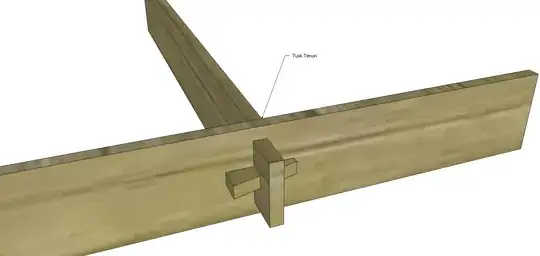
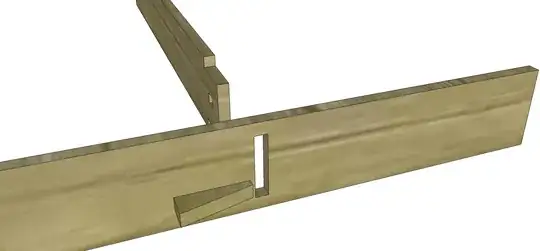
Tusk Tenon

This is a through tenon variation, where a wedge is used to lock the joint together.

Assembled Tusk Tenon
Exploded Tusk Tenon

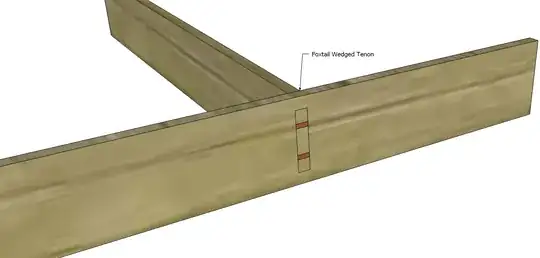
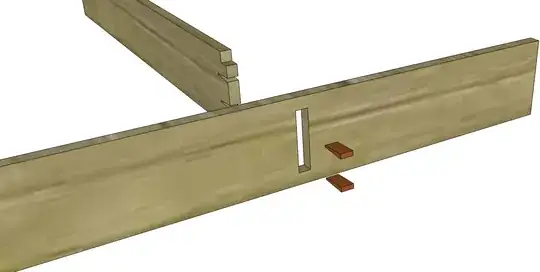
Fox tail (Wedged) Tenon

This is another through variation, though the tenon ends up flush on the outside of the joint. In this joint slots are cut into the tenon. and wedges are driven into the slots after assembly. This causes the tenon to expand, and tighten in the mortise. Usually the mortise will be slightly tapered, to allow additional expansion and to create a stronger joint.

Assembled Fox Tail Tenon
Exploded Fox Tail Tenon

Tester101
  • 133,087
  • 80
  • 327
  • 617
6

Mortise and tenon joints do not need glue to be strong. If they fit tightly and are oriented properly to carry load through the post (like a stud) and the tenon stabilizes lateral loads, it only need to be secured with a peg or screw.

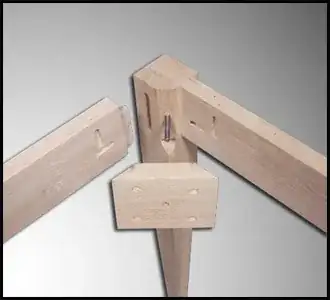
Tester101's tusks would be good for the slats. I was envisioning table type aprons for the corners.. This photo shows mortises, corner block (using a hanger bolt) and pocket screws for a solid yet disassemblable joint: enter image description here

HerrBag
  • 12,225
  • 1
  • 21
  • 37
3

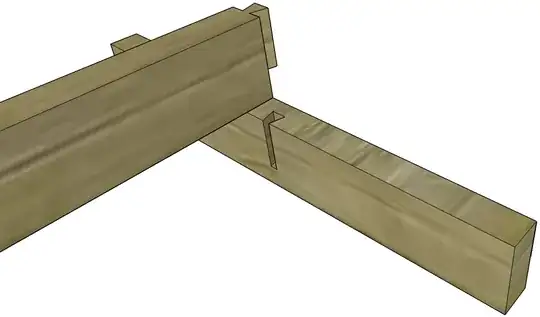
It might be good to consider a sliding dovetail.

enter image description here

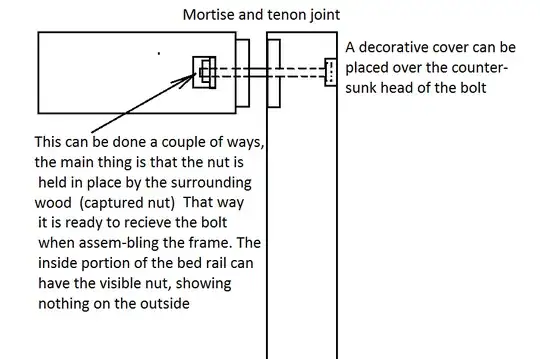
Edit 11/16/13 To assemble your bed frame, the M&T joints with captured bolts with nuts to hold the corners together with the legs.Captured nut Just as a mention, a good hardwood needs to be used for the assembly. regular 2X4, 2X6s and other similar materials used in the construction of homes will be too soft, and when the joints are put under stress SPF, Hem fir, etc is going to compress and loosen the joints. To use this material you need glue and screws to hold all this together. That is not an option for you I think?
To assemble this, white oak, ash, Black walnut and a dense variety of mahogany would be a good choice, if it is not cost prohibitive. There are other hardwoods too, just give a look. Red oak and Douglas Fir are hardwoods, but very prone to readily split under the stresses you are going to expose the joints to.

Another good thing about some hardwoods, is that you will not need the same dimension of material to have the same strength as 2X framing lumber.

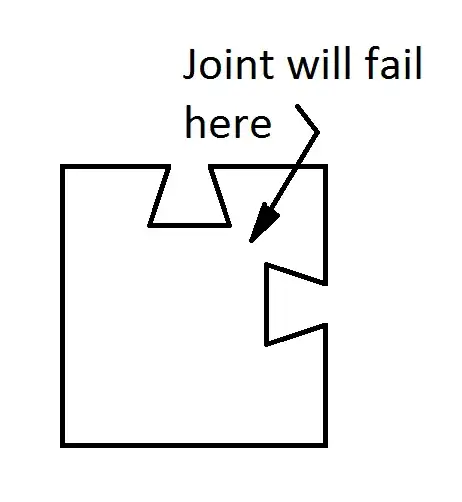
The sliding dovetails are ideal for the cross members into the side rails. To use the same joint for the attachment of the legs would produce a weak joint in my opinion, I have seen it fail in pedestal table legs.dovetail at leg

To dissemble this in time, and to ease the assembly, which sliding dovetails can be a bear to slide together, I suggest tapering the dovetail so as it goes in, the joint gets tighter, it doesn't need much, a 1/16th of an inch over 4 inches on each side would dramatically increase the ease of assembly/disassembly. A router jig with a bushing guide on the router would make the female cuts in the rails, and a router table with a tall fence and a shim on the appropriate corner of the support for the slats would cut the male dovetail. A push bock would be handy to control the top heavy stock for this cut.

Tester101
  • 133,087
  • 80
  • 327
  • 617
Jack
  • 38,117
  • 2
  • 30
  • 66
2

One really strong option to consider is drawboring.

cross-section of a drawbore peg

These use a slightly offset hole to pull the joint tight. The trunnel (peg) should ideally be dry, straight-grained wood, but usually a home-center oak dowel will suffice. I found them to be reasonably easy as a beginner, and they even compensate for a loose joint if you don't quite get the fit exactly right.

Google "drawbore joint" for all the details you could ever want.

skiggety
  • 561
  • 4
  • 18