10

I bought this brass ball valve from Home Depot and installed it in the orientation of what I would consider "backwards". I'm not sure if it actually matters and before I close up the wall I would like to make sure orientation isn't an issue with these.

My use of the term "backwards" in this case is when the handle points against the flow of water in the open state.

Model: NSF61-8?

enter image description here

Joe Phillips
  • 2,286
  • 12
  • 46
  • 61

9 Answers9

16

If a valve has directionality, it will almost universally be cast as an arrow in of the body, as seen in this globe (aka stop) valve:
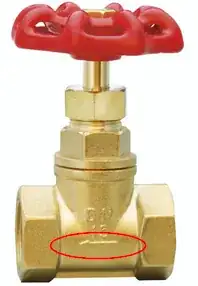
enter image description here


I've never seen a ball valve that is directional. If you look inside, you'll see the guts of it are symmetrical.
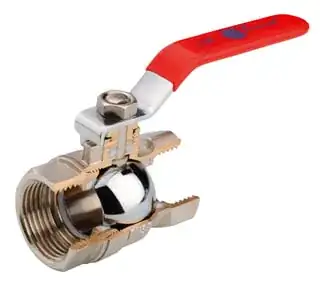
enter image description here

I would say the general rules of thumb for this are:

  • If you can even change the handle direction, be sure that off is perpendicular to the pipe.
  • If clearance or safety is an issue, then install it in the way that works or is safest.
    • For example, if it's sticking out when it's off and likely for someone to accidentally bump into or get caught on it, then install it the other way so that doesn't happen.
  • If clearance and safety are non-issues, and there are other valves present, then follow the convention of existing valves.
    • If you have pipes that flow in opposite directions it's very handy to ensure the valves indicate this.
  • If there's no existing valves, and no clearance issue, then the most common convention is to have the handle point in the direction of flow.
    • There are probably regional and/or industry-specific variations to this, but as far as North American potable water goes, this is it.
gregmac
  • 29,300
  • 17
  • 89
  • 162
3

Pipe fitters in NYC have a local rule that the incoming water be piped to the cast side, leaving water on the side with the seam.

Ben
  • 31
  • 1
3

I installed a brass ball valve about 13 years ago with the handle pointing against the flow when in the on position. It has worked perfectly. My valve is female by female so the direction did not matter when assembly the piping. In short: a ball is round so direction does no matter. If a valve must be installed in a certain direction is should have an arrow cast into the body showing the direction of flow.

Lloyd Lee
  • 31
  • 1
2

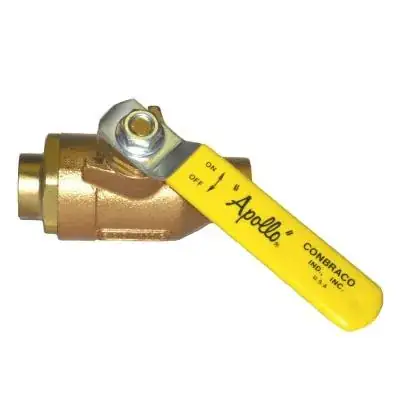
According to this, their ball valves are bi-directional http://www.apollovalves.com/_products/94ALF-A/IOM_I908900.pdf

nycpro
  • 21
  • 1
2

Without hunting through all the spec sheets to find your particular valve or at least one that looks just like it (not having a number) I note that none of the spec sheets I did examine at Apollo valve for brass/bronze ball valves indicated any directionality (and in fact, you can usually put the handle on the opposite way if it's more convenient. Perhaps not on that model, looking closely.)

Apollo Valve Spec Sheets

This also matches my experience using ball valves, generically.

Ecnerwal
  • 235,314
  • 11
  • 293
  • 637
1

I used one on a 1/2" water line supplying an outdoor faucet. It doesn't matter which way you. The one I used was the SharkBite brand from Home Depot. The only indication on it was the direction the shark was swimming

Bob Fritch
  • 11
  • 1
0

Pointing the handle where the flow comes from is the way to go I think because, you can open unscrew the part of the valve that can be unscrewed without having to remove the valve.

0

Some ball valves have a drain valve to empty the downstream side when needed. Eg. an indoor ball valve that can shut off water to an outdoor hose bibb on the other side of the wall. Unless, I am wrong, such a valve is marked with an arrow to indicate the correct direction of flow.

0

It would seem that a ball valve (at least what I buy) has one end that unscrews showing a Teflon seal which should be facing downstream to properly seal to the metal ball instead of the upstream end which is metal to metal????. The cheapo version of this valve only holds back water that is under pressure.