5

I am evaluating a quote to refinish my hardwood floors and stairs.

The contractor mentioned that they would not be removing the quarter-round below the base board and it would require touch up after the job is done. The alternative is to remove the quarter-round, and reinstall with caulk after finishing the floors. Based on the additional labor the cost of the work would be higher.

What are the relative advantages and disadvantages in regard to appearance, durability, and cost of removing/not removing quarter round?

Chase
  • 153
  • 1
  • 1
  • 4

3 Answers3

11

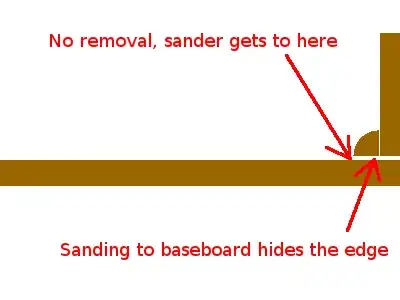
The answer depends on what you are willing to accept for a finished result. Removing the quarter-round allows the edger to reach underneath what is visible when the quarter-round is re-installed. Even the most fastidious edging is going to be visible to close inspection if the trim isn't removed. The extent to which it is obvious depends largely on the skill of the person doing the work, but it is impossible to hide completely unless the trim covers it.
enter image description here

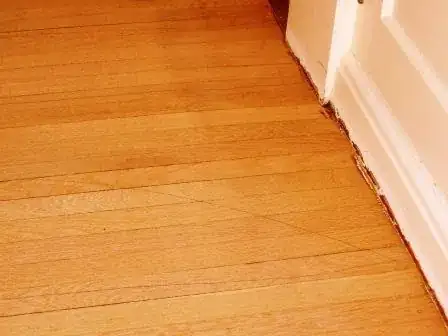
Depending on the condition of the floor when you start, the condition of the trim, skill of the work, this can look decent or pretty bad:
enter image description here

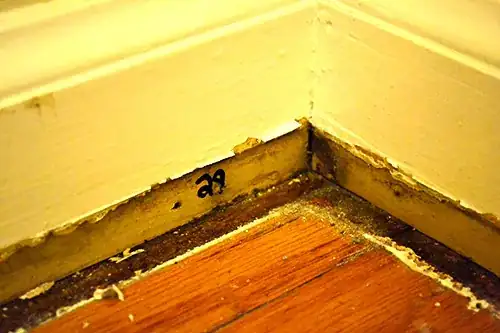
Keep in mind that this isn't the only cosmetic consideration. The other would be what the condition of the trim is. If you have several layers of paint, it might look worse if you remove the quarter-round. For example, the trim below would be a major pain to re-finish and look anywhere near decent.
enter image description here

My personal inclination would be to remove the quarter-round myself, have a professional do the floor sanding, and then re-trim it and paint it myself. I have quite a bit of experience installing trim, so your mileage my vary.

Comintern
  • 6,965
  • 1
  • 17
  • 22
3

Contractors are not interchangeable. Each has their own skill set, business model, and targeted market segment. Just asking if it makes sense not to remove the quarter round may be a sign that the person offering to do the work may not be the right fit for your job.

The contractor whose business model is largely based on refinishing floors for investors looking to flip houses and referrals from real-estate agents helping owners prepare houses for sale makes their money because they are fast and 'good enough'. At the other end of the spectrum are artisans who happen to contract. They simply won't cut corners.

And that's really what this boils down to, the value of cutting corners. How close to the limits of material and human craft does the project need to be and what value an individual places upon it.

2

The quarter round (in this case referred to as base shoe) has no purpose other than to conceal the joint between the base and the floor. If you don't remove before you refinish the floors there will be a line in floor where you stopped sanding. It has to come off. I'm baffled that a flooring re-finisher would suggest otherwise.